
In one of my earlier articles I dealt with the subject of predestination, and I shared the didactic explanation that Cardinal Charles Journet gives of this very complex topic. Now that the correct way of understanding the doctrine of predestination has been set forth, I wish to share what the Magisterium of the Church has defined on the matter.
A little history
Among the conflicts and heresies that Saint Augustine had to combat was Pelagianism, which denied not only the doctrine of original sin but also the necessity of grace for salvation. In the pitched battle the saint waged against the Pelagians, he found it hard to keep the relationship between grace and free will in balance, and in some of his works where he treats the doctrine of predestination he seems to introduce the concept of a double predestination: whereby God saves the elect by pure grace and abandons the rest in their sin. Thus, for example, in The Predestination of the Saints he writes in VI, 11
“All the ways of the Lord are mercy and truth. But inscrutable are His paths. Therefore inscrutable also are the mercy by which He freely saves, and the truth by which He justly condemns.” Saint Augustine, The Predestination of the Saints VI, 11
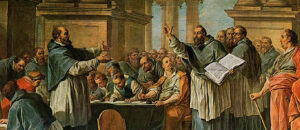
Saint Augustine is accused by the Pelagians of denying free will, and against this he defends himself on several occasions. In his reply to Julian he writes: “You assert that in another of my books I said: ‘Free will is denied if grace is defended, and grace is denied if free will is defended.’ Pure calumny. I did not say this; what I said was that this question presents such enormous difficulties that it might seem that the one is denied if the other is admitted. And since my words are few, I shall repeat them so that my readers may see how you tamper with my writings and with what bad faith you abuse the ignorance of those who are slow and dull of understanding, in order to make them believe that you have answered me, because you do not know how to keep silent.
I said, toward the end of the first book, dedicated to the virtuous Pinianus, whose title is De gratia contra Pelagium: “In this question, which treats of free will and of the grace of God, it is so difficult to mark out the field that, when free will is defended, the grace of God seems to be denied, and when the grace of God is defended, free will seems to be destroyed. But you, an honest and truthful man, suppress the words I said and put in their place others of your own invention. I did indeed say that this question was difficult to resolve, not that it was impossible. And much less did I affirm, as you falsely accuse me, that if grace is defended free will is denied, and if free will is defended the grace of God is denied. Quote my exact words and your calumnies vanish.”
Reply to Julian IV, 47
Taken from Complete Works of Saint Augustine XXXV. BAC 457, p. 703
He also defends himself when they accuse him of calling everyone who acknowledges free will a Pelagian:
“It is not true, as you say, that ‘we call Pelagians or Caelestians everyone who acknowledges free will in man and affirms that God is the creator of children’; rather, we give this name to those who do not attribute to divine grace the liberty to which we have been called; and to those who refuse to acknowledge Christ as the Savior of children; to those who do not admit in the just the necessity of directing to God any petition of the Lord’s Prayer. These indeed we call Pelagians and Caelestians, because they share in their criminal errors.”
Reply to Julian III, 2
Taken from Complete Works of Saint Augustine XXXV. BAC 457, p. 574
Thus he rejects the Pelagian idea that grace is not necessary. For Saint Augustine it is grace that gives free will the capacity to do the will of God.
“You say that ‘I praise the continence of Christian times not in order to enkindle men to the love of virginity, but in order to condemn marriage, which was instituted by God.’ But so that no one may think that the suspicion of a misinterpretation of my sentiments torments you, you say to me, as though wishing to approve: ‘If you sincerely exhort men to virginity, you must confess that the virtue of chastity can be observed by those who will it, so that anyone can be holy in body and in spirit.’ I answer that I admit it, but not in your sense. You attribute this power to the forces of free will alone; I attribute it to the will, aided by the grace of God. Yet I ask: over what does the spirit exercise its power not to sin, if not over an evil which, if it prevails, makes us fall into sin? And so as not to have to say, with the Manicheans, that this evil comes from an evil nature, foreign to us and mingled with us, it remains for us to confess that there exists in our nature a wound that must be healed, and whose stain makes us guilty if it is not washed away by the sacrament of regeneration.”
Reply to Julian V, 65
Taken from Complete Works of Saint Augustine XXXV. BAC 457, p. 825
The Magisterium speaks
In spite of this, the obscure texts of Saint Augustine gave occasion for his thought to be exaggerated in later times. One such case was a priest named Lucidus, who had to be corrected by the Council of Arles in 475. The memorial of his submission has been preserved:
On grace and predestination
Your correction is public salvation, and your sentence is medicine. Hence I too regard it as the highest remedy to excuse past errors by accusing them, and to purify myself by a wholesome confession. Therefore, in accordance with the recent decrees of the venerable Council, I condemn together with you that opinion which says that the labor of human obedience is not to be joined to divine grace; which says that after the fall of the first man the free choice of the will was wholly extinguished; which says that Christ our Lord and Savior did not suffer death for the salvation of all; which says that the foreknowledge of God violently drives man to death, or that those who perish, perish by the will of God; which says that whoever sins after having lawfully received Baptism dies in Adam; which says that some are destined to death and others predestined to life; which says that from Adam to Christ none of the gentiles was saved, in view of the coming of Christ, through the grace of God—that is, through the law of nature—and that they lost free will in the first father; which says that the patriarchs and prophets and the greatest saints lived within paradise even before the time of the redemption. All this I condemn as impious and full of sacrilege. Yet I affirm the grace of God in such a way that I always add to grace the effort and endeavor of man, and I proclaim that the liberty of the human will is not extinguished, but weakened and enfeebled, so that he who has been saved is in danger, and he who has been lost could have been saved.
I likewise confess that Christ, God and Savior, as regards the riches of His goodness, offered the price of His death for all, and does not will that anyone should perish, He who is the Savior of all, above all of the faithful, rich toward all who call upon Him [Rom. 10, 12]… Now, however, on the authority of the sacred testimonies found in abundance in the divine Scriptures, and by the doctrine of the ancients, made manifest by reason, I gladly confess that Christ came also for those lost men who, against His will, have been lost. For it is not lawful to limit the riches of His immense goodness and the divine benefits to those alone who appear to have been saved. Because if we say that Christ brought remedies only for those who have been redeemed, it will seem that we absolve those not redeemed, who, it is certain, are to be punished for having despised the redemption. I likewise affirm that men have been saved, according to reason and the order of the ages, some by the law of grace, others by the law of Moses, others by the law of nature, which God wrote in the hearts of all, in the hope of the coming of Christ; yet, from the beginning of the world, they were not freed from the original bond except by the intercession of the sacred blood. I also profess that the eternal fires and infernal flames are prepared for capital deeds, because with reason the divine sentence follows persistent human faults; a sentence which those incur who do not believe these things with all their heart. Pray for me, holy lords and apostolic fathers.
I, Lucidus, priest, have signed this my letter with my own hand, and what is affirmed in it, I affirm, and what is condemned, I condemn.
COUNCIL OF ARLES, 475
From the memorial of submission of Lucidus, priest
Taken from the Enchiridion Symbolorum
Here already four basic points of the right doctrine of predestination were established:
1. Free will cooperates with grace, but free will without grace can do nothing.
2. Christ died for all men and not for a chosen few.
3. Free will is weakened but not extinguished.
4. Those who are condemned are not condemned by the will of God.
Later, at the Second Council of Orange, against the Semipelagians, the right doctrine of predestination is reaffirmed.
“We also believe, according to the Catholic faith, that after grace has been received through Baptism, all the baptized, with the help and cooperation of Christ, can and ought—if they are willing to labor faithfully—to fulfill what pertains to the salvation of the soul. But that some have been predestined to evil by the divine power, we not only do not believe, but if there are any who would presume to believe so great an evil, with all detestation we pronounce anathema against them.
We also profess and salutarily believe that in every good work it is not we who begin and are afterwards aided by the mercy of God, but that He Himself first inspires in us—without any preceding good merit on our part—faith and love of Him, so that we may faithfully seek the sacrament of Baptism, and so that after Baptism, with His help, we may fulfill what is pleasing to Him. Hence it must be believed with all evidence that the so wonderful faith of the thief whom the Lord called to the homeland of paradise [Lk. 23, 43], and that of the centurion Cornelius, to whom an angel was sent [Acts 10, 3], and that of Zacchaeus, who merited to receive the Lord Himself as his guest [Lk. 19, 6], did not come to them from nature, but was a gift of the divine liberality.”
SECOND COUNCIL OF ORANGE, 529
Confirmed by Boniface II (against the Semipelagians)
Taken from the Enchiridion Symbolorum
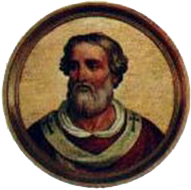
Pope Adrian I again corrects these same errors in a letter to the bishops of Spain
“Concerning what some of them say—that predestination to life or to death lies in the power of God and not in ours—these reply: ‘Why should we strive to live well, if it lies in the power of God?’; and the others, in turn: ‘Why should we pray to God not to be overcome in temptation, if it lies in our own power, through the liberty of free choice?’ For, in truth, they are able neither to give nor to receive any reason, being ignorant of the sentence of blessed Fulgentius… [against a certain Pelagian]:
“Thus God prepared the works of mercy and of justice in the eternity of His immutability… He prepared, then, the merits for the men who were to be justified; He also prepared the rewards for their glorification; but for the wicked He did not prepare evil wills or evil works, but He prepared for them just and eternal torments. This is the eternal predestination of the future works of God, and just as we know that it was always inculcated in us by the apostolic doctrine, so also we confidently preach it…”
From the Letter Institutio universalis, to the bishops of Spain, of the year 785
Taken from the Enchiridion Symbolorum
Later, the Council of Quierzy again had to make a pronouncement against the Predestinarians (who preached a double predestination):
On redemption and grace
Ch. 1. Almighty God created man upright, without sin, with free will, and placed him in paradise, and willed that he should remain in the holiness of justice. Man, making bad use of his free will, sinned and fell, and became a “mass of perdition” of the whole human race. But God, good and just, chose, according to His foreknowledge, from that same mass of perdition, those whom by His grace He predestined to life [Rom. 8, 29 ff.; Eph. 1, 11], and He predestined eternal life for them; as for the others, however, whom by the judgment of justice He left in the mass of perdition, He knew by His foreknowledge that they would perish, but He did not predestine them to perish; yet, because He is just, He predestined for them an eternal punishment. And therefore we say that there is only one predestination of God, which pertains either to the gift of grace or to the retribution of justice.
Ch. 2. The freedom of choice which we lost in the first man, we recovered through Christ our Lord; and we have free will for good, forestalled and aided by grace; and we have free will for evil, when abandoned by grace. But we do have free will, because it was set free by grace and healed by grace from its corruption.
Ch. 3. Almighty God wills that all men without exception be saved [1 Tim. 2, 4], although not all are saved. Now, that some are saved is the gift of Him who saves; but that some are lost is the desert of those who are lost.
Ch. 4. Just as there is not, has not been, nor will be any man whose nature was not assumed in Him, so there is not, has not been, nor will be any man for whom Christ Jesus our Lord did not suffer—although not all are redeemed by the mystery of His passion. Now, that not all are redeemed by the mystery of His passion regards not the greatness and abundance of the price, but the portion of the unfaithful and of those who do not believe with that faith which works through charity [Gal. 5, 6]; for the draught of human salvation, compounded of our weakness and of the divine power, has indeed in itself the power to profit all, but if it is not drunk, it does not heal.”
COUNCIL OF QUIERZY, 853
(Against Gottschalk and the Predestinarians)
Taken from the Enchiridion Symbolorum
Canon 3 of the Third Council of Valence keeps to the same line:
“Can. 2. We faithfully hold that ‘God foreknows and eternally foreknew both the good that the good would do and the evil that the wicked would commit,’ for we have the word of Scripture which says: Eternal God, who art the knower of hidden things and knowest all things before they come to pass [Dan. 13, 42]; and it pleases us to hold that ‘He absolutely foreknew that the good would be good by His grace and that by the same grace they would receive the eternal rewards; and He foresaw that the wicked would be wicked by their own malice, and that He would condemn them with eternal punishment by His justice,’ as according to the Psalmist: For power belongs to God, and to the Lord mercy, to render to each one according to his works [Ps. 61, 12 f.]; and as the doctrine of the Apostle teaches: Eternal life to those who, according to patience in good works, seek glory and honor and incorruption; wrath and indignation to those who are, however, of a contentious spirit and do not accept the truth, but believe iniquity; tribulation and anguish upon every soul of man that works evil [Rom. 2, 7 ff.]. And in the same sense in another place: In the revelation—he says—of our Lord Jesus Christ from heaven with the angels of His power, in a flame of fire taking vengeance on those who know not God nor obey the Gospel of our Lord Jesus Christ, who shall suffer eternal punishment unto their ruin… when He shall come to be glorified in His saints and to be made admirable in all who have believed [2 Thess. 1, 7 ff.]. Nor is it to be believed that the foreknowledge of God imposed upon any wicked man the absolute necessity that he could not be otherwise; rather, by his own will he was to be what God, who knows all things before they come to pass, foresaw by His omnipotent and immutable majesty. ‘And we do not believe that anyone is condemned by a prior judgment, but by the desert of his own iniquity,’ ‘nor that the wicked themselves perished because they could not be good, but because they would not be good, and by their own fault remained in the mass of damnation, whether by the original guilt or also by the actual’.”
“Can. 3. But also concerning the predestination of God it has pleased and faithfully pleases us, according to the apostolic authority which says: Has the potter no power over the clay, to make of the same lump one vessel unto honor and another unto dishonor? [Rom. 9, 21], a passage where it immediately adds: And if God, willing to show His wrath and to make known His power, endured with much patience the vessels of wrath fitted or prepared for ruin, that He might show the riches of His grace upon the vessels of mercy which He prepared unto glory [Rom. 9, 22 f.]: we confidently confess the predestination of the elect to life, and the predestination of the impious to death; yet, in the election of those who are to be saved, the mercy of God precedes the good merit; in the condemnation, however, of those who are to perish, the evil merit precedes the just judgment of God. ‘But by predestination God has only established what He Himself was to do, either by gratuitous mercy or by just judgment,’ according to the Scripture which says: He who made the things that were to be [Is. 45, 11; LXX]; but in the wicked He foreknew their malice, because it comes from them, yet He did not predestine it, because it does not come from Him. The punishment that follows evil merit, as God who foresees all things, He indeed foreknew and predestined, because just is He in whom, as Saint Augustine says, the sentence upon all things is as fixed as His foreknowledge is certain. Here indeed the saying of the wise man fits well: Judgments are prepared for scoffers, and hammers to strike the bodies of fools [Prov. 19, 29]. Concerning this immovability of the foreknowledge of the predestination of God, by which in Him the future is already an accomplished fact, that also is well understood which is said in Ecclesiastes: I knew that all the works that God has made continue for ever; we cannot add to nor take away from what God has made [Eccl. 3, 14]. But that some have been predestined to evil by the divine power—that is, as though they could not be otherwise—we not only do not believe, but if there are any who would believe so great an evil, against them, like the Synod of Orange, we say anathema with all detestation.”
In spite of this, canon 4 of this council opposed the canons of the Council of Quierzy: “Can. 4. Likewise concerning the redemption by the blood of Christ, on account of the excessive error that has arisen on this matter—to the point that some, as their writings indicate, define that it was shed even for those impious men who from the beginning of the world until the passion of the Lord died in their impiety and were punished with eternal damnation.” But it views this expiation as limited from the standpoint of the divine foreknowledge. That is to say, God knows from eternity what will come to pass. Thus, in spite of the conflict between these two local councils, the Church has kept her position constant in favor of the universal salvific will of God, who wills that all men be saved, while he who is condemned is condemned by his own free choice and not by the will of God. God foresees his condemnation; He does not impose it; and therefore predestination must be understood from the perspective that “God wills that this serve for that, but God does not will this.”
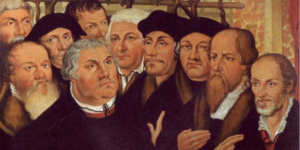
Predestination in the Protestant Reformation
Later, William of Ockham held that the work of God was inscrutable to such a degree that He could condemn the good man and save the wicked—a thought that gained great force within the Reformation. Very possibly his thinking influenced the Protestant reformers (especially Calvin and Zwingli) to the point that the heresies concerning the doctrine of predestination were not only revived but amplified.
The Council of Trent pronounced against these doctrines
Ch. 12. Rash presumption of predestination is to be avoided
Neither ought anyone, so long as he lives in this mortal state, to presume so far concerning the hidden mystery of divine predestination as to hold for certain that he is assuredly in the number of the predestined [Can. 15], as though it were true that the one justified either can sin no more [Can. 28], or, if he should sin, may promise himself a certain repentance. For, except by a special revelation, it cannot be known whom God has chosen for Himself [Can. 16].
Council of Trent, SESSION VI (13 January 1547), Decree on Justification
Taken from the Enchiridion Symbolorum
It was only some time later that, within the Protestant ranks, a theologian named Jacobus Arminius preached that human free will can exist without limiting the power of God or contradicting the Bible, opposing himself to the Calvinist doctrines that laid emphasis on predestination.
Arminius, who studied in Geneva under the French evangelical theologian Theodore Beza, returned to his native Holland and became professor of theology (1603–1609) at the University of Leiden. He affirmed that predestination was biblical and true—that is, that God had destined some persons to heaven and others to hell, as indicated by Jesus’ reference to the “sheep and the goats.” But he focused on the love of God rather than on His power in the act of choosing, the process by which God chose those destined for paradise.
After the death of Arminius, a group of ministers who sympathized with his views developed a systematic and rational theology based on his teachings. In their declaration, a protest published in 1610, the Arminians affirmed that election was conditioned by faith, that grace could be resisted, that the work of Christ was intended for all persons, and that it was possible for believers to fall from grace.
At the Synod of Dort, or Dordrecht (1618–1619), the High Calvinists prevailed over the group of the Arminians and condemned those who dissented from their theory. The Synod of Dort declared that the work of Christ was intended only for those chosen for salvation, that the people who believed could not lose grace, and that God’s election did not depend on any condition.
The Arminian evangelicals were then wholly forbidden in Holland by the rest of the Calvinist evangelicals until 1630, and thereafter not without reservations until 1795. Nevertheless, the Arminian tradition endured in the Netherlands into the late twentieth century.
The British theologian John Wesley studied and affirmed the work of Arminius in his Methodist movement during the eighteenth century in England. For the common people, Arminianism is summed up in the idea that there is no predestination and that people are free to follow or to reject the Gospel.
Today, within Protestantism there are different nuances among these opposing positions, but in essence they remain as entrenched as in the times of the Reformation, although Calvinism has lost the force it once had.
Author: José Miguel Arráiz
