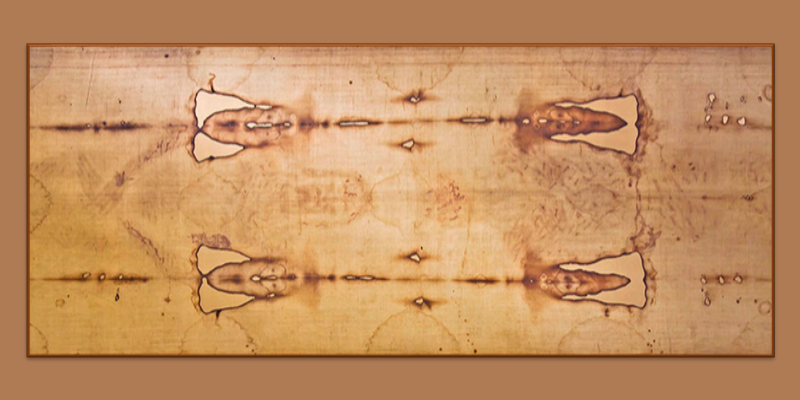
Science disqualifies the test carried out in 1988.
VALENCIA, April 12, 2001.- The vice-president of the Spanish Center of Sindonology stated this Thursday that all the scientific studies demonstrate the invalidity of the carbon-14 test carried out on the Holy Shroud of Turin, which attributed its origin to the Middle Ages.
Jorge Manuel Rodríguez, professor of Civil Law at the University of Valencia, who has been studying the authenticity of the cloth for 24 years, told “AVAN,” the news agency of the Archdiocese of Valencia, that “according to the scientific research carried out on this relic, it is far more probable that it belonged to Jesus Christ than to any other man.”
Rodríguez likewise maintains that “there is scientific evidence proving that the Holy Cloth is not a forgery, which explains why no one has been able to make an identical replica.”
However, the Valencian professor, who has given more than 500 lectures on the Holy Shroud in several European countries, has acknowledged that “most people think it is a fake relic, because of the enormous publicity given to the carbon-14 test done in 1988, which erroneously concluded that the Holy Cloth dated from the Middle Ages.”
On the contrary, “the subsequent corrections by the very scientists who carried out the analysis scarcely came to public light; they acknowledged the invalidity of applying the carbon-14 method, since the fabric was contaminated by the gases from the fire that the Holy Shroud suffered and by organisms such as lichens and fungi.”
The Spanish Center of Sindonology, an institution based in Valencia, studies the Holy Shroud of Turin, the Sudarium of Oviedo, and other relics attributed to Jesus Christ.
Its vice-president concludes that there is a probabilistic calculation based on “rigorous studies of the characteristics of the cloth and of its image, which places the odds of its not being an authentic relic of Christ at one in 200 billion.”
The Holy Shroud “reflects the marks of a crucified man in a way that is not documented anywhere except in the Gospels, in the case of Jesus.” Thus, “there is no record of any crucified man who was nailed through the feet and hands, scourged, pierced with a lance in the side and, moreover, crowned with thorns and with all his bones intact.”
Most of those condemned to the cross “were tied with ropes to the wood, their legs were broken to hasten their death, and they were not given crowns of any kind,” Rodríguez explained.
Moreover, according to the data obtained from the latest multidisciplinary investigation of the Holy Shroud, carried out by NASA experts in 1978, “the cloth shows an image that has three-dimensional information, that is made without a single stroke and that is not produced by contact either, but rather resembles the imprint that a hypothetical radiation emanating from the body would produce.”
In fact, “no image with these features is known, because even today we do not know how to reproduce them, which, together with the fact that the imprint on the cloth perfectly describes the wounds of Jesus recounted in the Gospel, reinforces the theory that the Holy Shroud belongs to Christ.”
Source: Zenit.org
