
Note: Previous: The author is a former Jehovah’s Witness, who by the grace of God embraced the Catholic faith. While he was preparing to receive Baptism and thus become a “new creature”, he wrote this article to a friend of his, who was also preparing for such a great event. We thank Carlos for his collaboration, which is particularly useful in knowing the profound reality of the sacrament.
For José Luis Sansaloni Barcelona, Catalonia – Spain
On the occasion of your Baptism
On this journey that now takes me to the doors of the Catholic Church, my greatest interest (apart from the Scriptures, of course) came to focus on the first five hundred years of the history of Christianity. My intention was simple;simply find out what kind of life a Christian led in those times and what kind of congregation the Little Church was. If the current Catholic Church is the invention of Constantine, as some claim, a syncretism forged by imperial policy, then the study of the writings that survive from those times would make clear the deviation that the Church supposedly suffered after the death of the Apostles. I dove headlong into the seminal books of Christianity, especially the writings that the direct disciples of the Apostles have left us.
On the occasion of your baptism, José Luis, I would like you to consider some of the things that make this crucial moment in the life of a Christian and discover with me the elements that make up this precious sacrament. Some of these things will surprise you as much as they surprised me, but I have no doubt that the experience will leave you enriched and with a deeper insight into the importance of the step you are about to take. So here it goes.
Baptism in History
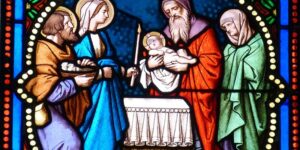
Baptism was once a pagan religious rite practiced among the peoples of ancient times and also among the Jews. The word baptism is of Greek origin: “baptizo” means to immerse as when one immerses a piece of cloth in the dyeing tub to dye it, for example. Sacred baths are common to many ancient religions, such as the Eleusinian rites or Hinduism and Buddhism.
Presbyterian theologian Francis Schaeffer writes: “There are two signs designated to mark the promise of the [divine] covenants; circumcision in the case of Abraham and baptism in the case of Christians. However, neither of them is original. They have been used by many peoples before and in the case of Judaism and Christianity they have been given new meanings, which are definitive because they have been assigned by God himself.” (“Genesis in Space and Time”, Intervarsity Press 1972)
The Romans of the time of Christ were interested in the mystical religions of Egypt and Babylon in some of which baptism was practiced as a ritual. For example, in the initiation rites of the cult of Isis, the initiate confessed his sins in front of other devotees and was then baptized in the belief that the ritual bath purified him of his faults and enrolled him in the ranks of the savior goddess.
The Jews also practiced ritual baptism for purification, as we know from various quotes from the Apostle Paul and from surviving documents that show the use that baptism was common among the Levites and non-Levitical religious communities of different times, such as among the Essenes of the first century.
Christian baptism derives from the baptism established by John the Baptist. John’s genealogy in Luke 1:5,6 indicates that the man appointed by God to baptize Jesus was descended from Levites through the paternal and maternal line. John is therefore the right man to baptize and ordain the ministry of Our Lord. We do not know precisely what the origin of John’s baptism is. Whether the idea came from Jewish or pagan sources we do not know, but we can affirm that the practice is adopted and sanctified by its adoption in the Christian Church and by the example of Our Lord Jesus Christ.
Another important function, the most important, of John’s baptism was the revelation of the Lamb of God to the world. Baptism then is not a Christian invention but was preceded by similar rites of other religions. By including Jesus in Christian doctrine by order and practice, Our Lord has given it a sacramental meaning. Baptism is the first sacrament of the Christian Church, the first initiation and the means to be born again into the reality of the Kingdom of God.
Psalm 89:11 says “Heaven and Earth and all the things they contain belong to me, says the Lord.” All things are the property of God because by his divine will they were created and by his power, wisdom, justice and love they continue to exist even today. It is clear throughout the Scriptures that God can make holy what is not holy, for the good of His purpose. He has taken sinners from among men to make for Himself a “holy people.”If it were inappropriate for God to take elements of the world for his own use in truthful worship…we would all be in real trouble and human salvation would be impossible.
There are many books written with the (fallacious) purpose of “exposing” pagan practices in Christianity. Books like “The Two Babylons” by Alexander Hyslop and “ Babylon “Mystery Religion” by Ralph Woodrow. Concluding that a church that adopts a pagan rite is, therefore, pagan, comes into direct conflict with the adoption of baptism by Our Lord Jesus Christ who instituted it to be publicly practiced in the name of the Father, the Son and the Holy Spirit.
It is good to meditate on this because many may have committed blasphemy by following fallacious and condemnatory reasoning, “calling unclean the things that God has sanctified” (see Acts 10:15).
When we study the writings of the first centuries, we never cease to be surprised by the consistency, healthy uniformity, simplicity and common sense of the doctrines of baptism and regeneration. If anyone believes that the quotes that follow are capricious or maliciously selected, I invite you to read the complete works. It is easily verified that the only ones who have questioned the effectiveness of this sacrament have been the dividers of the faith, the Gnostics and the non-believers.
These are the same ones who deny the Trinity, the deity of Christ, the organic unity of the Church. Never (until after the German Reformation of the 16th century) did anyone deny the nature, meaning, efficacy or importance of the baptismal sacrament.
For fifteen hundred years all of Christendom was of one mind on this question. Baptism, like so many other things, is not described in detail in the Scriptures, and although there is sufficient mention of this sacrament, there is no “guide,” let’s say, similar to the Lord’s Prayer, that indicates exactly how to baptize a proselyte. The Scripture in this case is completed in practice with the tradition kept since apostolic times and is a good example of how we should examine what we believe in the light of what Christians of all times have believed. “the faith that was once delivered to the saints” (Jude 1:3).
Baptism and our salvation
Our salvation depends on many things and not only on being baptized. Many sects go around the world inviting people to a meal (I have seen this in the Philippines) on the condition that before eating they declare “I believe in Jesus Christ” and be baptized. Baptism is not a magical mark that makes us invulnerable to sin or God’s judgment. This is obvious to anyone who has read the Scriptures. A good list of the “elements” that make up salvation would be the answer to the question: How do I receive salvation, justification, new birth and eternal life in Christ Jesus?
Here is a possible list of “items”.
- Through believing in Christ (John 3:16; Acts 16:31)
- Through repentance (Acts 2:38; 2 Peter 3:9)
- Through baptism (John 3:5; 1Peter 3:21; Titus 3:5)
- By the work of the Holy Spirit (John 3:5; 2 Corinthians 3:6)
- Through the declaration of our faith (Luke 12:8; Romans 10:9)
- By knowing the truth (1 Timothy 2:4; Hebrews 10:26)
- By works (Romans 2:6,7; James 2:24)
- By keeping the commandments (1 Corinthians 7:19)
- By undeserved kindness or grace (Acts 15:11; Ephesians 2:8)
- By the sacrificial blood of Christ (Romans 5:9; Hebrews 9:22)
- By the righteousness or holiness of Christ (Romans 5:17; 2 Peter 1:1)
- By the sacrifice on the cross (Ephesians 2:16; Colossians 2:14)
Note that the Bible does not lead us to “this or that” as an answer to this very important question. None of these elements is overwhelming to the point of canceling out all the others, none of them can be eliminated, the others being enough to do the work of our salvation. Whenever we are faced with the dichotomies of “by faith or by works,” “by this or by that,” we are not thinking biblically. The entirety of human salvation is the work of God and is not something simple, reducible to an equation. Just as we cannot reduce the creation of the material world to a chemical formula, the spiritual creation that Christianity teaches cannot be reduced to a simple statutory definition such as “believe in Jesus Christ and you will be saved.”It is obvious that demons believe in Jesus Christ and are not saved by that, and that faith without works is of no use for salvation; Nor are works of any use if we do not have faith. Believing must be in line with the rest of our life and with the ultimate purpose of God and his Kingdom.
Just a symbol? A “public statement”?
Baptism then is the door to this great house that is the Church of Christ. There is no need to fear attributing to baptism the sacramental powers with which it has been imbued by God. Many sects consider baptism a simple symbolic formality, a minimal act. Where does this minimalist view of baptism come from? It certainly does not come from apostolic times. This is proven by the uniformity of beliefs in the doctrines of the ancient liturgical churches, Catholicism and Orthodoxy. For fifteen centuries there was never any other doctrinal position regarding baptism.. It is as a result of the Reformation that people begin to think of baptism as a public declaration and nothing more. This is a doctrine that begins as a historical reaction and does not arise from the Scriptures or the continuous practice of fifteen centuries of Christian history. This doctrine of “public declaration” is the result of the inductive reading of Scripture. In that sense, Jehovah’s Witnesses generally follow the beliefs of the English and North American Anabaptist sects of the last two hundred years but not the traditional Christian practice of twenty centuries. This Anabaptist position having been declared necessary, scriptural excuses have been sought to support it; but as I now share with you, it will be evident to you that baptism it is a regenerative and miraculous act consistent with all the evidence presented in the Scriptures and contained in the oldest traditional documents of Christianity.
Importance of Baptism in Sacred History
“In the beginning God created the heavens and the earth. The earth was formless and void, darkness covered the deep, and the Spirit of God moved over the surface of the waters. And God said…” (Genesis 1:1-2)
You already know where these words come from and I invite you to see in them the divine foreknowledge that placed the waters and the Spirit in these verses as a testimony to the divine originality of our baptism. Before baptism there is tension and there is darkness, but after baptism there is light in the Christian heart, spiritual creation begins, the second phase of creation by God that is carried out in the soul of man by the same forces that generated the material universe.(Please compare with 2 Cor 4:6 and 6:14 Eph 4:18) The waters are concentrated in one place and out of the water “emerges” the dry land from whose soil God forms man.
Theophilus of Antioch (184 AD) “Those things that were created from the waters received the blessing of God, so that this was a sign that men in a future time would receive repentance and remission of sins through water and regenerative bathing.” (Jurgens, “The Faith of the Early Fathers”, Lithurgical Press 1970-79)
We know from the Scriptures that Christ was the firstborn of God’s creation, for he was begotten before time existed “and through him all things were made.”At the same time in his baptism, Jesus begins the spiritual creation being the firstborn (in baptism and resurrection) of many brothers to come (Rom 8:29). Thus, in baptism the new creation begins, when we are baptized we are born “from above” and we are integrated into the body of Christ.
Saint Ambrose in his treatise “On the Mysteries” says: “What have you seen [in the baptistery]? Certainly water, but not only water, you have also seen the deacons there ministering and the bishop, asking questions and invoking… Believe then that the presence of God is there. Consider how ancient is the mystery [of baptism] prefigured even at the origin of the world, when God made the heavens and the earth, ‘the Spirit’, we are told, ‘moved upon the face of the waters.’He, who moved on the waters, didn’t he work on those same waters? Water then is that in which the flesh is immersed so that all carnal sin may be washed away in it.” (Phillip Schaff, “The Nicene and Post-Nicene Fathers”, H. De Romestin, Eerdmans 1983).
The story of Noah is another type of baptism. As we progress through the story we discover more foreshadowings of baptism and its qualities. This presupposes two things: that baptism is an intimate declaration of God’s foreknowledge and that it is a revelation of his creative method, an illustration that allows us to delve into the mystery of the new birth even if we are not doctors of the faith. The liturgy and the sacraments make evident God’s love and firm purpose to save us. In this case, baptism reveals in ourselves that God designed our salvation from the beginning of the world, making it evident that his love is not only infinite but also eternal.
In the case of Noah, baptism is represented (1 Pet 3:20-22). This parallel is mentioned frequently in the Scriptures as well as in the writings of the early Fathers of the Christian Church. It is worth noting not only the salvation through passage through waters, the ark closed by God, the fact that Noah was a carpenter like Jesus was, the acceptance into the ark of clean and unclean animals, the number of souls that were saved from the flood (Noah, who represents Our Lord, with his wife, his three sons and daughters-in-law are seven souls plus one, which would seem to indicate a total salvation). In addition to these suggestive details we find the dove with the olive branch, symbol of the Holy Spirit who makes peace between God and men. Is the raven a symbol of the sin that leaves the ark after the flood, never to return?
Saint Cyprian (martyred in the persecution of 258 AD) leaves us writing: “For as in the baptism of the world, in which ancient iniquity was purged, he who was not in Noah’s ark could not be saved from the waters, so he cannot be saved by baptism who has not been baptized into the Church which is established in unity with the Lord according to the sacrament of the one ark.” (“The Epistles of Cyprian” cited in “The Nicene and Ante-Nicene Fathers” by A. Cleveland Coxe, Eerdmans 1985).
Another covenant between God and men is established during Abraham’s life. If you read Genesis 7 and Exodus 12, the covenant of circumcision is described there. As you may have already noticed, circumcision did not apply to new members who were born into the Jewish community when they reached adulthood. On the contrary, on the eighth day, the baby was circumcised and thereby received into the community of Israel and God. Our union with God is not an intellectual agreement between two mature people. No, but we are heirs of a promise and our birth into the family of God inescapably makes us his property, as it was said to Abraham: “Everyone who is born in your house or bought with money.” Circumcision has in common with baptism the symbol or representation of leaving the flesh behind, of getting rid of useless flesh in order to be fruitful in the service of heaven, within the framework of the divinely chosen community. Circumcision in the Old Testament is equivalent to baptism in the New Testament (Col 2:11-13) In baptism we have the circumcision of Christ.
It is curious that Moses was also “saved from the waters” and that his circumcision is mentioned in Genesis as well as how the salvation of his son, threatened by a destructive spirit, is obtained by circumcising him and establishing a “blood covenant” between Moses’ wife and God (Will she be a symbol of the Nation or the Church in this case?)
In the Exodus we are presented with the other great ceremony of the old covenant: The Passover Supper, the Passover, symbolic of the sacrifice of Our Lord. Just as baptism is represented by circumcision, the Eucharist is represented by the Passover meal. No one could eat the Passover meal without first being circumcised.
The crossing of the Red Sea by God’s people is the other apt representation of baptism (1 Cor 10:12). Slavery in Egypt is symbolic of our slavery to sin, the world and the Devil;which ended when the Israelites crossed the sea through the miraculously parted waters. The same flood parallel is presented here. The waters that save believers cause the death of unbelievers. Just as the flood was followed by a sacrifice in communion by Noah and his family, the passage through the sea is followed by the communion of the people in the manna, the bread from heaven, and the water that comes from the rock that followed them. Once again we are presented with the sacraments of baptism and the Eucharist. The people who leave Egypt, however, must be born again and raise a new generation to enter the Promised Land. Just as in circumcision, the old, rebellious, sinful flesh is left behind like the carcasses of the complaining generation that were left in the wilderness.
There is, however, one characteristic of baptism that we have not touched on yet. You see how through partial symbols God reveals to man the complete truths of heaven and this is made a little more complete by considering the miracle of Naaman in 2 Kgs 5. What an amazing story! Here we have someone who is “outside” the family of God, a Syrian, an enemy of Israel. A little Israelite slave girl reveals to the great Naaman of Syria the path of healing through the prophet Elisha. The young girl is a symbolic type of the Church that points Gentile foreigners at enmity to God to salvation through baptism. Naaman rebels at what seems like an assault on his dignity but at the urging of his own servants he sheds his initial proud attitude and bathes seven times in the Jordan until his flesh rejuvenates like the flesh of a young boy (Is this not a clear symbol of being born again?) Note the parallel and see why the early Church considered this passage as a prefiguration of baptism and the regeneration that follows it. Saint Ambrose in “Of the Mysteries” uses Naaman as a clear symbol of the baptismal sacrament and regeneration that allows our secret sins to be forgiven and left behind with the rebellious flesh. Another early Church writer Ephraim the Syrian mentions something similar in his “Hymns for the Feast of the Epiphany”. Later we will see Irenaeus’ comments in this regard.
Ezekiel, who was exiled to Babylon around 599 BC, had the prophetic mission of announcing the future restoration of Israel to pure worship and obedience to God and his laws. Ezekiel 36:22-27 reveals to us a type of baptism as a purifying agent and this about 600 years before John and Jesus! This passage from Ezekiel unites in a perfect arc the ancient purification laws of the Torah with the Christian sacrament of baptism.(Compare Num 8:7, purification of the Levites, and Num 19:17 where the ashes of the sacrifice and water are mixed and sprinkled on the people to make them “clean”). This splashing may parallel the splashing expressed in the messianic prophecy of Isa 52:15, the words of Jesus in John 3:3-5, and finally the universal command to “go and make disciples, baptizing them in the name of the Father, the Son, and the Holy Spirit,” which closely resembles in structure and phraseology the first command of “Be fruitful and multiply” found in Genesis, suggestively, following the first creation of man.
Zechariah 13:1 mentions a source that, in my opinion, points unequivocally to baptism. It is an allusion to the coming of Christ who is presented as opening a fountain to wash away sins, and which cannot be interpreted in any other way. Commentator John E. Walvoor in “The Bible Knowledge Commentary” (Victor Books, 1985) quote: “That day refers to the future day of the Lord. The phrase “on that day” occurs 16 times in the last three chapters. On the day of the crucifixion of Jesus Christ the fountain was opened potentially for all Israel and the entire world […] the spiritual cleansing of the nation is associated elsewhere in Scripture with the spiritual regeneration of Israel and the inauguration of the New Covenant.”
Classical commentators and baptism
The 18th century commentator Matthew Henry writes in his commentary on Zechariah 13:1: “This open fountain is the pierced side of Jesus Christ, spoken of in the preceding passage, for from it come both blood and water for our cleansing. Those who look upon the pierced Christ, and bitterly lament the sins which have caused him to be pierced, may look again upon him whom they pierced, and rejoice in him this time. For it has pleased the Lord to strike this rock that it may be to us a fountain of living waters.” (Matthew Henry’s Commentary, Hendrickson, 1991)
In your comment “Commentary on the Old Testament” CF Keil and F Delitzsch explain: “By this water we must understand not only grace in general, but the baptismal water that is prepared through the sacrificial death of Jesus, by the blood shed by Him and that is sprinkled on us to cleanse our sins in baptism.”
Martin Luther writes: “This source may well be understood as referring to the baptism in which the Spirit is given and all sins are washed away.” (“Luther’s Works”, Pelikan, Concordia 1973)
Returning to the Gospels, John the Baptist testified that he baptized with water as a symbol of repentance but the One who came after John would baptize with the Holy Spirit. In other words, it would no longer be a symbolic matter but rather a sacred action, a sacrament.
The Catholic Catechism expresses: “Celebrated appropriately and with faith, the sacraments confer the grace they symbolize. They are effective because Christ Himself is working in them: He is the one who baptizes, He is the one who acts in the sacraments to communicate the grace that the sacrament symbolizes.”
Baptism then is not only a symbol but also a powerful interior transformation that is produced by Christ through the Holy Spirit.
In the case of our Lord’s baptism we see the Holy Spirit in the form of a dove, as a parallel to the dove of Genesis in the case of Noah. The Father is pleased with Jesus and is at peace with him. This benefit of peace with God through the indwelling of his Spirit is now common to all Christians who inherit the life of Christ through baptism. In the baptism of Our Lord heaven and earth have made contact, so to speak, and now the second creation is in operation through the Christian Church which has in Jesus its first brother and member. In John we see the old covenant ordering the new. John is a perfect Levite, heir to priestly rights through his father and mother. Jesus is a perfect Jew, heir to the royal right of David through Mary, his mother; Joseph, his adoptive father and God his Father in the spirit from eternity and in the flesh through the Immaculate Conception.
An important effect of this baptism is the consecration of water, the most common element on our planet, for the purpose of the gift of baptism and forgiveness for undeserved kindness.
The Father, the Son and the Holy Spirit are present at this moment in one mind, in one agreement, beginning the second creation by God that shows the justice of the first creation and has as its firstborn the same Word that was begotten before Time and History to be the Master Worker of the Universe. The spiritual, mysterious, elusive, invisible, is now revealed in the person of Jesus and in us in the act of sacramental baptism that causes us to be born again. Who could have imagined such a vivid and perfect symbol! Here again we have water and above the water, the Spirit of God.
The new birth is best explained in the case of Nicodemus, at the beginning of the gospel of John. “Truly I say to you” (Greek “amen, amen”) sets the stage for a doctrine that will shake the foundations of the beliefs of Nicodemus, the teacher of the Law.
The Greek “anothen” can be translated as “from above” or “again”, “again”. It seems that Nicodemus did not understand what Jesus meant when he said “He who comes from above [anothen] is above all others.”
That is why Jesus refers to the event still fresh in everyone’s memory, his own baptism when the people witnessed the Spirit descending on Jesus like a dove.
Note that Jesus does not explain this topic in a “this either that” but in a framework of “this and that.” It is not about “water either spirit” but of “water and spirit”.
It is important to note that the Spirit can be present in water just as the Word is present in the flesh. The matter of the entire Universe belongs to God and it is not impossible for Him to make matter the abode of spiritual things.
What follows the conversation with Nicodemus is suggestive, Jesus marches to the Jordan and begins to baptize. These two things, baptism and the new birth, were not put in this same chapter for nothing. They are two things associated and inextricably linked by God himself. Baptism then is not an outward symbol of dedication only but besides It is the beginning of regeneration by God, the new birth. It is not separate from faith and the practice of faith but works together with the other elements to produce the salvation of man.
The Anabaptist sects from which Jehovah’s Witnesses draw their own baptismal tradition as purely symbolic, diminish the importance of baptism in their traditions. However, it is traditionally indisputable and biblically demonstrable that baptism is important and necessary as a sacrament and even more so as the first sacrament of the nascent Church: the strong Pauline expression “One Lord, one Faith, one Baptism” (Ephesians 4:5) should prove the importance of this sacrament beyond all doubt.
In the commission to make disciples by baptizing them, the importance and necessity of baptism for forgiveness of sins is defined, but a more important characteristic is revealed in Mark 9:20. Although these final phrases do not appear in all extant versions of Mark, scholars have concluded in recent years that it is possible that in early times this final part of the manuscript was lost and that the Church, knowing its essential content, adhered to what is now known as the “short conclusion” and that it does not conflict with any other part of Scripture.(See “The Expositor’s Bible Commentary, note by Walter Wessell, Gabelein, 1984 c. 8 p. 793) It is there that we find “He who believes and is baptized will be saved but he who does not believe will be condemned.”. It is important to highlight the authority given to the first century disciples to forgive sins through the initial sacrament of baptism. The rest of the Christian Scriptures confirm this particularity of apostolic authority that is granted by Christ after affirming that all authority has been granted to himself. For those who believe in wild and scattered Christianity, this argument is enough, which clearly defines and increases the apostolic authority that extends like the authority of Christ, not only throughout the world but throughout history to come, since Christ did not found his Church so that the gates of death and Hades would prevail against it or for it to dissolve into apostasy in a couple of decades.
Irenaeus, a disciple of Polycarp who was himself a disciple of the apostle John and heir to his episcopate, says: “And once again giving the disciples the power of regeneration in God, [Jesus] said to them: ‘Go and teach the nations, baptizing them in the name of the Father, and of the Son, and of the Holy Spirit.’ (“Against Heresies”, cited in “Ante-Nicene Fathers”, Roberts and Donaldson)
Infant Baptism as Apostolic Doctrine
Martin Luther did not understand that this passage excluded infants from baptismal initiation. In his works he writes: “Who is to be baptized? All nations, that is, human beings, young and old… the little ones must be baptized when they are presented for baptism by those who have authority over them because they are not excluded in the phrase ‘all nations’ and because holy baptism is the only means for these little ones to attain regeneration and the new birth.” (“Luther’s Small Cathecism”, Concordia, 1965). When the Anabaptists disagreed with this assessment of Luther, he appealed to the argument of “totius orbis constans confessio” that is, the confession [and practice] of the entire Church, which is nothing more than another way of referring to the tradition Christian. In short, the whole Christianity cannot have been wrong from the first day in such a fundamental dogma!
John Calvin, the 16th century Swiss reformer, also affirmed the need for infant Baptism. In their “Institutes of the Christian Religion” Calvin dedicates the entire chapter 16 to “paedobaptism” and defends the ancient tradition in a most vigorous manner. He concludes this twenty-something page defense by saying the following: “No doubt Satan’s design in assaulting infant Baptism with all his might is to conceal the testament of divine grace and gradually make disappear what the very promise presents before our eyes… therefore unless we maliciously wish to obscure the unmerited goodness of God, let us present our children before Him who has assigned them a place among His friends and family as members of the Church.” (“Institutes of the Christian Faith”, Eerdmans, 1983).
In Acts 2:37-41 the great worldwide preaching campaign begins in obedience to that “great commission” received in the days prior to the Ascension of Our Lord. The Apostle Peter is the one who preaches that baptism is a prerequisite for the forgiveness of sins and is the moment in which the Holy Spirit is received. Let us notice the three elements reunited again: Belief, waters and Spirit. This is the conclusion and realization of the prophetic shadows cast by the creation of Genesis, the Flood and the Ark, Abraham, Moses, the crossing of the Red Sea, Naaman, Ezekiel etc.and which is now clarified in context with the conversation of Jesus and Nicodemus.
Water and Spirit is the constant hammering of Scripture regarding this topic. Will we conclude that faith is not essential because it is not mentioned in these contexts?
Of course not! You see that Peter does not call the crowd to lean on “sola fide” or faith alone. Nothing should be unbalanced in such a way. If faith is not mentioned (although it is obviously there) that does not mean that baptism is not important or that faith is not important to the baptismal act. Belief and baptism are inseparable in that sense. Adults who are baptized do so because they have faith in Jesus Christ and in the sacramental act of baptism. In the case of infants, it is the parents or those responsible who exercise faith instead of the child who is not segregated from the people of God because he cannot yet reason enough to believe in God and accept Him as a personal savior. If the lilacs of the field and the little birds are important to God, how much more will the offspring of his believing and faithful children have it! I conclude once and for all by saying that these distortions of the baptismal sacrament that we see carried out today in certain sects are the result of the Anabaptist beliefs of the 16th century and that they were not even part of the theology of the first and main reformers of that time.
(Please see Acts 8:27 and 10:1, 44-48 pay attention in the case of Cornelius to the expression “and all his house” which in ancient times included children. See Acts 11:14, 18:8 and 1 Cor 1:16)
Jewish tradition determined that the proselytes of the nations circumcised every male in the house, including children as mentioned in the Scriptures in the case of Abraham. The second covenant, the new covenant, being better and superior to the first, cannot exclude the children who were included in the previous one.
The “Oxford Dictionary of the Christian Church” comments on this matter: “In New Testament times positive signs of infant Baptism can be seen in the fact that children of Christian parents are considered ‘holy’ as opposed to being ‘unclean’; and they are also exhorted to obey their parents ‘in the Lord’ (Col 3:20 and Eph 6:1). There is no suggestion or command that young people seek baptism upon reaching the age of reason” (Oxford University Press,1989).
Surely the episode of Matthew 19:14 has come to mind. We should not block the children’s path to Jesus, but rather present them before the Master.
The doctrine and experience of Baptism from the mouths of Jesus and the Apostles
Truly I tell you: Unless one is born again of water and the Spirit he cannot enter the Kingdom of God. That which is born of the flesh is flesh;and that which is born of the Spirit is spirit. Do not marvel if I have told you: “You must be born again to enter the Kingdom of Heaven.” (John 3)
What does Jesus mean? I think it is reasonable to focus on the baptism of Jesus to understand what these words mean. In the case of Jesus, the water of his baptism and the Holy Spirit act in accordance with the clearly expressed divine will. God has provided a priest (John the Baptist) and the divine blessing is heard directly from the heavens to bear witness to those present that this man, Jesus, is approved of God, at peace with God. The second creation begins and the perfect pattern of baptism is established forever. The priest heir of the true tradition of Aaron, the water of the Jordan, the Holy Spirit who remains in Jesus, the approval of the Father and the presence of the Son. All together at this crucial moment in history we have a wonderful example of how to execute this sacrament. This is what it means “born from above”, “born again”. In the future the Aaronic priesthood will be replaced by the apostolic priesthood. The second, like the first, inherits the authority conferred in principle by God himself (in Moses and in Jesus, his antitype).
Peter’s words at Pentecost are important because it is at that time that the Church is baptized in the Holy Spirit. Acts 2:37-41 confirms that the apostles have received the authority to baptize for forgiveness of sins. Peter affirms that baptism is the essential requirement for forgiveness and the reception of the Spirit. For ten years the Church has received its Jewish members under that condition and in that order (Baptism in those times precedes to the anointing in the Holy Spirit). However, and to prove to Peter that the door is now open to the men and women of the nations, after the premonitory vision, the Spirit precedes baptism in the case of Cornelius. This exception is the hand of God affirming the opening of the doors of his Church to the nations of the world and the extension of the benefits of salvation through the cross of Jesus even to those at whose hands Jesus died. Let us remember that Cornelius is a Roman from Italy and that he is a centurion. There cannot be a stronger and clearer example than that. The Spirit and Baptism are now available to everyone without exception. The forgiveness of Christ on the cross (“forgive them Lord, for they do not know what they are doing”) has become manifest.
In Acts 8:27-38 it is evident that the apostles and deacons (Acts 6:5) taught that baptism is an elementary requirement for salvation. How did the Ethiopian eunuch know that it was necessary to be baptized if Philip did not explain it to him beforehand? As an additional point, note that the eunuch recognizes the interpretation of Scripture as an authorized interpretation, an authority that is later endorsed by the testimony of the Holy Spirit. There is no personal and solitary interpretation in this case.
In 1 Cor 7:14 the family is consecrated by the membership in the Kingdom of one of its members. When the disciples stopped the children from coming to Jesus, Luke 18:15 uses the Greek word brefos What does a newborn mean? Jesus does not want to keep these little ones out of his kingdom and shows us that his undeserved kindness reaches even those at such a young age. He himself was circumcised and accepted into Israel on the eighth day of life. The rite of circumcision is the entry into the old covenant in the same way that the rite of baptism is the entry into the new covenant. John Calvin and Martin Luther agree in considering this passage as the fundamental reason for baptizing infants in the Church.
Paul’s conversion brings to mind the elements that we previously explained on the matter of creation. Paul is in the dark, blind, his mind in disorder with a confusion of ideas (remember the Genesis cited above). When Ananias arrives at the house, he tells him: “Be baptized and wash away your sins by calling on His name.” Note that the light is made for Pablo when the scales that covered his eyes fell. Note that the formula is different from that used on other occasions (“believe in Jesus Christ” etc.).
There is nothing purely symbolic in this baptism, it is the action of the Holy Spirit that first moves Ananias to visit Paul in the house on Straight Street and it is the same Holy Spirit that begins to act in Paul from the baptismal sacrament.
Paul, writing to the Corinthians in 1 Cor 10:1-4, makes a beautiful comparison that confirms two things for us. The first is that baptism is what brings us to the antitypical Moses who is Jesus. And the second is that submission to the divine arrangement through baptism makes us participants in the “supernatural food” either “miraculous” of the Lord’s Supper. It is true Christian doctrine that no one who has not been baptized can partake of the bread and wine because he has not put the world and the flesh behind him to accept the Kingdom of God in the Spirit (see Hebrews 13:10). How else can this speech of Paul be understood if not? We really should not be surprised by the uniqueness of the doctrine from the mouth of one of his Apostles, one whom the Lord Jesus Himself chose to be our apostle, since we are his flock of nations.
Commenting on this passage Matthew Henry explains: “[The Hebrews] had sacraments like ours. They were baptized in the cloud and the sea by Moses and were thus made heirs of the obligation to the Law of Moses and his Covenant. It was for them a baptism typical [of ours]”
It is necessary to remember that the name Moses means “Saved from the waters”.
In 1 Cor 6:9-11 the synonymous use of the words is noted “washed”, “sanctified” and “justified”.
In many Christian sects it is about reducing the salvation process to a series of steps or stages that the convert must complete to be except. In this reading of Paul it is noted that the elements seem to be in the wrong order as some maintain that justification comes first, then sanctification (identified by some as a moral improvement or change of behavior).
Paul treats these terms as synonyms in this case but going a little further these terms are put in the aorist tense of the Greek which implies an action already completed in time. That is why in the Spanish language it is translated “you have been” to emphasize the perfection of the verb tense.
Paul has used this term before.the word apolóuo, from the root “wash” preceded by “apo” which gives it the meaning of “outside” or “throw out”. The time is aorist in this case which denotes a single instant of time, something that has already occurred and is complete, never a continuity of actions that can extend to the present. Here we again find the elements of water, the Spirit and the mention of the Father, Jesus and the Holy Spirit well points to the baptismal formula ordered by Jesus “in the name of the Father of the Son and of the Holy Spirit”.
Paul in the letter to the Ephesians: “There is one body and one Spirit, just as you were called to a hope that belongs to your call, one Lord, one faith, one baptism, one God and Father of us all.” Baptism is an incorporation into the Church of Christ, his body. It is also a declaration of union with Christ to fulfill what Jesus himself asked the Father in John 17:20-33.
One comment says: “Baptism is the sacramental complement of faith, the rite by which man achieves union with Christ and publicly manifests his mission.” (“The Letter to the Galatians” Brown, Fitzmyer, Murphy in “The Jerome Biblical Commentary”, publ. By Prentice Hall, 1968).
Following Paul, the Nicene Creed states: “We recognize baptism for the forgiveness of sins.” Some however declare that the “one baptism” Paul speaks of is not water baptism.
Protestant professor Andrew T. Lincoln however declares: “The ‘one baptism’ is baptism in water, the public rite of confession of one Lord. Baptism is one because it is the initiation and entry into the body of Christ which is one body.” (“Ephesians,” vol. 42 of the Word Biblical Commentary, Word Books, 1990).
Tertullian, in the second century writes: “There is for us one and only one baptism according to the Gospels of the Lord and the Letters of the Apostles as we are sufficiently told ‘one God, one Baptism and one Church’. We then enter once into the fountain: Once sins have been washed away they should never be repeated. Happy water that washes once and does not mock the sinner with vain hopes” (“Ante-Nicene Fathers”, Roberts and Donaldson).
View and meditate on these various portions of the apostolic letters: Col 2:11-12; Titus 3:4-7; Eph 5:26; Heb 6:1-4, 1 Pet 3:18-22.
Comments on Baptism in the writings of the early Church
The Didache or the Teaching of the Apostles
This treatise or summary is known to predate the writing of most of the New Testament writings and was used to instruct new disciples, among other things. The document that has come down to us was undoubtedly used during the life of the apostles and fulfilled the function of a basic catechism as a general preparation prior to baptism.
“All of this points to a very early period and many scholars consider the Didache to be at some early point in the second half of the first century, that is, a date much earlier than many of the writings contained in the New Testament.” (“Early Christian Writings”, Andrew Louth, Penguin Books, 1968)
From the Didache: “Baptize in the following way: After explaining all these points, in the name of the Father, the Son and the Holy Spirit, in a stream of water. But if there is no stream of water nearby, in another body of water, if there is no cold water, let it be hot water but if you have neither one nor the other, pour water over the head three times in the name of the Father, the Son and the Holy Spirit. And let no one eat or drink of the Eucharist except those baptized in the name of the Lord. For concerning this the Lord has said: ‘Do not give to dogs what is holy.’”
The Epistle of Barnabas (70 AD ~ 100 AD)
“Let us observe here how [the Lord] describes both the water and the cross in the same figure, the meaning He gives them being, ‘blessed is he who descends into the water with his hopes placed in the cross’… He tells us here that after having descended into the water laden with sins, we came out of it blossoming into fruit with reverence in our hearts and the hope of Jesus in our souls.”
Clement of Rome (“The Epistle of Clement” ~ 96 AD)
“Why are there quarrels, tumults, and divisions among you? Have you not all one God and one Christ? Is there not one Spirit of grace poured out upon us all?”
The Martyrdom of Polycarp (~ 155 AD)
“And as Polycarp entered the arena a voice from heaven was heard saying ‘Be strong Polycarp and behave like a man’. Finally he was called to be examined and the Governor pressured him saying: ‘Take the oath and I will let you go’… ‘Insult Christ’. Polycarp’s response was the following: ‘For eighty-six years I have served Him and He has not done me any harm. How can I blaspheme my King and Savior?’
Eusebius says of Polycarp in his “History of the Church”: “Polycarp was taught by the Apostles and by those who saw the Lord, but he was appointed bishop of Smyrna by the apostles to serve there. I saw it myself because he lived a long life and was older when he gave his life in a splendid martyrdom. At all times he taught the things that he had learned from the apostles, the things that the Church transmits and only those that are true.
It is enough to do the math to deduce that Polycarp was baptized in the year 70, when he was just a child as mentioned in the First Apology of Saint Justin. It is said of Polycarp that the lions refused to attack him, an attempt was then made to burn him but the fire did not harm him and he finally had to be pierced by a dagger.
Ignatius of Antioch (~35 AD – 107 AD)
“It is not appropriate for baptisms to take place if the bishop is not present.” (Epistle to the Smyrnaeans)
An Ancient Homily by an Unknown Author (120 AD ~140 AD)
“Concerning those who have not kept the seal [of baptism], He says ‘Their cresa will not die and their fire will not be quenched and they will be a spectacle to all flesh’… because after we have departed from the world we can no longer make confession there nor repent any more. Therefore, brothers, if we have done the will of the Father and have kept the flesh pure and kept the commandment of the Lord, we will receive eternal life. This is what it means to keep the flesh clean and the seal [of thebaptism] without blemish to the very end so that we may receive life.”
Irenaeus of Lyon (130 AD ~ 200 AD)
“There are as many versions of redemption as there are teachers in these mystical opinions. And in refuting them we show that this class of men has been instigated by Satan to deny the baptism which is regeneration by God and in effecting such denial they deny and renounce the whole of the Christian faith.
‘And he was immersed,’ says the Scripture, ‘seven times in the Jordan.’It was not for nothing that Naaman of old, suffering from leprosy, was purified at his baptism. This indication is good for us, because it was written for us. For we are like lepers in sin and are made clean through holy water and the invocation of the Lord. Cleansed of all our transgressions and spiritually regenerated as if we were newborns. Thus the Lord has declared: ‘Unless one is born of water and the Spirit, he will not enter the Kingdom of Heaven.’” (Against Heresies).
And finally I would like to quote you from a Catholic document that explains the doctrine of salvation as revealed in the Church. It is in very few and good words that he reveals the essence of the apostolic teachings when saying, in reference to 1 Cor 6:11.
“The followers of Christ, called by God not by virtue of their works but by His plan and grace, being justified by the Lord Jesus Christ have been made children of God in baptism, the sacrament of faith and partakers of the divine nature, therefore they have been truly sanctified. They must therefore embrace and perfect the sanctification which they have received from God”
(“Lumen Gentium”, no. 40)
After these words you will be able to understand, José Luis, how happy I am for your upcoming baptism.
Author: Carlos Caso-Rosendi
Fountain: Apologetica.org
