
Teaching of the Catechism of the Catholic Church.
I. CHRIST — THE UNIQUE WORD OF SACRED SCRIPTURE
 101 In order to reveal himself to men, in the condescension of his goodness God speaks to them in human words: “Indeed the words of God, expressed in the words of men, are in every way like human language, just as the Word of the eternal Father, when he took on himself the flesh of human weakness, became like men” (DV 13).
102 Through all the words of Sacred Scripture, God speaks only one single Word, his one Utterance in whom he expresses himself completely (cf. Heb 1:1-3):
You recall that one and the same Word of God extends throughout all Scripture, that it is one and the same Utterance that resounds in the mouths of all the sacred writers, since he who was in the beginning God with God has no need of syllables, for he is not subject to time (St. Augustine, Psal. 103,4,1).
103 For this reason, the Church has always venerated the divine Scriptures as she venerates the Lord’s Body. She never ceases to present to the faithful the Bread of life, taken from the one table of God’s Word and Christ’s Body (cf. DV 21).
104 In Sacred Scripture, the Church constantly finds her nourishment and her strength (cf. DV 24), for in it she welcomes not a human word, but what it really is: the Word of God (cf. 1 Thess 2:13). “In the sacred books, the Father who is in heaven comes lovingly to meet his children, and talks with them” (DV 21).
II. INSPIRATION AND TRUTH OF SACRED SCRIPTURE
105 God is the author of Sacred Scripture. “The divinely revealed truths, which are contained and presented in Sacred Scripture, were written down under the inspiration of the Holy Spirit.”
“Holy Mother Church, relying on the faith of the apostolic age, recognizes that all the books of the Old and New Testaments, with all their parts, are sacred and canonical, inasmuch as, written under the inspiration of the Holy Spirit, they have God as their author, and as such have been entrusted to the Church” (DV 11).
106 God inspired the human authors of the sacred books. “In composing the sacred books, God chose certain men and made use of their powers and abilities; in this way, with him acting in them and through them, they, as true authors, committed to writing everything and only those things which he wanted” (DV 11).
107 The inspired books teach the truth. “Since therefore all that the inspired authors or sacred writers affirm should be regarded as affirmed by the Holy Spirit, we must acknowledge that the books of Scripture firmly, faithfully and without error teach the truth which God, for the sake of our salvation, wished to see confided to the Sacred Scriptures” (DV 11).
108 Still, the Christian faith is not a “religion of the Book.” Christianity is the religion of the “Word” of God, “not a written and mute word, but the incarnate and living Word” (St. Bernard, hom. miss. 4,11). If the Scriptures are not to remain a dead letter, Christ, the eternal Word of the living God, must, through the Holy Spirit, open our minds to understand them (cf. Lk 24:45).
III. THE HOLY SPIRIT, INTERPRETER OF SCRIPTURE
 109 In Sacred Scripture, God speaks to man in a human way. Therefore, to interpret Scripture correctly, one must be attentive to what the human authors truly wanted to affirm and to what God wanted to reveal to us by their words (cf. DV 12,1).
110 To discover the intention of the sacred authors one must take into account the conditions of their time and culture, the “literary genres” in use at that time, and the modes of feeling, speaking, and narrating then current. “For the truth is presented and expressed in different ways in texts that are variously historical, prophetic, poetic, or in other forms of literary expression” (DV 12,2).
111 But, since Sacred Scripture is inspired, there is another principle of correct interpretation, no less important than the preceding one, and without which Scripture would remain a dead letter: “Sacred Scripture must be read and interpreted in the same Spirit in whom it was written” (DV 12,3).
The Second Vatican Council indicates three criteria for interpreting Scripture in accordance with the Spirit who inspired it (cf. DV 12,3):
112 1. Be especially attentive “to the content and unity of the whole Scripture”. Indeed, however different the books that compose it may be, Scripture is one by reason of the unity of God’s plan, of which Christ Jesus is the center and heart, open since his Passover (cf. Lk 24:25-27, 44-46).
The heart (cf. Ps 22:15) of Christ designates Sacred Scripture, which makes known the heart of Christ. This heart was closed before the Passion because Scripture was obscure. But Scripture was opened after the Passion, because those who henceforth understand it consider and discern in what way the prophecies must be interpreted (St. Thomas Aquinas, Expos. in Ps 21,11).
113 2. Read Scripture within “the living Tradition of the whole Church”. According to a saying of the Fathers, “sacra Scriptura principalius est in corde Ecclesiae quam in materialibus instrumentis scripta” (“Sacred Scripture is written more in the heart of the Church than in the material instruments of written books”). Indeed, the Church holds in her Tradition the living memory of the Word of God, and the Holy Spirit gives her the spiritual interpretation of Scripture (“…secundum spiritualem sensum quem Spiritus donat Ecclesiae”: Origen, hom. in Lev. 5,5).
114 3. Be attentive “to the analogy of faith” (cf. Rom 12:6). By “analogy of faith” we mean the coherence of the truths of faith among themselves and within the whole plan of Revelation.
The senses of Scripture
115 According to an ancient tradition, one can distinguish between two senses of Scripture: the literal sense and the spiritual sense; the latter is subdivided into the allegorical, moral, and anagogical senses. The profound concordance of the four senses assures all its richness to the living reading of Scripture in the Church.
116 The literal sense. It is the sense conveyed by the words of Scripture and discovered by exegesis following the rules of sound interpretation. “Omnes sensus (sc. sacrae Scripturae) fundentur super litteralem” (St. Thomas Aquinas, s.th. 1,1,10, ad 1): all the senses of Sacred Scripture are founded on the literal sense.
117 The spiritual sense. Thanks to the unity of God’s plan, not only the text of Scripture, but also the realities and events of which it speaks can be signs.
The allegorical sense. We can acquire a more profound understanding of events by recognizing their significance in Christ; thus the crossing of the Red Sea is a sign of Christ’s victory and therefore of Baptism (cf. 1 Cor 10:2).
The moral sense. The events narrated in Scripture can lead us to act justly. They were written “for our instruction” (1 Cor 10:11; cf. Heb 3-4:11).
The anagogical sense. We can view realities and events in their eternal significance, leading us (in Greek: “anagoge”) toward our homeland. Thus the Church on earth is a sign of the heavenly Jerusalem (cf. Rev 21:1-22:5).
118 A medieval couplet summarizes the significance of the four senses:
“Littera gesta docet, quid credas allegoria,
Moralis quid agas, quo tendas anagogia” (AUGUSTINE OF DACIA, Rotulus pugillaris, I: ed. A. Walz: Angelicum 6 (1929), 256.
119 “It is the task of exegetes to apply these norms in their work so as to penetrate and explain the meaning of Sacred Scripture, so that through such study the judgment of the Church may mature. All that has been said about interpreting Scripture is ultimately subject to the definitive judgment of the Church, which received from God the commission and ministry of preserving and interpreting the word of God” (DV 12,3).
Ego vero Evangelio non crederem, nisi me catholicae Ecclesiae commoveret auctoritas (St. Augustine, fund. 5,6).
IV. THE CANON OF THE SCRIPTURES
120 It was by apostolic Tradition that the Church discerned which writings constitute the list of the sacred books (cf. DV 8,3). This complete list is called the “Canon” of Scripture. It includes 46 writings for the Old Testament (45 if Jeremiah and Lamentations are counted as one) and 27 for the New (cf. DS 179; 1334-1336; 1501-1504):
Genesis, Exodus, Leviticus, Numbers, Deuteronomy, Joshua, Judges, Ruth, the two books of Samuel, the two books of Kings, the two books of Chronicles, Ezra and Nehemiah, Tobit, Judith, Esther, the two books of Maccabees, Job, the Psalms, Proverbs, Ecclesiastes, the Song of Songs, Wisdom, Sirach (Ecclesiasticus), Isaiah, Jeremiah, Lamentations, Baruch, Ezekiel, Daniel, Hosea, Joel, Amos, Obadiah, Jonah, Micah, Nahum, Habakkuk, Zephaniah, Haggai, Zechariah, Malachi for the Old Testament; the Gospels of Matthew, Mark, Luke, and John, the Acts of the Apostles, Paul’s letters to the Romans, the first and second to the Corinthians, to the Galatians, to the Ephesians, to the Philippians, to the Colossians, the first and second to the Thessalonians, the first and second to Timothy, to Titus, to Philemon, the Letter to the Hebrews, the Letter of James, the first and second of Peter, the three Letters of John, the Letter of Jude, and Revelation for the New Testament.
The Old Testament
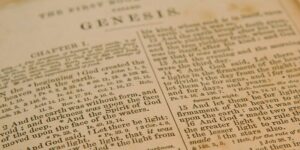 121 The Old Testament is an indispensable part of Sacred Scripture. Its books are divinely inspired and retain a permanent value (cf. DV 14), because the Old Covenant has never been revoked.
122 Indeed, “the principal purpose of the economy of the Old Testament was to prepare the coming of Christ, the universal Redeemer.” “Though they contain matters imperfect and provisional,” the books of the Old Testament bear witness to the whole divine pedagogy of God’s saving love: “They contain sublime teachings about God and saving wisdom concerning man, they enclose treasures of prayer and hide the mystery of our salvation” (DV 15).
123 Christians venerate the Old Testament as true Word of God. The Church has always vigorously rejected the idea of dispensing with the Old Testament under the pretext that the New would have rendered it obsolete (Marcionism).
The New Testament
 124 “The Word of God, which is the power of God for salvation to everyone who has faith, is set forth and displays its power in a special way in the writings of the New Testament” (DV 17). These writings offer us the definitive truth of divine Revelation. Their central object is Jesus Christ, the incarnate Son of God, his works, his teachings, his Passion and glorification, and the beginnings of his Church under the action of the Holy Spirit (cf. DV 20).
125 The Gospels are the heart of all the Scriptures “because they are the principal testimony to the life and teaching of the Word made flesh, our Savior” (DV 18).
126 In the formation of the Gospels three stages can be distinguished:
1. The life and teaching of Jesus. The Church firmly maintains that the four Gospels, “whose historicity she unhesitatingly affirms, faithfully communicate what Jesus, the Son of God, while living among men, really did and taught for their salvation, until the day when he was taken up into heaven” (DV 19).
2. The oral tradition. “After the Lord’s Ascension the apostles certainly preached to their hearers what he had said and done, with that fuller understanding which they enjoyed, instructed by the glorious events of Christ and enlightened by the Spirit of truth” (DV 19).
3. The written Gospels. The sacred authors wrote the four Gospels by selecting some things from the many that were being handed on orally or in writing, synthesizing others, or explaining them with regard to the situation of the Churches, while preserving the form of proclamation, so that they always communicated to us the sincere truth about Jesus” (DV 19).
127 The fourfold Gospel occupies a unique place in the Church; witness to this is given by the veneration with which the liturgy surrounds it and the incomparable attraction it has exercised on the saints in every age:
There is no doctrine that is better, more precious, and more splendid than the text of the Gospel. See and hold fast what our Lord and Master, Christ, taught by his words and accomplished by his deeds (St. Caesaria the Younger, Rich.).
It is above all the Gospel that occupies me during my prayers; in it I find all that is necessary for my poor soul. In it I always discover new lights, hidden and mysterious meanings (St. Thérèse of the Child Jesus, ms. autob. A 83v).
The unity of the Old and New Testaments
128 The Church, already in apostolic times (cf. 1 Cor 10:6, 11; Heb 10:1; 1 Pet 3:21), and then constantly in her Tradition, has illuminated the unity of the divine plan in the two Testaments through typology. This discerns in God’s works in the Old Covenant prefigurations of what God accomplished in the fullness of time in the person of his incarnate Son.
129 Christians, therefore, read the Old Testament in the light of Christ dead and risen. This typological reading reveals the inexhaustible content of the Old Testament. It must not make us forget that the Old Testament retains its own value as Revelation, reaffirmed by our Lord himself (cf. Mk 12:29-31). Moreover, the New Testament also requires being read in the light of the Old. Early Christian catechesis constantly made use of it (cf. 1 Cor 5:6-8; 10:1-11). According to an old saying, the New Testament lies hidden in the Old, while the Old is made manifest in the New: “Novum in Vetere latet et in Novo Vetus patet” (St. Augustine, Hept. 2,73; cf. DV 16).
130 Typology signifies a dynamism oriented toward the fulfillment of the divine plan when “God will be everything to everyone” (1 Cor 15:28). Thus the vocation of the patriarchs and the Exodus from Egypt, for example, do not lose their own value in God’s plan because they are also intermediate stages.

V. SACRED SCRIPTURE IN THE LIFE OF THE CHURCH
131 “Such is the power and force of the Word of God that it constitutes the Church’s support and vigor, firmness of faith for her children, food for the soul, a pure and perennial source of spiritual life” (DV 21). “The faithful should have easy access to Sacred Scripture” (DV 22).
132 “Scripture should be the soul of theology. The ministry of the word, which includes pastoral preaching, catechesis, all Christian instruction, and, in a privileged place, the homily, receives wholesome nourishment from the word of Scripture and through it bears fruits of holiness” (DV 24).
133 The Church “forcefully and specifically exhorts all the faithful… to frequent reading of Scripture so that they may acquire ‘the supreme knowledge of Jesus Christ’ (Phil 3:8), ‘for ignorance of Scripture is ignorance of Christ’ (St. Jerome)” (DV 25).
IN BRIEF
134 All Sacred Scripture is one book, and this book is Christ, “because all divine Scripture speaks of Christ, and all divine Scripture is fulfilled in Christ” (Hugh of St. Victor, De arca Noe 2,8: PL 176, 642; cf. Ibid., 2,9: PL 176, 642-643).
135 “The sacred Scripture contains the word of God and, because it is inspired, is truly the word of God” (DV 24).
136 God is the Author of Sacred Scripture because he inspires its human authors: he acts in them and through them. He thereby assures us that their writings teach without error the saving truth (cf. DV 11).
137 The interpretation of inspired Scripture must be above all attentive to what God wants to reveal through the sacred authors for our salvation. What comes from the Spirit is fully perceived only by the action of the Spirit (cf. Origen, hom. in Ex. 4,5).
138 The Church receives and venerates as inspired the forty-six books of the Old Testament and the twenty-seven of the New.
139 The four Gospels occupy a central place, for Christ Jesus is their center.
140 The unity of the two Testaments derives from the unity of God’s plan and his Revelation. The Old Testament prepares the New, while the New fulfills the Old; the two shed light on each other; both are true Word of God.
141 “The Church has always venerated Sacred Scripture, as she has done with the Body of Christ” (DV 21): both nourish and govern the whole Christian life. “Your word is a lamp to my feet, a light to my path” (Ps 119:105; Is 50:4).
