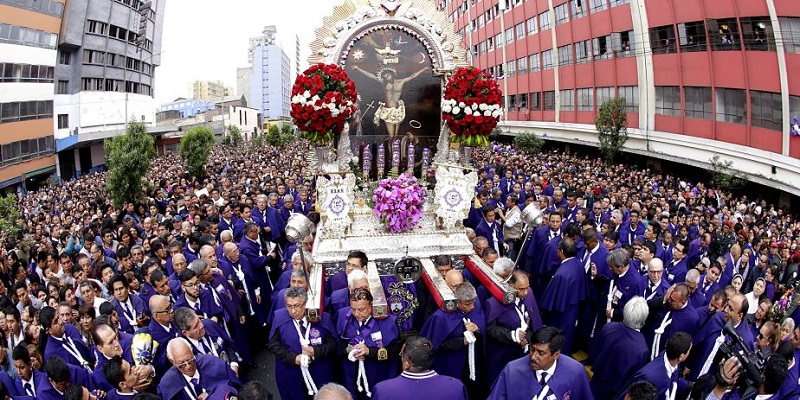
The accusation of idolatry is probably the most repeated and worn-out charge made by Protestants against the Catholic Church. “Catholics worship images” they repeat endlessly, and one must acknowledge that this argument manages to confuse many poorly formed Catholics who unfortunately are ignorant of their faith — partly through their own fault and partly through ours as members of the Church, for standing on the sidelines and failing to deepen our study of the subject so as to achieve a better understanding that would help to clarify the doubts of our brothers.
Defining Some Concepts
Idolatry, Adoration, and Veneration
According to the dictionary of the Royal Spanish Academy, the meaning of idolatry is:
Idolatry: The worship given to idols.
Where, in turn, the word idol is defined as:
Idol: An image of a deity, worshipped as if it were the divinity itself.
This definition matches the composition of the word idolatry: Idol — Latria. Where idol is that which takes the place of God, and latria means the cult of adoration.
Idolatry consists in worshipping (adoring) something or someone different from God (an idol), whether a person or a thing.
According to the dictionary of the Royal Spanish Academy, the meaning of to adore is:
Adore: 1. To revere with the highest honor or respect, regarding it as something divine.
2. To revere and honor God with the religious worship that is His due.
From the foregoing definitions we can conclude that idolatry consists in adoring (regarding as God or as a deity) something or someone other than God. We Catholics profess that neither the saints nor images are to be given adoration, since adoration belongs exclusively to God.
Venerate: To respect in the highest degree a person on account of their holiness, dignity, or great virtues, or a thing.
Whereas to adore is to regard something or someone as God, to venerate consists in greatly respecting something or someone — not because they are God, but because of their relationship with God. We can venerate someone by considering that this person, through their life and virtues, is pleasing to God, without adoring them.
But Is It Not Forbidden to Make Images?
What is forbidden is to worship idols, which is a different matter. Protestant denominations interpret the first commandment (Exodus 20:4) out of context, as an absolute prohibition against making images.
“You shall have no other gods before me. You shall not make for yourself a graven image, or any likeness of anything that is in heaven above, or that is in the earth beneath, or that is in the water under the earth; you shall not bow down to them or serve them; for I the Lord your God am a jealous God, visiting the iniquity of the fathers upon the children to the third and the fourth generation of those who hate me, but showing steadfast love to thousands of those who love me and keep my commandments.”[1]
In the passage above, everything in bold is a single prohibition. God forbids making images in order to give them the place that belongs to Him alone. God gave this commandment not because the thing itself was evil, but because of the circumstances: the Israelites lived among idolatrous pagan peoples (who believed that statues were gods or possessed divine properties, and therefore worshipped them) and were very prone to imitating them. To prevent them from falling into the error of the pagans, God forbade the representation of the divinity by means of paintings or statues. This intention can be observed in other passages:
“You shall not go after other gods, of the gods of the peoples who are round about you; for the Lord your God in the midst of you is a jealous God; lest the anger of the Lord your God be kindled against you, and he destroy you from off the face of the earth.”[2]
“And if you forget the Lord your God and go after other gods and serve them and worship them, I solemnly warn you this day that you shall surely perish.”[3]
These passages make clear that the prohibition regarding images consisted in worshipping them or regarding them as gods, not in making them.
Another passage that makes this very clear is the following:
“Therefore take good heed to yourselves. Since you saw no form on the day that the Lord spoke to you at Horeb out of the midst of the fire, beware lest you act corruptly by making a graven image for yourselves, in the form of any figure, the likeness of male or female, the likeness of any beast that is on the earth, the likeness of any winged bird that flies in the air, the likeness of anything that creeps on the ground, the likeness of any fish that is in the water under the earth. And beware lest you lift up your eyes to heaven, and when you see the sun and the moon and the stars, all the host of heaven, you be drawn away and worship them and serve them, things which the Lord your God has allotted to all the peoples under the whole heaven.”[4]
Further evidence that God does not forbid the making of all types of images can be found by going to the original language in which the Old Testament was written: Hebrew. There, in Exodus 20:4 and Deuteronomy 5:8, the Hebrew word פֶּסֶל (pésel) is used, meaning “idol” or “idolatrous image”; which is why many Bibles, such as the Jünemann translation, in an attempt to be more precise, render it:
“You shall not make for yourself an idol (pésel), nor any likeness of what is in heaven above or on the earth below or in the water under the earth.”
In the Hebrew language itself there are words to refer to other types of images that are not idolatrous but representational, such as the word tselem or the word pittuach, which refer to representational or decorative images upon which no prohibition rests. Only when an image begins to be worshipped and is regarded as something divine can it be said to cease being a representational image and to become an idol (pésel).
God Commands That Images Be Made
Another proof that God did not prohibit the making of images in itself is found in the Bible itself. Let us look at several examples:
God commanded that figures of cherubim be made upon the ark of the covenant:
“They shall make an ark of acacia wood; two cubits and a half shall be its length, a cubit and a half its breadth, and a cubit and a half its height… And you shall make two cherubim of gold; of hammered work shall you make them, on the two ends of the mercy seat. Make one cherub on the one end, and one cherub on the other end; of one piece with the mercy seat shall you make the cherubim on its two ends. The cherubim shall spread out their wings above, overshadowing the mercy seat with their wings, their faces one to another; toward the mercy seat shall the faces of the cherubim be.”[5]
The Temple of Solomon was filled with images of cherubim:
“The cedar within the house was carved in the form of gourds and open flowers; all was cedar, no stone was seen. The inner sanctuary he prepared in the innermost part of the house, to set there the ark of the covenant of the Lord… In the inner sanctuary he made two cherubim of olivewood, each ten cubits high. Five cubits was the length of one wing of the cherub, and five cubits the length of the other wing of the cherub; it was ten cubits from the tip of one wing to the tip of the other. The other cherub also measured ten cubits; both cherubim had the same measure and the same form. The height of one cherub was ten cubits, and so was that of the other cherub. He put the cherubim in the innermost part of the house; and the wings of the cherubim were spread out so that a wing of one touched the one wall, and a wing of the other cherub touched the other wall; their other wings touched each other in the middle of the house. And he overlaid the cherubim with gold. He carved all the walls of the house round about with carved figures of cherubim and palm trees and open flowers, in the inner and outer rooms… He covered the two doors of olivewood with carvings of cherubim, palm trees, and open flowers; he overlaid them with gold, and spread gold upon the cherubim and upon the palm trees. So also he made for the entrance to the nave doorposts of olivewood, in the form of a square. On them he carved cherubim and palm trees and open flowers; and he overlaid them with gold evenly applied upon the carved work.”[6]
This is without counting the animal figures that Solomon’s Temple contained:
“Then he made the molten sea; it was round, ten cubits from brim to brim, and five cubits high, and a line of thirty cubits measured its circumference. Under its brim were gourds, for thirty cubits, compassing the sea round about; the gourds were in two rows, cast with it when it was cast. It stood upon twelve oxen, three facing north, three facing west, three facing south, and three facing east; the sea was set upon them, and all their hinder parts were inward.”[7]
“And on the top of the stand there was a round band half a cubit high; and on the top of the stand its stays and its panels were of one piece with it. And on the surfaces of its stays and on its panels, he carved cherubim, lions, and palm trees… with wreaths round about.”[8]
Was Solomon forgetful? Or perhaps he did not know the commandment that forbade images? Another example can be seen when God Himself commanded Moses to make an image of a bronze serpent:
“Then the Lord sent fiery serpents among the people, and they bit the people, so that many people of Israel died. And the people came to Moses, and said, ‘We have sinned, for we have spoken against the Lord and against you; pray to the Lord, that he take away the serpents from us.’ So Moses prayed for the people. And the Lord said to Moses, ‘Make a fiery serpent, and set it on a pole; and every one who is bitten, when he sees it, shall live.’ So Moses made a bronze serpent, and set it on a pole; and if a serpent bit any man, he would look at the bronze serpent and live.”[9]
This example is very clear, since this image of the bronze serpent was only destroyed when the people began to worship it and it passed from being a representational image to an idolatrous one.
Protestants often respond that images may indeed be made only when God specifically commands their making in some particular circumstance; but if this were true and the making of images were genuinely sinful, it would mean that God can order man to do evil, which is incompatible with His nature. Hence God can under no circumstance command blasphemy or the worship of any idol.
Is Genuflection Not Idolatry, Being a Symbol of Worship?
It is frequently heard that Catholics do indeed worship images because they kneel before them; however, kneeling can have different meanings depending on the intention of the one who kneels.
One May Kneel in Order to Worship
“When Peter entered, Cornelius met him and fell down at his feet and worshiped him. But Peter lifted him up, saying: ‘Stand up; I too am a man.’”[10]
“I John am he who heard and saw these things. And when I heard and saw them, I fell down to worship at the feet of the angel who showed them to me; but he said to me: ‘You must not do that! I am a fellow servant with you and your brethren the prophets, and with those who keep the words of this book. Worship God.’”[11]
In both passages above, both men — Cornelius and John — fell to their knees with the intention of worshipping, and for that reason their gesture is reproved. The text makes clear that John fell down “to worship” at the feet of the angel, to which the angel responds: “Worship God.”
One May Kneel in Order to Venerate
Kneeling may also be done as a sign of veneration and respect, as we see in other passages where this act is not reproved. For example, when King Solomon kneels before his mother, no one understood that he was thereby adoring her.
“So Bathsheba went to King Solomon, to speak to him on behalf of Adonijah. And the king rose to meet her, and bowed down to her; then he sat on his throne, and had a seat brought for the king’s mother; and she sat on his right.”[12]
Obadiah knelt before Elijah, and Elijah did not correct him, because it was likewise an act of respect:
“And as Obadiah was on the way, behold, Elijah met him; and Obadiah recognized him, and fell on his face, and said: ‘Is it you, my lord Elijah?’”[13]
People also knelt before Elisha:
“Now when the sons of the prophets who were at Jericho saw him over against them, they said: ‘The spirit of Elijah rests on Elisha.’ And they came to meet him, and bowed to the ground before him.”[14]
Daniel knelt before the angel Gabriel:
“When I, Daniel, had seen the vision, I sought to understand it; and behold, there stood before me one having the appearance of a man. And I heard a man’s voice between the banks of the Ulai, and it called: ‘Gabriel, make this man understand the vision.’ So he came near where I stood; and when he came, I was frightened and fell upon my face. But he said to me: ‘Understand, O son of man, that the vision is for the time of the end.’ As he was speaking to me, I fell into a deep sleep with my face to the ground; but he touched me and set me on my feet.”[15]
The women knelt before the angels at the tomb:
“While they were perplexed about this, behold, two men stood by them in dazzling apparel; and as they were frightened and bowed their faces to the ground, the men said to them: ‘Why do you seek the living among the dead?’”[16]
There are many other examples throughout Scripture where prostrating oneself means only an act of veneration[17]. Despite this, Protestants tend to cite the earlier passages where genuflection implies an act of idolatry, while ignoring these; a very common error that arises when the Bible is interpreted on the basis of isolated texts while the rest is disregarded.
Conclusion
It is more than likely that the charge of idolatry will continue to be the spearhead of our Protestant brothers, and that it will keep confusing many poorly formed Catholics, drawing them away from the Catholic Church and attracting them to other religious groups. In part this is the responsibility of ourselves and our pastors, owing to our failures in transmitting the faith whole and uncontaminated. If you ask a Catholic friend whether images are worshipped and he cannot answer, you already know that there is someone who needs to be evangelized with urgency.
Notes
- Exodus 20,3-6 ↩
- Deuteronomy 6,14-15 ↩
- Deuteronomy 8,19 ↩
- Deuteronomy 4,15-19 ↩
- Exodus 25,10.18-20 ↩
- 1 Kings 6,18-19.23-29.32-33.35 ↩
- 1 Kings 7,23-25 ↩
- 1 Kings 7,35-36 ↩
- Numbers 21,6-9 ↩
- Acts 10,25-26 ↩
- Revelation 22,8-9 ↩
- 1 Kings 2,19 ↩
- 1 Kings 18,7 ↩
- 2 Kings 2,15 ↩
- Daniel 8,15-18 ↩
- Luke 24,4-5 ↩
- On this matter, one may consult: Genesis 33,3.6.7; 48,12; 49,8; Exodus 18,7; Joshua 5,14; 1 Chronicles 21,21; 29,20; 1 Kings 1,16.23.31; 2,13.19; 18,7; 2 Kings 1,13; 2,15; 4,27.37; 1 Samuel 24,9; 25,23.41; 28,14; 2 Samuel 1,2; 9,6; 14,4.33; 16,4; 18,28; 24,19; Daniel 2,46; Tobit 12,15; Ruth 2,10; Matthew 18,26.29; Acts 16,29 ↩
