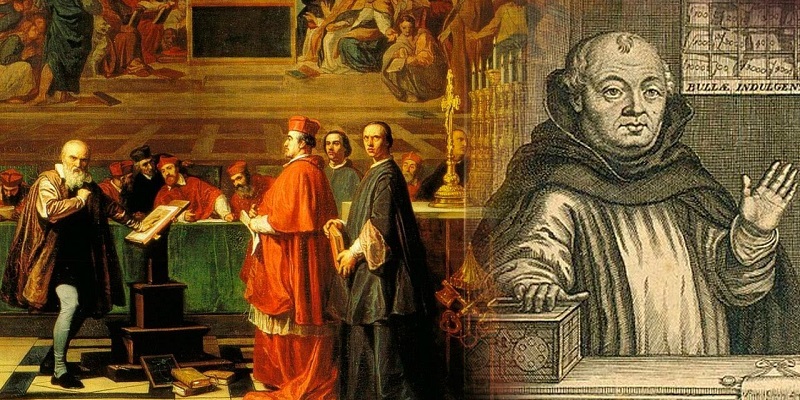
To understand the foundations and true doctrine.
Surely you have heard it said many times: “Catholics used to believe in indulgences, but now they no longer believe in them.” This statement is heard from the lips of many Catholics, even some priests. It is said with some discomfort and as if wishing to close a chapter in the history of the Church, with which many Catholics feel uncomfortable.
Those who claim that indulgences are no longer part of the Church’s teaching have the admirable desire to distance themselves from the abuses that occurred around the time of the Protestant Reformation. They also wish to remove obstacles that prevent non-Catholics from having a positive view of the Church. As admirable as these reasons may be, the claim that indulgences are not part of the current teaching of the Church is false.
This is proven by the Catechism of the Catholic Church, which states: “Indulgences are obtained by the Church which, by virtue of the power of binding and loosing conceived by Christ Jesus, intervenes on behalf of a Christian and opens to him the treasury of the merits of Christ and the saints to obtain from the Father of mercy the remission of the temporal penalties due for his sins.” The Church does this not only to help the Christian, but also to “prompt him to do works of piety, penance and charity.” (Catechism of the Catholic Church, 1478)
Indulgences are part of the infallible teaching of the Church. This means that no Catholic is free to ignore or disbelieve them. The Council of Trent established that “those who say that indulgences are useless or that the Church has no power to grant them be anathema.” The anathema of Trent places indulgences in the field of infallibly defined teaching.
This was not the first time that an ecumenical council discussed the issue of indulgences – the first time was in 1415, when the Council of Constance affirmed the practice – but at Trent the doctrine was proclaimed infallibly for the first time.
The pious use of indulgences dates back centuries, long before the Council of Constance, to the earliest days of the Church. The principles on which indulgences are based date back to the Bible itself. Catholics who are uncomfortable about indulgences don’t realize how biblical they are. The principles behind indulgences are as clear in the Scriptures as those on which other more familiar doctrines, such as the Trinity, are based.
Before examining these principles more closely, we should define indulgences. In his apostolic constitution on indulgences, Pope Paul VI said: “An indulgence is a remission before God of the temporal punishment due for sins whose guilt has already been forgiven, which the duly disposed Christian faithful obtains under certain defined conditions through the help of the Church, when she, as minister of Redemption, dispenses and applies with authority the treasure of satisfactions gained by Christ and the saints.”
This technical definition can be expressed more simply this way: “An indulgence is what we receive when the Church lessens the temporal punishment to which we might be subject even though our sins have been forgiven.” To understand this definition, we must examine the underlying biblical principles behind indulgences.
Principle 1: Sin brings guilt and punishment.
When a person sins, this brings certain consequences: the consequence of guilt and the consequence of punishment. Scripture speaks of the first when it describes guilt as clinging to our souls, and making them colorless and impure before God: “Come, therefore, and let us dispute,” says Yahweh, “may your sins be like scarlet, they shall be as white as snow; and so may they be red as crimson, and as wool they shall be” (Isaiah 1:18).
This idea of guilt clinging to our souls appears in texts that describe forgiveness as a cleansing or washing and the state of our forgiven souls as clean and white: “Wash me thoroughly from my guilt, and purify me from my sin…Sprinkle me with hyssop, and I will be clean; wash me, and I will be whiter than snow” (Psalm 51:4.9).
We not only incur guilt, but also the liability of punishment when we sin: “I will review the world for its malice and the wicked for their guilt. I will put an end to the arrogance of the insolent, and I will humble the pride of the lawless” (Isaiah 13:11). Judgment concerns even the smallest things: “For God will bring every work to judgment, including everything hidden, to see whether it is good or bad.” (Ecclesiastes 12, 14).
Principle 2: Punishments are both temporal and eternal.
The Bible teaches that some punishments are eternal, lasting forever, but others are temporary, lasting only a time. Eternal punishment is mentioned in Daniel 12:2: “Many of those who sleep in the dust of the earth will awaken, some to eternal life, others to shame, to eternal horror.”
Normally we focus on the eternal penalties of sin, because they are the most important, but Scripture teaches that temporal penalties are real and date back to the first sin committed by human beings: “To the woman he said, ‘I will make your labors as great as your pregnancies are: in pain you will bear children. Your desire will go to your husband, and he will dominate you.’
“To the man he said, ‘Because you have listened to your wife’s voice and eaten from the tree from which I had forbidden you to eat, cursed be the ground because of you: with toil you will draw food from it all the days of your life. It will produce thorns and thistles for you, and you will eat the grass of the field. In the sweat of your face you will eat bread, until you return to the ground, for from it you were taken. For you are dust and to dust you will return.'” (Genesis 3, 16-19).
Principle 3: Temporal penalties can remain when a sin is forgiven.
When someone repents, God removes their guilt (“May your sins be like scarlet, they will be white like snow. And they will be red like crimson, like wool” [Isaiah 1:18]) and all eternal punishment (“How much more then, being now justified by his blood, we will be saved from wrath through him!” [Romans 5:9]), but temporal punishments can remain. A passage that demonstrates this is 2 Samuel 12, in which the prophet Nathan confronts David with his adultery. “David said to Nathan: ‘I have sinned against Yahweh.’ Nathan answered David: ‘Yahweh also forgives your sin; you will not die. But because you have insulted Yahweh with this deed, the son born to you will die without remedy.'” (2 Samuel 12, 13-14). God forgave David, even to the point of saving his life, but David still had to suffer the loss of his son in addition to other temporal punishments.
In Numbers we read: “Moses answered Yahweh: ‘… If you cause this people to perish as one man, the people who have heard about you will say: Yahweh, since he could not bring this people into the land that he had promised them with an oath, he has killed them in the desert…’ to their fathers.'” (Numbers 14, 13-23) God states that, although he forgave the people, he would impose a temporal penalty on them by preventing them from entering the promised land.
Later, Moses, who is evidently one of the saved (see Matthew 17:1-5), is told that he will suffer a temporal punishment: “Yahweh said to Moses and Aaron, ‘Because you have not trusted in me, honoring me before the Israelites, I say to you, you will not lead this assembly into the land that I have given them.'” (Numbers 20:12; cf. 27:12-14).
Protestants often deny that temporal punishments remain after the forgiveness of sins, but in practice they acknowledge it—for example, when they insist that people return stolen things. Thieves can be forgiven, but they must make restitution.
Protestants realize that while Jesus paid the price before God for our sins, he did not relieve us of our obligation to make amends for what we have done. They fully admit that if you stole someone’s car, you should return it; It is not enough to simply repent. God’s (and man’s!) forgiveness does not include allowing you to keep the stolen car.
Protestants also admit the principle in practice, when dealing with the subject of death. Scripture says that sin entered the world because of original sin (Genesis 3:22-24; Romans 5:12). When we come to God for the first time we are forgiven, and when we sin later we can be forgiven, however this does not free us from the penalty of physical death. Even the forgiven die; a penalty remains after our sins are forgiven. This is a temporary penalty, since physical death is temporary and we will be resurrected (Daniel 12:2).
A Protestant might say that God gives temporal punishments to teach the sinner a lesson, making the punishments a discipline rather than a punishment. There are three answers to this: 1) nothing in the above texts says that they are disciplines, 2) a Catholic could also call them disciplines, and 3) there is nothing wrong with calling them “punishments”, since “disciplining” a child, in ordinary speech, is synonymous with punishing a child.
Like Greg Krehbiel, a Protestant who has written for This Rock, indicates in a privately circulated article, the idea that all temporal penalties vanish when one is forgiven “is the central error of the ‘gospel of health and wealth,’ that is, ‘Jesus took away my poverty and illness, so I should be healthy and rich.'”
The Catholic has good grounds for maintaining that temporal punishments can remain after a sin is forgiven. The Church has shown this from its earliest centuries, and through acts of penance prescribed as part of the sacrament of reconciliation.
Principle 4: God blesses certain people as a reward to others.
Suppose a father prays for his seriously ill son and says, “Dear Lord, if I have pleased you, please heal my son!” The father is asking that his son be healed as a reward for the fact that he (the father) has pleased God. Intuitively we recognize that this is a valid prayer that sometimes God answers positively. But we do not need to remain in our intuitions: Scripture confirms this fact.
After Abraham fought a battle for the Lord, God spoke to him in a vision and said: “‘Do not be afraid, Abram [Abraham]. I am a shield for you. Your reward will be very great.’ Abram said: ‘My Lord, Yahweh, what will you give me, if I go away childless…?’ that one will inherit you, but one who will come out of your womb will inherit you.’ And he brought him outside and said to him, ‘Look at the sky, and count the stars, if you can number them.’ And he said to him, ‘So will your descendants be.’ (Genesis 15, 1-6). God promised Abraham a reward – a multitude of descendants who would not otherwise have been born. These people received a great gift – the gift of life – because God rewarded the patriarch.
Later, God told Abraham that nations and kings would come from him, that God would make a covenant with his descendants, and that they would inherit the promised land (Genesis 17, 6-8). All of these blessings came upon Abraham’s descendants as God’s reward to him.
This principle is also in the New Testament. Paul tells us that “in regard to election [the Jews are] loved for the sake of their parents” (Romans 11:28); The principle is also found in passages in which a person approaches Jesus asking for the healing or exorcism of another, as in the story of the Canaanite woman (Matthew 15:22-28).
Principle 5: God remits the temporal penalties of some as a reward to others.
When God blesses one person as a reward to another, sometimes the specific blessing he gives is a reduction of the temporal penalties to which the first person is subject. For example, Solomon’s heart was turned away from the Lord toward the end of his life, and God promised to wrest the kingdom from him as a result. “Yahweh said to Solomon: ‘Because you have done this on your part and have not kept my covenant and the laws that I commanded you, I am going to tear away the kingdom from you and give it to one of your servants. However, I will not do it in your lifetime for David your father’s sake; I will tear it out of the hand of your son. Nor will I tear away the entire kingdom; I will give a tribe to your son, for the sake of David my servant, and for the sake of Jerusalem which I have chosen.'” (1 Kings 11:13-13). God lessened the temporal penalty in two ways: by deferring the withdrawal of the kingdom until the days of Solomon’s son and by leaving a tribe (Benjamin) under Judah.
God was clear about why He was doing this: not because of Solomon, but “because of David your father.” If David had not pleased God, and if God had not promised him certain things regarding his kingdom, God would have taken the entire kingdom from Solomon, and would have done so during Solomon’s lifetime. This is an example of God lessening a punishment in favor of one of his saints.
It is easy to think of other examples. God promised Abraham that if he could find a certain number of righteous people in Sodom, he was willing to postpone the temporary (and eternal) destruction of the city for those righteous people. (Genesis 18, 16-33).
Paul wrote: “As for the Gospel, [the Jews] are enemies for your good; but as for election, loved for the sake of their parents. For the gifts and calling of God are irrevocable” (Romans 11:28-29). Paul indicated that his Jewish contemporaries were treated more favorably than they otherwise would have been treated (God’s gifts and calling were not taken from them) because their ancestors were loved by God, who gave them irrevocable gifts (which are listed in Romans 9:4-5).
Principle 6: God remits temporal punishments through the Church.
God uses the Church when he remits temporal punishments. This is the essence of the doctrine of indulgences. Previously we had defined indulgences as “what we receive when the Church reduces the temporal punishment to which we could be subject even though our sins have been forgiven.” The members of the Church became aware of this principle through the sacrament of penance. From the beginning, acts of penance were assigned as part of the sacrament, because the Church recognized that Christians have to face temporal penalties, such as God’s discipline and the need to compensate those whom our sins have harmed.
In the early Church, penances were sometimes severe. For serious sins, such as apostasy, murder, and abortion, penances could extend for years, but the Church recognized that repentant sinners could shorten their penances by pleasing God through pious or charitable acts that expressed repentance and the desire to make up for their sin.
The Church also recognized that the duration of temporal punishments could be shortened through the intervention of other people who had pleased God (principle 5). Sometimes a confessor or someone about to be martyred would intervene and ask, as a reward for the confessor or the martyr, that the penitent see his time of discipline reduced. This is how the Church recognized its function of administering temporal punishments (principle 6); This function was simply part of the ministry of forgiveness that God had given to the Church in general.
Scripture says that God gave the authority to commit sins “to men” (Matthew 9:8) and to Christ’s ministers in particular. Jesus told them: “As the Father sent me, so I send you. … Receive the Holy Spirit. Whose sins you forgive, they are forgiven; whose sins you retain, they are retained” (John 20:21-23).
If Christ gave his ministers the ability to forgive the eternal penalties of sin, how much more would they have the ability to remit the temporal penalties of sin! Christ also promised His Church the power to bind and loose on earth, saying, “I tell you the truth, whatever you bind on earth will be bound in heaven, and whatever you loose on earth will be loosed in heaven” (Matthew 18:18). As is clear from the context, binding and loosing cover Church discipline, and Church discipline involves the administration and removal of temporal penalties (such as separating from and readmitting to the sacraments). Therefore, the power to bind and loose includes the administration of temporal punishments.
Principle 7: God blesses the faithful departed as a blessing to living Christians.
From the beginning the Church recognized the validity of praying for the dead so that their transition to heaven (through purgatory) would be quick and smooth. This meant praying for the diminution or remission of the temporal penalties that kept them from the full glory of heaven.
If it is reasonable to ask that such penalties be remitted in general, then it would be reasonable to ask that they be remitted in a particular case as a reward. A widower could pray to God and ask that, if he has pleased God, his wife’s transition to glory would be hastened. For this reason the Church teaches that “indulgences can always be applied to the deceased through prayer.”
A close parallel to this application is found in 2 Maccabees. Judas Maccabeus finds the bodies of soldiers who died wearing superstitious amulets during one of the Lord’s battles. Judas and his men “begged that the sin they had committed might be completely erased” (2 Maccabees 12, 42). The reference to sin being “completely blotted out” refers to its temporal penalties. The author of 2 Maccabees tells us that for these men Judas “considered that a magnificent reward is reserved for those who sleep piously” (v.45); He believed that those men slept godly, which would not have been the case if they were in mortal sin. If they were not in mortal sin, then they would not have had eternal penalties to suffer, and therefore the complete erasure of their sin must refer to the temporal penalties for their superstitious actions. Judas, “after having gathered from his men about two thousand drachmas, sent them to Jerusalem to offer a sacrifice for sin, working… on behalf of the dead, so that they would be freed from sin” (v. 43.45).
Judas not only prayed for the dead, but provided for them the then appropriate ecclesial action to lessen their temporal punishments: a sacrifice for sin. Accordingly, we can take the now appropriate ecclesial action to reduce temporal penalties – indulgences – and apply them to the deceased through prayer.
There is a difference between the way we obtain indulgences for ourselves in this life and the way they are applied to the deceased. Official documents of the Church, such as the apostolic constitution on indulgences of Pope Paul VI, the Code of Canon Law, and the Catechism of the Catholic Church, they all note that indulgences are applied to the deceased through prayer.
This is so, because Christians in the afterlife are no longer under the jurisdiction of the earthly Church. They can no longer receive sacraments, including penance, and the Church has no authority to release them from their temporal punishments. All you can do is turn to God and pray that he will lessen those sorrows. This is a valid form of prayer, as 2 Maccabees indicates. We can trust that God will apply indulgences to the deceased in some way, but the exact manner and degree of application are unknown.
These seven principles, which as we have seen are thoroughly biblical, are the foundations of indulgences, but there are still questions to ask:
Who are the parties involved?
There are four parts: the first pleased God and moved him to give a reward, providing the basis for indulgence; the second asks for indulgence and obtains it by carrying out the act prescribed for her; the third grants indulgence (this is God working through the Church); and the fourth receives the benefit of indulgence as her temporal penalties are reduced.
How much can be remitted from a person’s temporary sentence?
Potentially, all of it. The Church recognizes that Christ and the saints are interested in helping penitents face the consequences of their sins, as indicated by the fact that they always pray for us (Hebrews 7:25; Revelation 5:8). Carrying out its function in the administration of temporal punishments, the Church relies on the rich flow of rewards that God wanted to grant to the saints, who pleased Him, and to His Son, who pleased Him more than anyone else.
The rewards that the Church relies on are infinite because Christ is God, so the rewards He obtained are infinite and can never be exhausted. His rewards alone, not counting those of the saints, could remit all the temporal penalties of all people, in all places. The rewards of the saints were added to those of Christ – not because His were lacking in anything, but because it is fitting that they should be united with His rewards just as the saints are united with Him. Although immense, the saints’ rewards are finite, but his are infinite.
If the Church has the resources and power to erase all temporal penalties from all people, why doesn’t it do so?
Because God does not want it to be done. God Himself instituted the fact that temporal punishments should remain. They carry out valid functions, one of them disciplinary. If a child was never disciplined, he would never learn obedience. God disciplines us like children – “for whomever the Lord loves, he disciplines, and he disciplines all the children he takes in” (Hebrews 12:6) – so that some temporal punishments must remain.
The Church cannot erase, with a stroke of the pen, so to speak, all temporal punishments because its remission depends on the dispositions of the people who suffer these temporal punishments. Just as repentance and faith are required for the remission of eternal punishments, they are also necessary for the remission of temporal punishments. Pope Paul VI stated: “Indulgences cannot be earned without a sincere conversion and search for unity with God.” We could say that the degree of remission depends on how well the penitent has learned his lesson.
How is it determined what part of the sentences has been reduced?
Before Vatican II it was said that each indulgence remitted a certain number of “days” of a person’s discipline – for example, an act could earn “300 days of indulgence” – but the use of the term “days” confused people, giving them the mistaken impression that time still exists in purgatory and that we can calculate our “time off” in a mechanical way. The number of days associated with indulgences never really meant that such an amount of “time” was deducted from someone’s allotted stay in purgatory. Instead, it meant that an indefinite but partial (not full) amount of remission would be granted, proportionate to what the ancient Christians had received by performing pious works during that number of days. Thus, someone who gained a 300-day indulgence obtained approximately what an early Christian would have obtained, for example, by reciting a particular prayer upon rising for 300 days.
To resolve this confusion, Paul VI issued a revision of the manual (Enchiridion is the formal name) of indulgences. Today, numbers of days are no longer associated with indulgences, which can be plenary or partial.
Only God knows exactly how effective a partial indulgence is or whether a plenary indulgence has in fact been received. The new recognition system leaves the exact amounts to God and attributes only general principles to the Church.
Don’t indulgences duplicate or even deny the work of Christ?
Despite the biblical foundations for indulgences, some are sharp critics of them, insisting that the doctrine supplants the work of Christ and makes us our own saviors. This objection results from a confusion about the nature of indulgences and about how the work of Christ is applied to us.
Indulgences apply only to temporal punishments, not eternal ones. The Bible indicates that these penalties can remain after a sin has been forgiven and that God lessens these penalties as a reward for those who have pleased Him. Since the Bible teaches this, it cannot be said that the work of Christ is supplanted by indulgences.
The merits of Christ, being infinite, constitute the greatest part of the treasury of merits. Applying them to believers, the Church acts as a servant of Christ in applying what he has done for us, and we know from Scripture that Christ’s work applies to us over time and not all at once. (Philippians 2, 12; 1 Peter 1, 9).
But what about the merits of the saints? Does not the doctrine of indulgences make the saints co-saviors with Christ?
By no means. In the best of cases they would only be saving us from temporary calamities, something that every human being can do (and should do!) for another without thereby blaspheming against Christ. Furthermore, saints have the ability to please God because the love of God has been placed in their hearts (Romans 5:5). It is the grace of God that makes it possible for you to please them. His grace produces all his good works, and his grace is given to them because of what Christ did. The good actions of the saints are therefore produced by Christ working through them, which means that Christ is ultimately the cause of even this temporary “salvation.”
Should we be considering all of this? Isn’t it better to put all the emphasis on Christ alone?
No. If we ignore the made of indulgences, we are belittling what Christ does through us, and we stop recognizing the value of what he has done in us. Paul used this type of language: “Now I rejoice because of the sufferings I endure for you, and I complete in my flesh what is lacking in the tribulations of Christ, for his body, which is the Church” (Colossians 1:24).
Although Christ’s sufferings were superabundant (far more than was necessary to pay for anything), Paul was talking about completing what is “lacking” in the sufferings of Christ. (As Augustine put it, “the God who created you without your cooperation will not save you without your cooperation.”) If this mode of speech was permissible to Paul, then it is permissible to us, although Catholic language about indulgences is much less shocking than Paul’s language about his own role in salvation.
Catholics should not be defensive about indulgences. They are based on principles taken directly from the Bible, and we can trust not only that indulgences exist, but that they are useful and worth obtaining.
Pope Paul VI declared: “The Church invites all her children to meditate and weigh in their minds as well as they can, how the use of indulgences benefits their lives and the entire Christian society. … Founded on these truths, holy Mother Church once again recommends to the faithful the practice of indulgences. She has been very dear to the Christian people for many centuries, just as it is in our day. Experience proves this.”
CATECHISM OF THE CATHOLIC CHURCH ABOUT INDULGENCIES
1471. The doctrine and practice of indulgences in the Church are closely linked to the effects of the sacrament of Penance.
Indulgence is the remission before God of the temporal punishment for sins, already forgiven, in terms of guilt, which a willing believer and fulfilling certain conditions obtains through the mediation of the Church, which, as administrator of redemption, distributes and applies with authority the treasure of the satisfactions of Christ and the saints.
The indulgence is partial or plenary depending on whether it frees the temporal penalty due for sins in part or completely.
Every faithful can profit for himself or apply for the deceased as a suffrage, both partial and plenary indulgences (Code of Canon Law, can.992-994).
1472. To understand this doctrine and this practice of the Church it is necessary to remember that sin has a double consequence. Grave sin deprives us of communion with God and thereby renders us incapable of eternal life, the deprivation of which is called the “eternal penalty” of sin. On the other hand, all sin, even venial, entails inordinate attachment to creatures who need purification, whether here below or after death, in the state called Purgatory. This purification frees from what is called the “temporal penalty” of sin. These two punishments should not be conceived as a kind of revenge, inflicted by God from without, but as something that springs from the very nature of sin. A conversion that comes from fervent charity can lead to total purification from sin, so that no punishment would remain. (cf. Council of Trent: Denzinger-Schönmetzer 1712-1713; 1820).
1473. The forgiveness of sin and the restoration of communion with God entail the remission of the eternal penalties of sin. But the temporal penalties of sin remain. The Christian must strive, patiently enduring suffering and trials of all kinds and, when the day comes, calmly facing death, to accept these temporal penalties of sin as a grace; He must apply himself, both through works of mercy and charity, as well as through prayer and various practices of penance, to completely put off the “old man” and to put on the “new man” (cf. Ephesians 4, 24).
1474. The Christian who wants to purify himself from his sin and sanctify himself with the help of God’s grace is not alone. “The life of each of God’s children is linked in an admirable way, in Christ and through Christ, with the life of all other Christian brothers, in the supernatural unity of the mystical Body of Christ, as in one mystical person.” (Paul VI, ap. const. “Indulgentarium doctrina”, 5).
1478. Indulgences are obtained by the Church which, by virtue of the power to bind and loose that was granted to her by Christ Jesus, intervenes on behalf of a Christian and opens to him the treasury of the merits of Christ and the saints to obtain from the Father of mercy the remission of the temporal penalties due for his sins. That is why the Church not only wants to come to the aid of this Christian, but also encourage him to do works of piety, penance and charity (cf. Paul VI, ibid. 8; Council of Trent: Denzinger-Schönmetzer 1835).
CAN WE EXPIATE OUR SINS – AND WHAT DOES “ATONE” MEAN?
Some criticize indulgences, saying they involve us making “atonement” for our sins, something only Christ can do. While this sounds like a noble defense of the sufficiency of Christ, this criticism is unfounded, and most who make it do not know what the word “atonement” means or how indulgences work.
Protestant Scripture scholar Leon Morris comments on the confusion over the word “atonement”: “Most of us…don’t really understand what ‘atonement’ is…Atonement is…the making right of something wrong…Atonement is an impersonal word; it atones for a sin or crime” (The Atonement [Downers Grove: InterVarsity, 1983], 151). The Wycliff Bible Encyclopedia gives a similar definition: “The basic idea of atonement has to do with the reparation of wrong, the satisfaction of the demands of justice through the payment of a penalty.”
The terms used in these definitions – atonement, satisfaction, amendment, reparation – mean basically the same thing. To make atonement or satisfaction for a sin is to make amends or reparation for it. When someone makes reparations, they try to amend the situation caused by their sin.
Certainly when it comes to the eternal effects of our sins, only Christ can make amends or reparation. Only he was able to pay the infinite price to cover our sins. We are completely incapable of doing so not only because we are finite creatures incapable of making infinite satisfaction (or anything infinite), but because everything we have was given to us by God. For us, trying to satisfy God’s eternal justice would be like using money we have borrowed from someone to repay what we had stolen from that same person. There would have been no real restitution (cf. Psalm 49:7-9; Job 41:11; Romans 11:35). This does not mean that we cannot make amends or reparation for the temporary effects of our sins. If someone steals something, they can return it. If someone damages another person’s reputation, they can publicly correct the slander. When someone destroys another’s property, they can compensate the owner for their loss. These are all ways in which at least partial amends (atonement) can be made for what has been done.
There are ways in which we are expected to make compensations, as even the harshest critics of indulgences admit. If I have harmed another person, then, in addition to putting myself in proper relationship with God, I must repair, or at least try to repair, the harm caused to that person. For full reparation it is necessary not only to restore what had been taken or damaged, but also to compensate the owner for the time during which he was deprived of his property, or it was damaged. In financial cases this is carried out by paying interest.
We are given excellent biblical illustrations of this principle in Leviticus 6:1-7 and Numbers 5:5-8, which tell us that in the Old Testament a penitent had to pay an additional twenty percent of the value of what he had taken or damaged. (This applied to a penitent who voluntarily made restitution; a captured thief had to pay double the value of what was stolen [Exodus 22:1-9]).
HOW TO GET AN INDULGENCE
To obtain any indulgence you must be a Catholic in a state of grace. You have to be a Catholic to be under the jurisdiction of the Church, and you have to be in a state of grace because outside of God’s grace none of your actions are fundamentally pleasing to God (meritorious). He must also have at least the habitual intention of obtaining an indulgence through the act he performs.
To earn a partial indulgence, you must carry out with a contrite heart the act with which the indulgence is associated.
To earn a plenary indulgence you must perform the act with a contrite heart, and you must also confess (one confession may be sufficient for several plenary indulgences), receive Holy Communion, and pray for the Pope’s intentions. (An Our Father and a Hail Mary prayed for the Pope’s intentions are sufficient, although you are free to substitute other prayers of your own choosing.) The final condition is that he must be free from all attachment to sin, even venial sin.
Because of the extreme difficulty in fulfilling the last condition, a plenary indulgence is rarely obtained. If you try to receive a plenary indulgence, but are unable to meet the last condition, you receive a partial indulgence instead.
Below are indulgences listed in the Manual of Indulgences (New York: Catholic Book Publishing, 1991). Note that there is an indulgence for reading the Bible. So, instead of discouraging Bible reading, the Catholic Church promotes it by granting indulgences! (This dates back to long before Vatican II).
-
An act of spiritual communion, expressed through any devotional formula, is rewarded with a partial indulgence.
-
A partial indulgence is granted to faithful Christians who devoutly spend time in mental prayer.
-
A partial indulgence is granted to the Christian faithful who read the Holy Scripture with due veneration for the Word of God and as a form of spiritual reading. The indulgence will be plenary when said reading is carried out for at least half an hour [as long as the other conditions are met].
-
A partial indulgence is granted to the Christian faithful who devoutly make the sign of the cross while saying at the same time the customary formula: “In the name of the Father, and of the Son, and of the Holy Spirit. Amen.”
-
Priests who administer the sacraments to the Christian faithful who are in danger of death must not neglect to impart to them the apostolic blessing, with its associated indulgence.
-
But if a priest cannot be present, Holy Mother Church lovingly grants people who are duly willing a plenary indulgence to be obtained in articulo mortis, as death approaches, provided they have habitually prayed in some way during their lives. The use of a crucifix or cross is recommended to obtain this plenary indulgence. In such conditions the three usual conditions required to gain a plenary indulgence are replaced by the condition “provided they have prayed habitually in some way.” The Christian faithful can obtain the plenary indulgence mentioned here, as death approaches (in articulo mortis) even if they have already obtained another plenary indulgence on the same day.
(Published in English in “This Rock”, March 1994, (c) Catholic Answers Inc., P.O.Box 17490, San Diego, CA92177, United States. Translated with the permission of the publisher. Any reproduction of this article must acknowledge the original source and be free of charge or cover the cost of printing only.)
Author: Jimmy Akin
Translator: Daniel Cotarelo García
