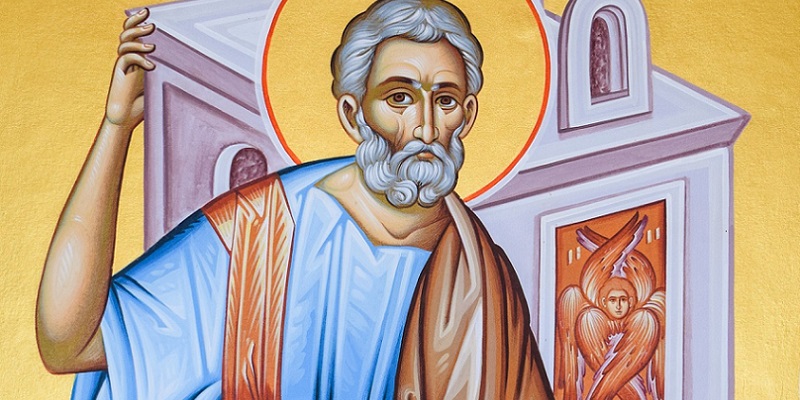
The tomb of Saint Peter is found in Rome
On September 2, the great archaeologist who discovered the tomb and the bones of Saint Peter in Rome passed away, thus confirming the data of tradition. A year ago Federico Zeri died, an art historian counted among the most authoritative in the world. We remember them by publishing their previously unpublished interventions at a conference in the Cultural Center of Milan in 1990.
“Margherita Guarducci is a spearhead.” That is how Federico Zeri once defined her, contrasting her with scholars, philologists and archaeologists who belong to another type of person: those who submit their own creed to academic intrigues, ideological conveniences, and the trade in posts and patronage. “She is not a believer in the strict sense, but she loves the value of truth.” Thus Margherita Guarducci responded, from a distance, to Zeri’s considerations, without either of them knowing that they professed mutual esteem. There was a certain harmony between the two, but perhaps out of discretion they showed it without ostentation. They worked in different fields of culture; Guarducci, an eminent epigraphist, had trained Zeri in reading the tombstones in his collection. Zeri, as an art historian, had vigorously defended Miss Guarducci regarding the seventh-century bronze statue of Saint Peter in the Vatican, which others had attributed to the thirteenth-century sculptor Arnolfo di Cambio.
Thus, from distant yet very solid pulpits, the two had established an alliance, stainless in character, which assured them prudence and proved victorious. It was a kind of solidary conjunction in denouncing the pettiness of the small world of philologists suffocated by the narrowness of their specializations, strangers to any ideal aspiration. If this task, in Guarducci, drew its vigor from the commitment to defend, also through culture, the tradition of the Church, in the layman Zeri it was translated into the densest and most varied possible investigation of the cultural stimuli that might contribute to understanding the meaning of life.
(Marco Bona Castellotti)
MARGHERITA GUARDUCCI

What has the tradition of the Church said for centuries? It says that Peter, the fisherman of Galilee, whom Christ himself considered protos, the first of his disciples, the prince of the apostles at that moment, came to Rome to preach the good news; in Rome he died a martyr under Nero in the year 64, in the Vatican Circus; he was buried a short distance from the place of martyrdom, and over his tomb, at the beginning of the fourth century, the emperor Constantine had the great Vatican basilica built.
This centuries-old tradition of the Church began, from a certain moment, to provoke dissent on the part of the Church’s adversaries, and the dissenters went so far that some believed themselves obliged to say, against all historical truth, that Peter had never gone to Rome, so that they could deny the presence of Peter’s tomb in the Vatican. This is of supreme importance, since to say the tomb of Saint Peter in Rome, in the Vatican, means, in a certain sense, to say the primacy of the Church of Rome.
We must come to Pius XII, a man of the highest intelligence, great culture, enormous humanity and endowed with a truly far-sighted spirit. As soon as he was elected Pope, in 1939, he wanted to open the underground areas of the Vatican basilica to science and seek an answer to the centuries-old question.
The excavations began and lasted until 1949. They were strange excavations, in which many finds were destroyed and things almost unheard of were committed.
Altars like “matryoshka dolls”*
They found a necropolis, an ancient and vast cemetery, which stretched from east to west, parallel to Nero’s Circus, the very circus in which Peter had suffered martyrdom. This great necropolis was filled with earth, because Constantine, or someone in his name (Pope Sylvester was his great adviser), wanted to build the foundation on which the first basilica in honor of Peter was to be established.
What did they find beneath the papal altar? A succession of monuments and altars: some under others, some inside others. This meant that that place, the place of the confession, had already for a long time, for centuries, been the object of devotion to Peter. Beneath the papal altar, which is the present altar of Clement VIII (1594), an earlier one was found, that of Callistus II (1123); within the altar of Callistus II, the altar of Gregory the Great (590-604) was found; the altar of Gregory the Great, in turn, rested on the monument that Constantine, even before building the basilica, had ordered to be erected over the place of Peter’s tomb, and this Constantinian monument can be dated between 321 and 326. Constantine’s monument included an older one dating back to the second century, the first monument to Peter. Then what was included? Part of a small building was included, which was attached to a red-plastered wall that formed the background of the first monument of Peter. In this small building there was a wall covered with symbols and ancient inscriptions (naturally earlier than Constantine’s monument, since they were enclosed within it), covered with epigraphs which, by their abundance, indicated the immense devotion of the faithful. Then, behind this, one sees that the first monument of Saint Peter had in the pavement a cover, which indicated the presence of an ancient tomb in the earth, over which all these monuments had been superimposed. Under this cover, unfortunately, there was nothing. The earth was found devastated and empty.
A revolutionary radio message
 This was the state of things when the excavations of 1940-49 concluded. Pius XII, in his radio message of Christmas 1950, informed the world of what had happened in the excavations and said that Peter’s tomb had been found.
I began to concern myself with the excavations of Saint Peter after they had ended and the report was published in 1952.
One of the excavators had published, though not correctly, one of the epigraphs that had been found in the place where the wall covered with inscriptions I mentioned earlier was located.
I had already had occasion to see one of the epigraphs, in which I had intuited the reading “Petros eni” (“eni” in the sense of “enesti”: Peter is inside).
It was then that I asked Pius XII to visit the excavations, since no one could have access to them. Pius XII granted me permission. Then I began to look for the inscription, this “Petros eni,” and it was not there because one of the excavators had taken it home.
Well into 1952, I worked until 1965; those were years of very intense work.
I began to study the wall of inscriptions, which was inside the Constantinian monument. Now, this wall was a wild jungle, and I despaired of the undertaking, but patiently I began to try to decipher it.
This task lasted for months. It was one of the most difficult I had ever done. Then, at a certain moment, I grasped the thread of the skein and came to understand. A mystical cryptography had been used, that is, in a certain sense, there was play with the letters of the alphabet. The name of Peter abounded there, expressed with the letters P, PE, PET, normally linked to the name of Christ, with the symbol of Christ, with Christ’s monogram and with the name of Mary; and above all, on that wall, acclamations to the victory of Christ, Peter and Mary dominated. The Trinity was also recalled, Christ, the second person of the Trinity, and so on. In short, the whole theology of the moment was there, displayed on that wall.
With blows of a rammer
Then I began to take an interest in Peter’s bones. At first it did not even cross my mind that one day I would come to find Peter’s bones.
Nevertheless, while I was still deciphering the inscriptions (still in 1953), I was drawing ever closer to Peter’s bones. Peter’s bones were in the tomb, in the earth, under the cover, as the tradition of the Church had always maintained. Later, when Constantine wanted to make the monument in honor of the Apostle, the bones were taken out of the earth, wrapped in a precious mantle of purple and gold, and deposited in this niche; then the niche was closed forever. It happened that during the excavations, the excavators, wanting to investigate this place which tradition indicated as the place of Peter’s burial, did not mince matters. With blows of a rammer (an instrument for driving stakes into hard ground) they knocked down the altar of Callistus II in order to reach the tomb as quickly as possible. And what happened? Under the heavy blows of the rammer a quantity of rubble fell from inside the wall, from the inside and the outside, I mean, from the old red-plastered wall, and everything spilled into this cavity, over the unfortunate bones that Constantine had deposited in the niche of the monument. Thus a heap of debris appeared and the bones were not recognized.
At that moment, the head of the Fabric of Saint Peter was an intelligent man, very pious, very sensitive about not leaving exposed the bones of whoever they might be, whether Christians or pagans. Monsignor Cas (a trusted man of Pius XII) noticed that among the rubble of the niche there were some bones. He had the rubble set aside, had the bones kept inside a box, and put it in a cupboard in the Vatican grottoes, where they remained ignored for ten years.
There were some bones with threads of gold and tiny pieces of purple-colored fabric.
An anthropologist whom I trusted, Professor Correnti, examined the group of bones in the box and said to me: “Look, there is something strange, because all the other groups they had me examine were from different individuals; these are from one only.” I asked him: “Of what sex?” He said: “Male.” “Age?” “Advanced.” “Build?” “Robust.”
Not by “chance”
In 1964, the investigations had ended. In 1965 my book The Relics of Saint Peter beneath the Confession of the Vatican Basilica appeared, and then the storm began to break out, because some, indeed many, were pleased with the result; others were not. After my revision of the book, which came out in 1967, Paul VI found himself obliged to announce that the bones of Peter had been found again.
We know that Christ founded his Church upon the rock of Peter and promised him victory over the forces of evil. Now, I believe it is not mere chance that the bones of the prince of the apostles have, by a miraculous exception, been preserved and are precisely inside the Vatican basilica, that is, at the center of that Church which, by definition, is universal. You know that catholicós means universal in Greek.
FEDERICO ZERI
It honors and gladdens me to speak together with, and after, Professor Margherita Guarducci, whose learning and moral integrity I have always admired so much. I say this aloud. On the other hand, I must warn at once that I speak as an outsider, since I am not a believer.
I was about twenty when I heard about the beginnings of those excavations. It was not possible for me to gain access to them. And then, as the publications came out, I followed with the greatest attention, read and meditated on what was being written, and I can say that as soon as Professor Guarducci intervened in the discussions, I became deeply convinced by her ideas. […]
When the news came out about the niche, the small hole, and finally the matter of the bones, I was completely convinced; and I must say this: what most persuaded me that the bones found in that niche are those which tradition attributed to Saint Peter, or better, that in Constantine’s time they were considered the bones of Saint Peter, is the fact that they were wrapped in that fabric of which we have just seen some slides, that is, a purple fabric (dyed with the shell that came from the coast of Syria, the Lebanese coast) and interwoven with threads of gold. A fabric of this kind was reserved exclusively for the highest sacred authority of the empire, that is, for the emperor, the Augustus; only the Augustus had this attribute of purple and gold. There is absolutely no other possibility: the emperor himself must have had them wrapped in that most precious fabric, which was the symbol of his authority and even of his will. Purple and gold, especially in the Constantinian period, are precisely the emblem of the one who is the supreme authority of that universal state which was the Roman Empire.
Afterwards, however, I had always followed another line of reasoning, which coincides with Professor Guarducci’s discoveries and takes into account Constantine’s particular position with respect to the city of Rome.
The city of Rome was pagan, overwhelmingly pagan, and the Christians, who in the third century had had the opportunity to multiply behind the walls of the great cities and even to have some happy moments, had been rejected.
The Christians had become entirely the scapegoat of that great reconstruction of the empire which Aurelian began, which Diocletian and Maximian later carried forward, and which Constantine brought to completion. […]
In the second half of the 320s, that is, around 322-323, Constantine began the construction of the great sacred buildings dedicated to the Christian religion. […]
It has always seemed extraordinary to me that in order to make this great basilica, which was of enormous proportions (it had five naves and a grandeur comparable only to that of the Holy Sepulchre in Jerusalem. The greatest churches built by Constantine are that of the Holy Sepulchre—the Martyrion, with the added Anastasis, that is, the place of the resurrection—and the great basilica built in Rome, in the capital of the empire, erected over the tomb of Saint Peter); it is extraordinary that in order to make this immense, very costly, very important building, for which marble was imported from every part of the empire, for which some immense cedars of Lebanon were sacrificed, one of which still existed at the time of the demolition of the basilica at the beginning of the 1500s under Julius II, and in fact a beam was found, the sources say, full of mice and other animals, but bearing the seal of “Dominus Noster Costantinus Auguster”… to make this basilica Constantine had totally sacrificed a very important building of pagan Rome, the Circus of Caligula in the Vatican.
Now, it has always seemed to me that to dare an act so important and so badly viewed as laying hands on a circus where there was an obelisk (which later remained standing until Sixtus V, at the end of the 1500s, wanted to move it to Saint Peter’s Basilica); that he laid hands on this circus, that he buried a great necropolis, where there were tombs of important families of pagan Rome; it seems impossible to me that he would have made this decision if there had not effectively been something extraordinary underneath, in the place where he was building this basilica. It is not possible to believe that, faced with the malicious criticisms of the pagans—who always criticized the Christian religion in the first centuries, or hindered it in every possible way—faced with the criticisms, Constantine did not realize that the basilica had to be built upon something concrete.
In my view, that the tomb of Saint Peter with the bones of Saint Peter was there was something notorious throughout pagan Rome, well known and irrefutable. […]
When the news of the excavations appeared and then of Professor Guarducci’s investigations, I was certain that those investigations did nothing but confirm something that I, for my part, had always thought: that that was truly the tomb of Saint Peter. […]
I believe that many of the criticisms directed against Professor Guarducci’s investigations, against the excavations, belong to that class of criticism which is based not so much on factual data as on a kind of ideological prejudice. That is, the bones of Saint Peter were not supposed to be found; it was not necessary to say that this was the tomb of Saint Peter. This is very frequent, especially when the matter has to do with religion, in this specific case, the primacy of the Church of Rome. […]
I fully endorse everything she has said, and I am full of admiration for the strength, tenacity and constancy with which she conducted her inquiries and reached her conclusions. I can say that if I had had to face certain acts of malice (because some were truly perfidious acts of malice, of an almost diabolical subtlety), perhaps I would have yielded, I would have surrendered. Professor Guarducci has been a rare example of constancy, integrity and absolute dedication to the search for truth. I repeat to you: Professor Guarducci speaks as a believer; I am not a believer. That does not prevent me from expressing my high admiration to her and endorsing, to the last word, everything she has said.
Source: Conoze.com
