
Magisterium of the Church
Baptism.
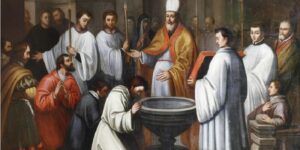 The Arians run the danger of losing the fullness of the sacrament of baptism. Indeed, initiation is conferred in the name of the Father and of the Son; but they do not express the true Father, since they deny the one who proceeds from him and is like him in substance; and they also deny the true Son, since they mention another, created out of nothing, whom they have invented. The rite they administer must be entirely empty and sterile, and although it preserves the appearance, it is in reality useless from the religious point of view. For they do not truly baptize in the Father and in the Son, but in the Creator and in the creature, in the Maker and in his work. But since the creature is something other than the Son, the baptism they claim to administer is different from true baptism, even though they profess to name the Father and the Son according to Scripture. It is not enough, in order to confer baptism, to say: “O Lord!”; one must at the same time have the right faith. And this was the reason why our Savior did not simply command them to baptize, but first said: “Teach,” and only then: “Baptize in the name of the Father and of the Son and of the Holy Spirit.” For from instruction right faith is born, and once faith is present, the initiation of baptism can be carried out… (22).
The paschal celebration of the Eucharist.
 Brethren, now that the enemy who held the universe tyrannized has been destroyed, we no longer celebrate a temporal feast, but an eternal and heavenly one; we no longer proclaim that event in figures, but truly live it. Formerly the Jews celebrated this feast by eating the flesh of an unblemished lamb and anointing their doorposts with its blood to drive away the destroyer. But now we eat the Word of the Father and mark the lips of our heart with the blood of the New Testament, acknowledging the grace that the Savior has given us when he says: “I have given you power to tread upon serpents and scorpions and upon the whole power of the enemy” (Lk 10:19)… Moreover, my beloved, it is known that we who celebrate this feast must not wear dirty garments upon our consciences, but must adorn ourselves with absolutely clean garments for this day of our Lord Jesus, so that we may truly be at the feast with him. We are clothed in this way when we love virtue and abhor vice; when we keep chastity and avoid lust; when we prefer justice to iniquity; when we are content with necessary things and devote ourselves rather to strengthening our soul; when we do not forget the poor, but are determined that our doors be open to anyone; when we strive to humble our spirit and detest pride… (23).
The Eucharist, spiritual food.
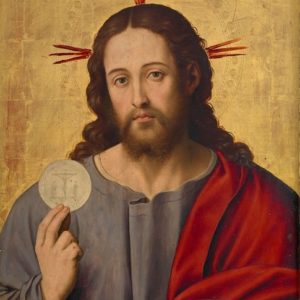 In the Gospel of John I have observed the following. When he speaks of his body being eaten, and sees that because of this many are scandalized, the Lord says: “Does this scandalize you? What if you were to see the Son of Man ascending to where he was before? It is the Spirit that gives life: the flesh is of no avail. The words that I have spoken to you are spirit and life” (Jn 6:62-64). On this occasion he says both things about himself: that he is spirit and that he is flesh; and he distinguishes the spirit from what is according to the flesh, so that by believing not only what was visible, but also the invisible that was in him, they might learn that what he says is not carnal, but spiritual. To feed how many men would his body be sufficient? But it had to be food for this whole world. For this reason he mentions to them the ascension to heaven of the Son of Man, in order to draw them out of their bodily mentality and make them learn henceforth that the flesh he calls food comes from above, from heaven, and that the food he is going to give them is spiritual. He says to them: “What I have spoken to you is spirit and life” (Jn 6:64), which is the same as saying: what appears and what is handed over for the salvation of the world is the flesh that I have, but this same flesh with its blood I will give to you as food in a spiritual manner. That is, it is in a spiritual manner that this flesh is given to each one, and thus becomes for each one a pledge of the resurrection of eternal life… (24).
The mystery of the Eucharist.
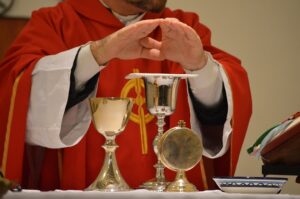 You will see the ministers carrying bread and a cup of wine, and placing them on the table; and while the invocations and supplications have not been made, there is nothing but plain bread and drink. But when those extraordinary and marvelous prayers have been completed, then the bread becomes the body and the chalice the blood of our Lord Jesus Christ… Let us consider the culminating moment of these mysteries: this bread and this chalice, while the prayers and supplications have not been made, are plain bread and drink; but as soon as those extraordinary prayers and those holy supplications have been uttered, the Word himself descends upon the bread and the chalice, which become his body (25).
The practice of penance.
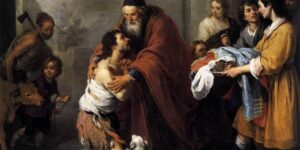 In the same way that a man, when baptized by a priest, is enlightened with the grace of the Holy Spirit, so also the one who makes confession repentantly receives forgiveness through the priest by the grace of Christ (26).
Those who have blasphemed against the Holy Spirit or against the divinity of Christ by saying: “By Beelzebub, the prince of demons, he drives out demons” (Lk 11:15) do not obtain forgiveness either in this world or in the future. But it must be noted that Christ did not say that one who had blasphemed and repented would not obtain forgiveness, but rather the one who was in blasphemy, that is, who remained in blasphemy. For fitting penance wipes away all sins… Blasphemy against the Spirit is lack of faith (apistia), and there is no other way to forgive it except a return to faith: the sin of atheism and lack of faith will not obtain forgiveness either in this world or in the future (27).
Source: Patristic Library
NOTES
(22) Contra Ar. II, 42-43. (return)
(23) ATHANASIUS, Epistula festalis, IV, 3. (return)
(24) Ad Serap. IV, 19. (return)
(25)) Fragm. from a sermon to the baptized. (return)
(26) Fragm. contra Novat. (return)
(27) Fragm. in Mt. (return)
