Development versus Evolution of Christian Doctrine
The Immutability of the Truths of Faith
“Heaven and earth will pass away, but my words will not pass away.” (Matt 24:35; Mark 13:31; Luke 21:33)
An essential element that distinguishes Christian doctrine from all other religions that have existed and that exist today is its permanent validity throughout the different stages of history.
Jesus Christ commanded his Apostles to “make disciples of all nations… teaching them to observe all that I have commanded you” (Matt 28:19–20), so the mission of his followers has been, is, and always will be to maintain the integrity and purity of his teachings.
If, as the Creed professes, Jesus Christ is truly the only-begotten Son of God, born of the Father before all ages; if he also wished to found a Church capable of carrying his message to all nations, with which he promised to remain all days until the end of the world (Matt 28:20), and upon which the forces of evil could not prevail (Matt 16:18), then his doctrine cannot be corrupted or adulterated, for that would mean he had failed in his purpose. On the contrary, it should be recognizable and admirable — just as a lamp is placed on a stand so that it may give light to all in the house (Matt 5:15).
All Christians agree that Christ founded a Church to be the salt of the earth and the light of the nations, from his first coming until his return (Rom 1:5; Matt 24:14; Rom 16:26; 1 Cor 15:24–25). Moreover, if his doctrine or teaching is objectively true, it would have to be so always — regardless of whether humanity at any given moment in history is capable of recognizing it. We have examples of this in the Ten Commandments and in the Beatitudes, which have maintained their splendor and relevance across the centuries.
The Development of Christian Doctrine
Nevertheless, if we study the history of the Catholic Church and the development of her doctrine across the centuries, it is impossible not to notice that it appears to have grown and expanded on an enormous scale. To observe this growth even in its strictly dogmatic dimension, it suffices to compare the elaborate formulas of the Ecumenical Councils and the ecclesiastical Magisterium with the earliest statements found in Sacred Scripture.
Also evident is the influence that various civilizations and philosophies — those that have come into contact with Christianity — have had on dogmatic definitions. Among these we may mention Greek philosophy in the Patristic Age, and scholastic philosophy in the Medieval and Modern periods.
How can this growth be explained?
Of the various explanations that have been offered for this growth, I will briefly address only three of the most important.
Protestantism has traditionally adhered to the hypothesis that this growth stems from a corruption of the Christian message, in which man-made traditions were gradually added to the Word of God — just as in Jesus’ own time the doctrines of the Pharisees had done (Matt 15:1–9; Mark 7:1–13; Col 2:8). According to this view, this corruption began to infect Christianity when the Roman Empire adopted it as the official religion following the conversion of Emperor Constantine. The product of this transformist evolution of doctrine, they argue, is the Catholic Church as we know it today — embodied in the “Great Whore of Babylon” (Rev 17) — which for them represents an apostate church that has betrayed the Christian message.
As a result of adhering to this hypothesis, Protestantism, in an attempt to return to the original purity of the Christian faith, has rejected all doctrinal development not contained in the Bible (Sola Scriptura). The definitions of the Councils may be accepted only if they agree with Scripture — or in practice, if they agree with the personal interpretation or private judgment of each believer. Hence some Protestant denominations accept doctrines defined by the Catholic Church, such as the Trinity and the Incarnation, since in their judgment these are implicitly contained in Scripture. Others, however, reject even these doctrines, adhering to the most strict biblical fundamentalism.
Modernism has adopted a very different solution. From this perspective, dogma does not always preserve the same meaning; dogmatic content is not subject to the unchanging character of data objectively revealed by God, but rather to the contingency of the psychological and religious conditions of persons. From this point of view, dogmas are as contingent and mutable as the subjective conditions that human beings admit, so that they can change in content and substance — allowing dogmatic formulas to carry different and even opposing meanings throughout history.
From the Catholic perspective, both solutions have always been inadmissible:
The Protestant one, because it denies the indefectibility of the Church. Christ would have failed to found a Church capable of preserving and transmitting the purity of his message, leaving humanity in darkness for more than a millennium. Were this the case, the forces of evil would have prevailed over the Church — at least with regard to the lives of all those who lived during more than ten centuries of Christian history.
The Modernist one, because it is essentially relativistic. Relativism is the position that viewpoints have no universal truth or validity, but only a subjective and relative validity with respect to different frames of reference. In the moral realm, relativism holds that there is no absolute good or evil, but only what is dependent on concrete circumstances. In practice, something that is evil today could become good and admirable in the future — or even in the same era, depending on the “lens” through which it is viewed.
The Modernist theses were condemned by Pope Pius X in the encyclical Pascendi dominici gregis, on September 8, 1907, as well as by the Oath Against Modernism, prescribed by the same pontiff. The Catholic perspective admits a development of Christian doctrine as a growth in depth and clarity in the understanding of the truths of divine revelation. From this perspective, the substantial or essential truths at the core of each doctrine — as part of the one deposit given by Christ to the Apostles — remain immutable, with the Catholic Church as the guardian and custodian of that deposit.
This growth is the result of the Church’s pious reflection, theological study, and very often research (frequently prompted by the struggle against heresy), practical experience, and the collective wisdom of the Church’s bishops and the Pope, especially when gathered together in an Ecumenical Council.
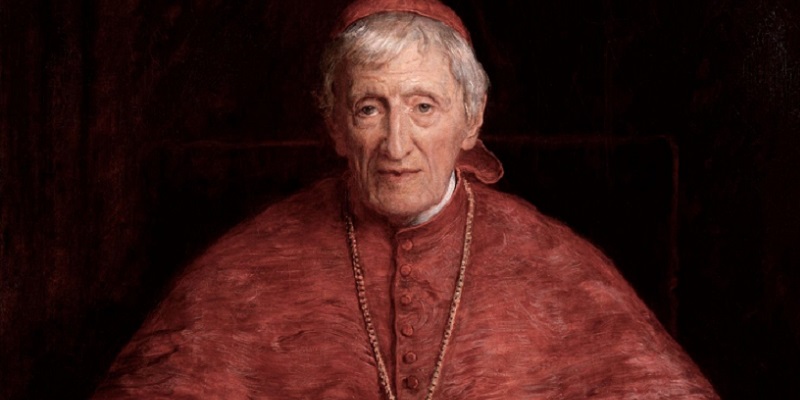
This concept was extensively developed by John Henry Newman in his Essay on the Development of Christian Doctrine, and is very well analyzed in the work of the priest Francisco Marín-Sola, O.P., titled La Evolución homogénea del Dogma católico [The Homogeneous Evolution of Catholic Dogma], published by the B.A.C.
In this work I have preferred to use the term “development” rather than “evolution,” because I agree that it better reflects the idea that dogma does not evolve in a transformist manner (changing its meaning), but homogeneously (always preserving its original meaning), making ever more explicit what has always formed part of the deposit of faith.
Throughout the study of the primitive Christian texts, there will be ample opportunity for the reader to judge for himself whether the doctrinal growth to which we refer proceeds from a homogeneous development or a transformist evolution, as Protestants and Modernists maintain.
