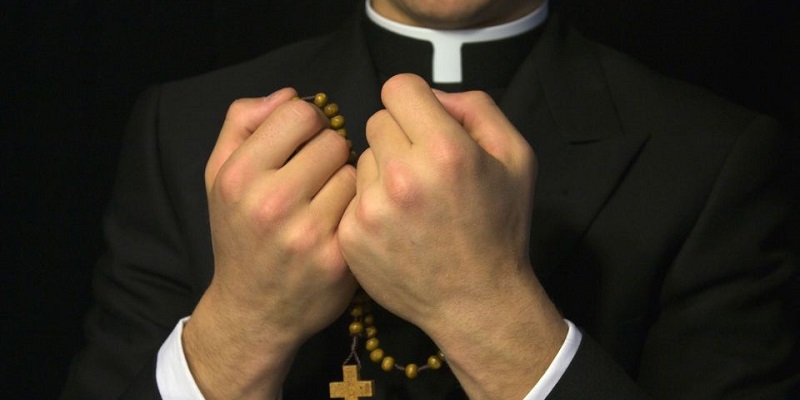
Priestly celibacy for the Latin rite of the Catholic Church is one of the disciplines most commonly questioned today, and it is common to find Catholics advocating that priests should be allowed to marry. This chapter offers a brief overview of the topic, with the aim of dispelling the doubts that may exist about it.
Point 1 — Celibacy Is Not a Doctrine; It Is a Discipline
We must begin here, since most people do not usually distinguish within the Church between that which is ecclesiastical discipline and that which pertains to its doctrine on matters of faith and morals. It is important to understand this, because the dogmas of faith do not change (although understanding and comprehension of them may grow throughout history), whereas that which is ecclesiastical discipline can change according to the historical context of the situation and the judgment of the Church. This means that priestly celibacy could indeed become optional in the future for priests of the Latin rite, just as it was in times past.
Point 2 — Reasons for Celibacy
Celibacy was highly esteemed by Christ and the Apostles as the supreme expression of detachment on the part of one who wishes to devote himself wholly to the service of the Lord. An interesting episode in which the subject of celibacy came up — curiously — occurred when Jesus was speaking about marriage.
“Now when Jesus had finished these sayings, he went away from Galilee and entered the region of Judea beyond the Jordan; and large crowds followed him, and he healed them there. And Pharisees came up to him and tested him by asking, ‘Is it lawful to divorce one’s wife for any cause?’ He answered, ‘Have you not read that he who made them from the beginning made them male and female, and said, ‘For this reason a man shall leave his father and mother and be joined to his wife, and the two shall become one flesh’? So they are no longer two but one flesh. What therefore God has joined together, let not man put asunder.’ They said to him, ‘Why then did Moses command one to give a certificate of divorce, and to put her away?’ He said to them, ‘For your hardness of heart Moses allowed you to divorce your wives, but from the beginning it was not so. And I say to you: whoever divorces his wife, except for unchastity, and marries another, commits adultery; and he who marries a divorced woman, commits adultery.’ The disciples said to him, ‘If such is the case of a man with his wife, it is not expedient to marry.’ But he said to them, ‘Not all men can receive this precept, but only those to whom it is given. For there are eunuchs who have been so from birth, and there are eunuchs who have been made eunuchs by men, and there are eunuchs who have made themselves eunuchs for the sake of the kingdom of heaven. He who is able to receive this, let him receive it.’”[1]
Jesus speaks of those who “have been so from birth” and of those who “have made themselves eunuchs.” He thus distinguishes the one who by his own birth condition is incapable of marriage from the one who, though not so incapacitated, chooses out of love for the Kingdom of Heaven to “make himself a eunuch,” or “celibate.”
Now, why would someone need to make himself a eunuch out of love for the Kingdom of Heaven? The reason is obvious: it is the perfect state for devoting oneself entirely to the service of the Lord.
Saint Paul likewise gives the same recommendation: opt for celibacy in order to serve God with “undivided devotion.” Whoever cannot exercise self-control should marry, but the one who does not marry does better. In this regard it is advisable to read the entire seventh chapter of the First Letter to the Corinthians, but for the moment a few excerpts will suffice:
“Now concerning the matters about which you wrote. It is well for a man not to touch a woman. But because of the temptation to immorality, each man should have his own wife and each woman her own husband.”[2]
“To the unmarried and the widows I say that it is well for them to remain single as I do. But if they cannot exercise self-control, they should marry. For it is better to marry than to be aflame with passion.”[3]
“Now concerning the unmarried, I have no command of the Lord, but I give my opinion as one who by the Lord’s mercy is trustworthy. I think that in view of the impending distress it is well for a person to remain as he is. Are you bound to a wife? Do not seek to be free. Are you free from a wife? Do not seek marriage. But if you marry, you do not sin, and if a girl marries she does not sin. Yet those who marry will have worldly troubles, and I would spare you that.”[4]
The clearest text, in which he gives the reason why celibacy is the best option for one who dedicates himself to the service of God, is the following:
“I want you to be free from anxieties. The unmarried man is anxious about the affairs of the Lord, how to please the Lord; but the married man is anxious about worldly affairs, how to please his wife, and his interests are divided. And the unmarried woman or girl is anxious about the affairs of the Lord, how to be holy in body and spirit; but the married woman is anxious about worldly affairs, how to please her husband. I say this for your own benefit, not to lay any restraint upon you, but to promote good order and to secure your undivided devotion to the Lord.”[5]
He then concludes:
“So that he who marries his betrothed does well; and he who refrains from marriage will do better.”[6]
Taking these counsels into account, the Catholic Church has opted for celibacy for the priesthood of the Latin rite. Thanks to this the priest can be free and devoted 100% to the work of God, without being divided by attending to the affairs of his wife and children.
Point 3 — Some Objections Against Celibacy
3.1. The Bible Says the Bishop Must Be Married
“This is why I left you in Crete, that you might amend what was defective, and appoint elders in every town as I directed you, if any man is blameless, the husband of one wife, and his children are believers and not open to the charge of being profligate or insubordinate.”[7]
This argument is frequently used by Protestants to attempt to prove that the priest must be married. However, the text does not intend to require the priest to contract marriage but rather to limit the number of times he may do so (once and no more than once). Today that may seem obvious to us, given that everyone (or almost everyone) who is married has only one wife, but in an era when the Christian Church had recent converts from paganism and Judaism, one could encounter persons who had been polygamous or divorced and remarried.
This clarification would even be unnecessary if the Protestants who use this text interpreted Scripture in harmony with itself. It would be absurd for Paul to say “he who refrains from marriage will do better” and “it is well for them to remain single as I do,” while at the same time saying that one must marry. And indeed the same Paul and other Apostles, not to mention Jesus Himself, were celibate.
3.2. The Priest Must Be Married to Set an Example
Another argument often used by Protestant pastors, though without the respective biblical support — for what then has become of the idea that the Bible is the sole rule of faith?
Neither Saint Paul nor Jesus said one must be married to set an example; if that were so, they would have done it themselves. Saint Paul, on the contrary, commands us to follow his example when he invites us to be “imitators of him.”[8] In addition to Jesus and Saint Paul, other Apostles and Prophets were celibate, such as John the Evangelist and John the Baptist. (Moses, though he had been married, eventually dismissed his wife in order to devote himself entirely to his mission.)
3.3. The Celibate Priest Is More Prone to Committing Immoralities (Pedophilia, Homosexuality)
A hackneyed myth about celibacy on which much has been written. Suffice it to say that there is no period of abstinence, however prolonged, that would cause a normal person to begin feeling sexual desires toward children or toward persons of the same sex. Those who commit such aberrations have deviations of another kind that do not depend on whether they are married or not. This is confirmed by the statistics on child abuse: the great majority of cases occur in the family or immediate environment and are committed by people who are married or have a partner, not by celibates. And as for homosexuality, marriage does not prevent it either: among Protestants themselves there are cases that prove it, even though their pastors are allowed to marry. A well-known case was that of the Protestant pastor Ted Haggard (president of the National Association of Evangelicals in the United States), who had a wife but at the same time maintained homosexual relations with a male prostitute — as in his case, so with many others.
3.4. Celibacy Is a Doctrine of Demons Spoken of in the Bible
“Now the Spirit expressly says that in later times some will depart from the faith by giving heed to deceitful spirits and doctrines of demons, through the pretensions of liars whose consciences are seared, who forbid marriage and enjoin abstinence from foods which God created to be received with thanksgiving by those who believe and know the truth.”[9]
Using this text to insinuate that celibacy is a doctrine of demons is essentially absurd. First of all because it omits the difference between celibacy (a voluntary vow of chastity) and the prohibition of marriage as an illicit act. This text actually refers to the Gnostic heresies that would go so far as to forbid marriage, regarding it as intrinsically sinful.
It is curious that those who use this text to condemn a voluntary vow of chastity fail to notice that Saint Paul himself bears witness to the existence of an order with a vow of chastity already in his own time.
“Let a widow be enrolled if she is not less than sixty years of age, having been the wife of one husband; and she must be well attested for her good deeds, as one who has brought up children, shown hospitality, washed the feet of the saints, relieved the afflicted, and devoted herself to doing good in every way. But refuse to enroll younger widows; for when they grow wanton against Christ they desire to marry, and so they incur condemnation for having violated their first pledge. Besides that, they learn to be idlers, gadding about from house to house, and not only idlers but gossips and busybodies, saying what they should not. So I would have younger widows marry, bear children, rule their households, and give the enemy no occasion to revile us.”[10]
Let us read the preceding text carefully:
1) There existed at that time an order of widows who had taken a vow of chastity (Paul refers to those “enrolled” among the widows).
2) He orders that younger widows be excluded from this order.
3) He indicates that the reason is that some of those younger widows desired to contract marriage, and incurred sin “for having violated their first pledge.” It can be inferred that this implicitly refers to a voluntary vow of chastity that conflicts with their subsequent desire to marry.
Under the Protestant way of interpreting the Bible, we would have to conclude that Saint Paul was preaching “doctrines of demons,” since he had just condemned the marriage of those widows as a violation of a prior commitment. It is evident that the Apostle saw a difference between a voluntary vow of chastity and the prohibition of marriage itself.
