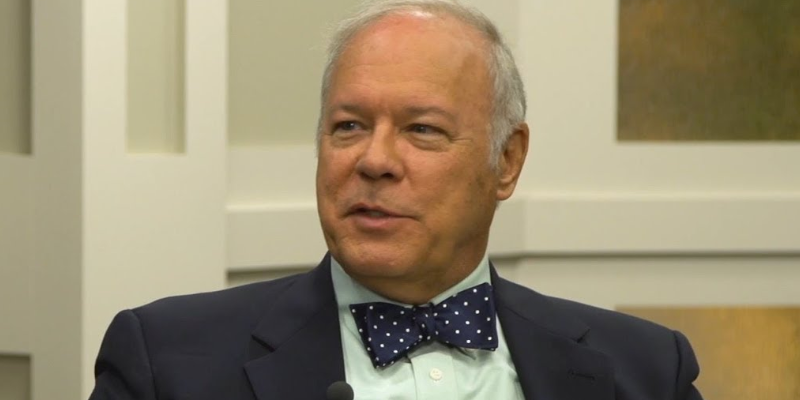
A former member of the Jehovah’s Witnesses’ world headquarters in Brooklyn and his wife were received into the Catholic Church in 2006. This is the story from the beginning
My parents were baptized as Jehovah’s Witnesses in the spring of 1954, just after my fourth birthday. My father, at that time a rancher—one of the old-fashioned kind—devoted to raising cattle, grew up without attending any church. My mother had until then been nominally a Methodist without attending church very regularly. They were drawn to the version of Christianity the Watchtower offered them and embraced that belief with great enthusiasm.
Within about two years, convinced that the end of the world (Armageddon) was approaching, they sold their home in Phoenix, Arizona, and volunteered to move to a place “where the need for preachers is greater.” In 1956 my father was appointed as overseer of the Cottonwood, Arizona congregation, which at that time consisted only of our family and one elderly Witness. By 1960 the group had grown into a small but very dedicated congregation of a dozen families. Dad brushed up on the Spanish he had learned in high school and started a small Bible study group among the Hispanics of Cottonwood. Later, at the Watchtower’s request, we moved to El Centro, a town in Southern California, where my father served as overseer of a Spanish-speaking congregation.
My mother and I began studying Spanish. I picked it up fairly easily, but she had great difficulty learning it and never came to speak it fluently. A few years later we were again asked to move to a small Spanish-speaking congregation in Arizona. After graduating from high school in 1967, I took up the full-time ministry (as a pioneer). As a result, I was classified as a Minister of Religion by the local draft board and was exempted from military service. In the summer of 1968, at my parents’ suggestion, I applied to work at the world headquarters of Jehovah’s Witnesses in Brooklyn, New York. I was accepted, to begin on November 14, 1968.
Progress in Brooklyn
At Bethel Home (as the Brooklyn headquarters is commonly called), I applied myself diligently to my work. I was determined to learn as much as possible about the Watchtower’s teachings. My willingness to give myself to the work, together with a natural aptitude for it, meant that I was assigned other responsibilities generally reserved for people older than I was.
Shortly after my arrival at Bethel, my parents took up the full-time ministry (pioneering). My father was invited to become a circuit overseer (traveling preacher), and so for some ten years he devoted himself to visiting the Spanish-speaking congregations in the Southwest and Northeast of the United States.
In New York I was appointed a member of the service committee of my local congregation at the age of nineteen, and then as an elder in 1971, at twenty-one. The following year I was named a “Bethel elder.” As such, I was called upon to speak at public conventions and assemblies as a representative of the Watchtower. At the age of twenty-seven I served as the principal speaker at the district convention in Roanoke, Virginia. At Bethel I was assigned to work on the large Linotype machine that produced “The Watchtower” magazine. A year later I was made supervisor of a row of Linotypes. At twenty-seven I was appointed overseer of the pressroom. I cultivated friendships with mature, responsible members of Bethel, many of them writers or people who worked in other important offices to which the most loyal and best-trained Witnesses were assigned. In those days I often had conversations with them about the Society’s teachings and the workings of the organization.
Toward the end of 1973, I again crossed paths with a charming young woman named Gloria, who was also a Bethelite and whom I had met shortly after her arrival at Bethel in 1971. We courted for a while, fell in love, and were married on May 25, 1974. Gloria, like me, was a fervent enthusiast of the Watchtower Society and a very hard worker. We had both decided to devote our lives completely as members of the world headquarters during the few years that remained before the end of the world arrived at Armageddon. We both learned French and volunteered to work with French-speaking Witnesses, mostly Haitians, in Newark, New Jersey.
Troubling Doubts Arise
Although I had been a Witness for almost 10 years (I was baptized in 1959), I had never read the Bible in its entirety. So I decided to do so. This stirred up many doubts that kept circling in my thoughts. The more I read, the more contradictions I found between the simple explanations the Scriptures offered and my beliefs as a Witness. At first I attributed my lack of understanding to my youth and inexperience. But as time went by, the respect and confidence my peers placed in me kept growing. At this point, I began to speak cautiously about my doubts concerning the Bible with older, well-respected members of the headquarters. I was surprised to discover how many of them had the same problems I did, and also how openly they spoke about those matters. I began to look at the Watchtower’s teachings from different points of view after the publication of the book “Aid to Bible Understanding” in 1971. Changes took place in the organization that left the door open to the examination of other fundamental teachings. I wondered, “If we have been mistaken in thinking that certain activities were solidly based on the Scriptures, could we not also be mistaken in our doctrines?” I was not the only one asking such questions. During the 1970s, a growing number of sincere people at the headquarters began to read Bible translations other than the Watchtower’s New World Translation, along with Bible commentaries. We began to meet in informal groups in which we studied and debated openly, without the “assistance” of the Watchtower’s publications. By 1979, I had become convinced that there was no way to reconcile some key Watchtower teachings with the Bible. Nevertheless, I still trusted that God was guiding the organization, and so I believed that great changes were on the way. I awaited them with eager expectation. My wife Gloria, for her part, was unhappy at Bethel. Her difficulties were not primarily doctrinal in nature but had to do with the way people were treated. She wanted to leave Bethel in order to have children. As I saw it, the Watchtower’s chronology was correct. I therefore could not understand why everyone wanted to leave when so little time remained before the end of the world.
I mentioned the matter to a trusted friend on the Governing Body, Ray Franz. He gave me a copy of a letter that had been written to the Watchtower Society by Carl Olof Jonsson, a Witness who was a member of the leadership body in Sweden. Jonsson presented irrefutable proof that the Watchtower’s chronology contained serious errors. The logic he used and the documentation he presented were solid and highly scholarly. I read the evidence over and over again. Finally, I was convinced. What was hard to accept was not the error itself, but its consequence: the chronology was and is absolutely essential to the Watchtower Society’s claim to be God’s “channel of communication” with mankind in the brief period before the end of the world. I began to consider seriously the possibility that the Watchtower Society was not what it claimed to be. It seemed certain that the Society’s leaders had at best been led into error, or at worst were hypocrites and false prophets. Although I had thoroughly enjoyed being in their service and truly loved my Witness brothers and sisters, it seemed practically certain that my final departure was inevitable.
Thus died in me the desire to actively support something I no longer believed in. My role at the headquarters had come to an end. In the midst of this period of confusion, my parents came from Texas to visit us in New York. From some comments I made about the disfellowshipping of some of our close friends, they sensed that my former attitude of unconditional support for the organization was changing. I assured them that I would never abandon God, Jesus Christ, or the Bible, but that I could not deny having serious doubts about the organization’s authority. Yet without faith in the Watchtower’s chronology, there was no longer any reason to postpone our desire to start a family. We decided to leave Bethel as soon as possible. We departed on July 15, 1980. I was not yet prepared to walk away from my entire community. Our whole life was bound up with Jehovah’s Witnesses. I also had the impression that we would be in a better position for our parents to understand how my thinking had changed if we still maintained a relationship. Things did not turn out as I had hoped. That was the beginning of a deep estrangement that lasted a quarter of a century. It kept growing until I found myself almost completely isolated from my parents. I was never able to reconcile with my father before he passed away in 2002. I still love him and miss him. Everything was about to be turned upside down. We had to start our lives over. We had no money, since I had spent the previous twelve years as an unsalaried volunteer. I had studied a great deal and had work experience and technical knowledge, but I had no university degree. I borrowed 300 dollars from my father-in-law to move to Lancaster, Pennsylvania, with the little we had. We lived with Gloria’s parents for ten weeks until I was able to get a job and find a place to live.
Expelled (Disfellowshipped) from the Brotherhood of Jehovah’s Witnesses
We had left the headquarters of our own free will, but the organization still held me in high esteem, so shortly after arriving in Pennsylvania I was appointed a member of the body of elders. I had doubts, but I found no reason to distance myself from Jehovah’s Witnesses, so long as my relationship with them did not require me to go against what my conscience dictated. However, I found that this goal was becoming increasingly difficult, since the general tendency of the Watchtower’s publications during those months consisted of warnings against those who disagreed with its teachings, whom it branded as “apostates” deserving of eternal condemnation. After about a year, I resigned my position as an elder. By then we had a son, Matthew, who had been born on August 9, 1981. About a year and a half later, the members of the Lancaster congregation’s council asked to speak with Gloria and me after the usual Thursday night Service Meeting. It turned out to be an informal judicial session. They questioned me (in Gloria’s presence) for more than an hour about whether I had any “doubts.” The only specific subject I was questioned about was whether or not I believed that the Watchtower Society was Jehovah’s organization. I answered that God had worked through Jehovah’s Witnesses, but that He was not willing to limit Himself to working exclusively through them. He is God, after all, I said, and He can do whatever He wants. The meeting ended without any action being taken.
Although we had been quite active in the congregation for more than two and a half years, few, if any, knew that we had doubts. Nevertheless, within a couple of days, many had heard that we were “skeptics.” We were asked to attend another brief meeting a couple of weeks later. The council members informed us that since our doubts were common knowledge in the congregation, they had to take some kind of action. I pointed out that no one in the congregation had known anything about our doubts before the elders met with us. It was obvious that the council members themselves had spread the word after our meeting. An elder’s wife had mentioned some details of the meeting to one of Gloria’s sisters-in-law. One of the council members replied, “How the information became known is not the issue. Now that it is public knowledge, we must take action.” They announced their decision to expel us. This meant that our family and friends would be required to shun us or else be expelled themselves. We had the impression that the decision to expel us had been made before they ever met with us, on the basis of factors that were neither evidence nor our own testimony. It was clear that appealing the decision would accomplish nothing. Thus ended nearly three decades of our association with Jehovah’s Witnesses. Our religious community had rejected us, and now we were alone.
Does God Work Through an Organization?
Despite the way we were treated, there were many admirable things about the Witnesses that I was sure were right. I had discovered error, but what I wanted was the truth. I needed some reliable way of knowing which Watchtower teachings were real and which were false. Because I had once believed that God used the Watchtower organization as an exclusive channel for communicating with His faithful, I focused my reflections on that subject. My hope was to write an essay that would help my parents (above all) understand why I had changed some of my opinions about the Watchtower Society. Using my concordance and Bible dictionary, I began painstakingly searching the Sacred Scriptures for evidence as to whether or not God had ever used any organization as an official instrument for communicating directly with mankind.
I concluded that He does not, and I published my essay as an article entitled “Does God Work Through an Organization?” Over the years it was translated into several languages and circulated rather widely among Witnesses who were leaving the organization, especially once the Internet came into widespread use. Although at the time I acted without any feeling of guilt, I feel some sadness over the success it had, and I must accept the fact that my writings probably led many into error. Initially, I did not understand the difference between human organizations and the true church, the Body of Christ. Later, I revised my article to show that Christ was organically united to His Body, which was not the case with human organizations. But I still had much to learn about what Jesus had founded and preserved: a visible church; a living body in which He dwells.
A Hand Extended to Former Witnesses
After leaving Bethel, I kept in touch with ex-Witness friends and made some new ones. An ever-growing network began to form, through which words of comfort and encouragement were exchanged. During the summer of 1983, my friend Peter Gregerson invited us and several Witnesses to a meeting at which it was decided to make the group official in the form of a ministry. We called our group “Biblical Research and Commentary Incorporated,” BRCI for short. The aim was to produce materials and provide support for Witnesses who were leaving, to ease their painful transition from the Watchtower Society to the “outside world.” The following summer—in 1984—the first of several annual meetings was held in Gadsden, Alabama.
Many expelled Witnesses have family members or spouses who still remain loyal to the organization. It seemed to us that a rather neutral name would make it easier to send materials to someone without alerting family members who were Witnesses to the fact that the recipient was talking to an ex-Witness, something that was strictly forbidden. As far as I recall, Ray Franz suggested the name, although he was never a member of BRCI’s board.
We set up a confidential telephone helpline to comfort people who were hurting from leaving the Watchtower organization. Shortly after its publication, my article on the Organization was always included in the information packet sent to those who called the BRCI Helpline. Church Experience
For roughly the first seven years, Gloria and I read and studied the Bible on our own or with other former Witnesses, with whom we met every other week in a small support group. We formed strong social bonds with these dear friends, but our spiritual growth was slow. Our discussions generally centered more on things we had once believed to be true but had since rejected. We often went over the same ground every time we met. Finally Gloria said, “I’m tired of examining the same old things over and over. I want to learn something new and true about Christ!” Our second son, James, had also arrived by then, born on November 22, 1986. As our children began to grow, we felt more and more the need to find Bible-believing Christians our children could associate with.
Many of the children in our neighborhood were being raised as secular humanists and shared neither our Christian principles nor our views on the importance of pleasing God. We tried a local church and quickly became friends with the pastor and his wife. When he learned about my background, he asked me to take charge of an adult Sunday school class. I was surprised that he did not ask me for more details about my actual beliefs. He never even attended the class to see what I was teaching. This struck me as strange, since doctrinal accuracy was still important to me. But I always taught “orthodoxy” in the sense that I could back up my teaching both from the Sacred Scriptures and from respected Protestant commentaries. Neither Gloria nor I ever became members of that church. We did not want to join any religious organization. After I had taught there for about a year, the pastor regretfully asked me to step down from my teaching post, since he felt he could not have someone teaching classes who was not a member of the church. I think he was right. On the whole it was a good experience. We began to make Christian friends. We learned that not all evangelical Christians were as fully convinced about doctrinal truth as we were. We were looking for a community of believers with lots of children and a wealth of programs for them. Eventually, we gradually settled into an independent evangelical Baptist fellowship. There we met many excellent Christians and quickly became involved in church activities. A few months after we began associating with that church, I was again asked to teach adult Bible classes, something I did without interruption for fourteen years.
History Lessons
Toward the end of the 1990s, I began working on another article intended to complement the one I had written about the organization. My intention was to help former Witnesses find other believers and build relationships with them. I wanted them to feel at ease by helping them understand that many churches today teach and worship in ways similar to the first-century disciples. I thought it would be useful to show what the early Christians were like, how their congregations were structured, how they lived and worshiped, and in what respects they differed from the teachings and practice of Jehovah’s Witnesses. I wanted them to understand that living as Christians was what mattered most, and I encouraged them to join any Bible-centered Christian fellowship.
I began by using the Scriptures alone, and I soon realized that a great many things taught and practiced in the churches cannot be established directly from Scripture alone. I ended up buying history books—in time I acquired dozens of them—in addition to doing a great deal of research on the Internet. When I finished writing “Where Is the Body of Christ?” I received some kind comments. But what I kept discovering raised far more questions in my mind than answers.
A Fundamental Change of Vision
As I researched, I began to stumble across references to the “Early Church Fathers.” Virtually all scholars, Catholic and Protestant alike (except for some modern scholars), showed great respect for them. At the time, I had only the vaguest idea of who they were. When I learned, in the late 1990s, that my friend David Bercot had published a Dictionary of Early Christian Beliefs, I bought a copy. I glanced through it but did not read much. I had my own ideas about what the church of the first Christians was like and how they believed and worshiped. Almost twenty years after leaving the Watchtower Society, I still believed that shortly after the first century, the faithful apostolic church of the early Christians had turned into the corrupt Roman Catholic Church. The Reformers, as I later learned, held a similar view, except that they placed the date of “the great apostasy” in the fourth or fifth century or even later. Nevertheless, both Luther and Calvin believed that the ante-Nicene church was truly authentic. One of the goals of the Reformation was to restore to the church its original, unspoiled, ante-Nicene purity. This set me thinking about the consequences of the concept of the “great apostasy.” The corollary of this doctrine is that Jesus had no congregation of faithful disciples, no visible organization or church on earth, for a prolonged period—possibly several centuries—until some individual (Martin Luther, John Calvin, John Wesley, Joseph Smith, Charles Russell, or anyone else), relying solely on the writings of the first Christians, understood them correctly and “restored” true apostolic Christianity on earth. I finally concluded that this view was indefensible. For it would mean that most of the people who lived between the apostasy and the “restoration,” whenever it supposedly occurred, would have had practically no opportunity to become true Christians, since apparently no one was capable of recognizing “the simple truths taught in the Bible” until the reformers appeared.
The Church: Visible or Invisible?
I also began to think seriously about what the true church of Jesus Christ must be like. Because of my own experience, I had no trouble accepting the view of the “invisible church,” in which all the members of the “one holy catholic and apostolic church” are scattered throughout all the Christian confessions of the world, a church made up of the men and women in every Christian community who really take their faith seriously and try to live according to the Sacred Scriptures. Most of the faith communities I saw seemed to be full of sinners who did not practice their faith. But as I thought it over, I began to realize that this perspective presented insurmountable problems. An invisible church is a “community” of scattered people who neither know one another nor are in contact with one another. In reality, it lacks any visible characteristics at all (because, after all, it is invisible). We can know nothing certain about such a church: where its members are, what they believe, how they worship. I concluded that it was all a matter of imagination. It is whatever we want it to be, since nothing real exists with which we can compare it. It is a church we interpret in our own way. And most importantly, it bears absolutely no resemblance to the church described in the New Testament, which was full of real people, saints and sinners. It had a structure that included presbyters, deacons, and disciples of Christ who submitted, to a greater or lesser degree, to their leadership. Each congregation of God’s faithful described in the Scriptures is not only visible; it is human, with all the problems that exist in any family, club, or community of human beings anywhere. How else could any church be the salt and light of its community? How else could unbelievers see its good works and glorify God? Even the reformers, though they rejected the authority of Rome, recognized the existence and the necessity of a visible body of believers. I kept reading history books, as well as the writings of the early Christians. These I regarded as accurate representations of what the main body of ancient Christians believed and practiced. I was surprised that so many concepts and teachings I had previously rejected had been presented to me incorrectly, and even dishonestly, in the Watchtower and in evangelical literature, which portrayed them as illogical or at odds with the Sacred Scriptures. As the early Christians presented them, they generally made more sense and corresponded better to the Scriptures than many of the explanations I had read in commentaries. I began to accept more and more of the teachings I found there, simply because they were clear, mature, and in accord with the Scriptures. One by one, I examined these teachings against the Sacred Scriptures, and as I became convinced of their validity, my understanding of Christianity gradually began to change. The complexity of certain passages I had wrestled with for years slowly began to disappear. All the pieces were truly beginning to fit together (for the first time in my life). My whole understanding of Christianity was transformed.
Sacraments
The early Christians believed that the bread and wine served at communion, when consecrated by the presbyter, really become the body and blood of Jesus Christ. Of course, this is exactly what Jesus plainly says in John chapter 6. Yet most Protestants regard Jesus’ words as symbolic. None of the early Christians understood them that way. In fact, with very few exceptions, no Christian before the German Reformation ever even questioned that teaching. This was my introduction to the concept of the “sacraments” of the Christian faith: material objects through which God conveys grace to His faithful. I had never heard them mentioned among Witnesses or evangelical Christians. The whole concept was new and strange to me. But as I read and prayed and thought about it, it made more and more sense. In short, sacramental worship teaches that God works through simple things such as water, bread, wine, and oil. These material objects, when consecrated and employed in the church Jesus founded, become the means by which God’s grace is communicated to human beings. They play a fundamental role in healing and in restoring us to full fellowship with our Heavenly Father. From this perspective, God works through His creation, not around it or in spite of it. At first, I thought this was totally foreign to the Scriptures. But now, guided by the early Christians, I began to find it everywhere in the Bible. One example: Naaman, a Syrian leper, was healed by obeying Elisha’s command (conveyed, incidentally, by a servant eager for gain) to bathe seven times in the Jordan River. The water was not magical, but Naaman had to obey the command and bathe in that water in order to be healed. (2 Kings 5)
The early Christians believed that the waters of baptism had the power to wash away or remove the sin of new disciples (Acts 22:16), just as they had removed Naaman’s leprosy. Other examples: Jesus healed a blind man by making clay, putting it on his eyes, and commanding him to wash in the pool of Siloam (John 9:6-11). A woman who trusted that she would be healed if she could only touch the hem of Jesus’ garment was truly cured. The cloth was not magical, but in conjunction with her faith it became the means by which she received Jesus’ power (Matthew 9:20-22). As I reread the Scriptures, I was surprised to see how many accounts of the mighty works performed by Jesus and the apostles involved physical actions, such as touching or breathing upon the recipients, or objects such as bread, fish, oil, or wine. A striking discovery! Around that time, I was browsing through a used-book sale and saw a copy of the Catholic Catechism on sale for a few cents. I bought it and began to read. I was stunned by what I had found! The Catholic explanation of the faith and of Christian moral principles—including salvation, baptism, redemption, and the atonement of sins—was much closer to that of the church of the early Christians than to anything in the Protestant commentaries I had read. Quite frequently it referred to the early Christians as a source of authority. From that point on, I began to give serious consideration to the Roman Catholic Church. I was surprised to discover how closely its teachings and practices corresponded to the outlook of the early Christians. But how could I explain the existence of so many Catholics who apparently did not take Christianity seriously? At first I had some difficulty with the concept, but as I thought and prayed, I remembered that God used ancient Israel as the “vessel” of the divine self-revelation transmitted through Moses for more than fifteen centuries, even though most of the Israelites and even their authorities were unfaithful. Could He not have done the same with the universal church that Christ founded?
Sacred Tradition
I had learned, mainly from Jewish sources, that much of Jewish practice had been handed down orally for centuries. Moses communicated the norms of the Mosaic Law to the Israelites at Sinai. But not everything was put into writing. The oral traditions were first set down in written form (in the Talmud and the Mishnah) after the destruction of the second temple in the first century A.D. Of course, Jesus said that the Pharisees had “made void the word of God” through their traditions. But I realized that He did not mean that all tradition was bad—only those traditions that man had created and that were at odds with divine revelation. The Sacred Scriptures clearly state that Christ revealed many things to His disciples that were not written down (John 21:25). They also say that “the church” (and not the Sacred Scriptures) is “the pillar and bulwark of the truth.” What Jesus taught His disciples orally was not “added to the Scriptures” by the apostles. It was taught orally to the new disciples they made. The Scriptures were composed within a fully functioning ecclesial framework in which every Christian teaching had already been handed down orally for decades. When the apostle Paul wrote epistles to the congregations, he had already devoted much time to teaching them orally. His letters could and often did leave many things unsaid. Paul’s letters deal mostly with contingencies and problems requiring his counsel, not with the teachings and practices that everyone knew and that had been taught orally beforehand.
Turning Point: Moving Forward in Faith
We were finally rewarded, and the evidence proved conclusive. My research into the history of the early Christian church enabled me to adopt a Catholic perspective without the interference of my former prejudices against the Catholic Church. What we kept finding in Catholic teaching was incredible: profound, attractive teachings, backed by history and coherent in their logic, which conform to the Scriptures and prove rewarding not only to the mind but also to the heart. We now feel that we have been part of that journey all these years. I have found the writings of other converts to Catholic Christianity to be of great help. I admit that I had looked into the subject only very vaguely in my study of Christianity.
Many Catholic theologians are spiritual giants. Reading them, I have learned so much about God and His ways that I never knew existed! I read “The Everlasting Man” by G. K. Chesterton, which influenced C. S. Lewis’s conversion to Christianity. His books “Orthodoxy,” “Heresy,” and “Conversion” truly touched my heart. Catholic apologists have a deep respect for C. S. Lewis, even though he was an Anglican, since his theology is practically orthodox. Frank Sheed’s “A Map of Life,” “Theology for Beginners,” and “Theology and Sanity” are clear and concise. The books of contemporary converts to Catholicism such as Jimmy Akin, Thomas Howard, Karl Keating, Scott Hahn, Dave Armstrong, and Peter Kreeft are especially useful for addressing the doubts Protestants have about the Catholic faith. “Catholic Christianity” and the “Christian Apologetics” of Dr. Kreeft and Ron Tacelli are clearer and more exhaustive than any Protestant defense of Christianity I have ever read. These people are on the right track, I thought as I read them. They think far more deeply than I do about most questions, and they are willing to risk their lives and careers to follow the truth wherever it may be found. For a long time, I made the mistake of judging Catholic teachings on the basis of Catholic people, most of whom (like their Protestant cousins) are rather indifferent when it comes to theology. But after accepting the historical evidence that the Catholic faith was the original and fullest expression of Christianity, and that the whole church should not be judged by the behavior of some sinners, my outlook changed. I began to read Catholic writings with enthusiasm. Catholic explanations of Christianity fit the Scriptures, the real world, and the human heart. I honestly believe that anyone who follows them faithfully will become a man or woman of God. The teachings of Catholicism are solid, full, and upright. We came to them slowly and carefully, following the truth and identifying and rejecting error. I shared with Gloria the things I was reading. She read and reflected on them as well. We talked over some things, but I did not want to pressure her into making a decision; I wanted her to decide on her own. She kept reading, and then one day she simply said, “We should become Catholics.” (She had been baptized a Catholic at birth.) We fulfilled our desire to become part of this venerable Church by meeting with our parish priest, Father James Cronin, over the course of several months in order to examine Catholic teachings. We were received into the Roman Catholic Church on Friday, June 9, 2006. We are thrilled to be Catholics, and it makes us happy to share the good things we have found with any of our former evangelical Christian companions or with our new Catholic companions. We feel completely happy within the Church that Jesus Christ founded. We have come home.
Author: Tom Cabeen
Source: Voxfidei.com
