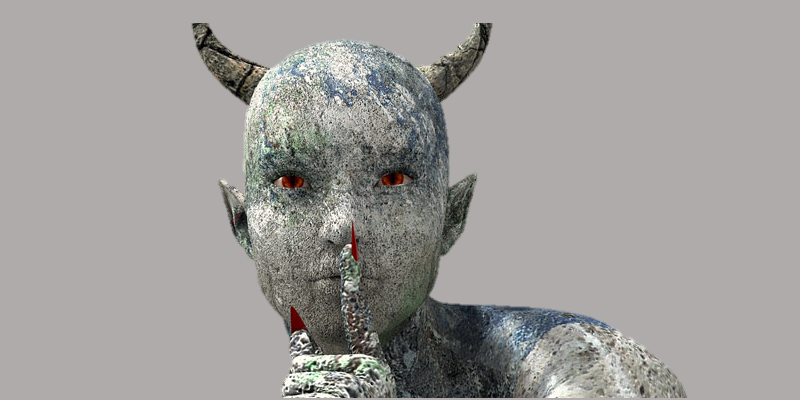
I. Evil and the problem of God
In modern culture, reflection on evil, as happens with almost all the other problems of the spirit, has become something highly ambiguous: having discarded the absolute perspective of metaphysics, which upheld the existence of the Absolute and of its rights, man swings between opposing outlooks of oblivion or indifference, of anguish and despair. That is, he either sways imperceptibly to the rhythm of events, whatever they may be, or he hurls himself against everything and everyone. The former conduct is more frequent in countries under totalitarian regimes, where there remains neither time to hold an opinion nor any possibility of protest; the latter is proper to states of a still fragile or recent democracy, where idle chatter—we might say that this too forms part of the rights of hard-won freedom—floods every social level, and especially the political and religious ones. The enormous development of the mass media, together with the great publishing conglomerates that dominate the marketplace of ideas, gradually creates before consciences something like a cloud of smoke that blinds and contaminates, to the point that the conscience of the majority often becomes incapable of judging even the events of everyday life. This leads inevitably to ethical skepticism, which is the last step before passing over into practical atheism.
Faced with so many problems, why does God not intervene? Whence come all these evils? This is the question Plotinus posed. The laments that arise before this multitude of evils—physical and moral, individual and social…—are beyond telling: from the weeping of Eve before the bloodied body of Abel, murdered by his brother—depicted with sorrowful emotion by Masaccio in the Brancacci Chapel of the Carmine in Florence—to the final drama of history that is reserved for the Antichrist (as the Revelation of John affirms), it will be a complete reckoning of all possible horrors and perversions. Afterward, but only after such a cataclysm, will come the definitive victory of God: so the prophets, Christ, and also the ancient poets and philosophers promise. Meanwhile man’s protest continues over evil and pain, over himself and over others, over the just and over criminals: over the frequent good fortune of the latter and over the misfortune, pains, and sufferings of the former, which have been described with great breadth and bitterness in the Book of Job and in Ecclesiastes, were we to give a biblical reference. Such is the existential reality that some of us have probably already experienced or are now suffering. With respect to what man expects from life, existence offers him a decidedly negative balance—either one suffers on account of one’s own troubles, or one suffers on account of the troubles of others, or one suffers doubly, on account of both. These are evils of every kind and at every level of existence: evils that affect the little ones and the young, adults and the old, the intelligent or the quick-witted, the dull and the simple, the saints and the wicked… The avalanche of evils knows no barriers or distinctions, even when it affects some differently than others.
It is superfluous to observe that for atheists the reality of evil is the principal course, the decisive argument against the existence of God. But this is far too hasty and simplistic an inference as regards its conclusion: it is a mechanistic and therefore aprioristic connecting of reality. The existence of evil is a great problem, the gravest and most complicated of all, but not only for theism—also for atheism. And beginning with theism, Saint Thomas himself saw in “evil” the first difficulty against admitting the existence of God. “By this name God we understand a certain infinite good. If, then, God existed, no evil would be found. But evil is found in the world. Therefore God does not exist.” It is a reflection on the moral and existential level that the Angelic Doctor seeks to counter with a celebrated reply of Saint Augustine: “God is so supremely good that He would in no way permit any evil in His works were He not so omnipotent and good as to bring good even out of evil itself.” And for this reason, Saint Thomas comments, far from being an objection, the existence of evil can contribute to exalting the goodness of God, inasmuch as He permits evil in order to draw from it a greater good.
This could be called a formal-theological answer that appeals to the transcendence of divine Providence, but which leaves open a crack in the divine edifice of creation, which was supposed to be structured with order and wisdom.
The problem was taken up again later on and in almost the same terms, both in the objection and in the reply. Here is the core of the objection: “God always does what is best, more so than nature does. Therefore in the things created by God nothing evil is found.” The body of article 2 takes up again the principle developed in the preceding question (q. 47, aa. 1-2), namely: the perfection of the universe requires that beings be unequal, some perfect and others imperfect, some corruptible and others incorruptible; and since evil is the lot of the latter, its existence ought not to surprise us. And yet, at least on the existential plane, as we shall say presently, the matter is surprising—indeed very surprising. In any case, Saint Thomas gives to the objection cited a more far-reaching reply, one that brings to mind the Hegelian axiom das Wahre ist das Ganze (the True—and therefore also the Good—is the Whole): what matters is the good of the Whole, for the sake of which the good of the part may be sacrificed (that is to say, of the “individual” in human society!)—which is an Aristotelian, that is, a purely philosophical, principle. But then how can it be maintained at the same time that “the person is that which is most perfect in all of nature”? Saint Thomas replies: “The whole, which is the totality of creatures, is better and more perfect if there are in it things that can fall away from some good, which at times do so fall away when God does not prevent it.” The reply extends further by adducing a text of Pseudo-Dionysius (a great authority for Saint Thomas): “It belongs to Providence not to destroy nature, but to save it”—which, however, Saint Thomas seems to reverse when he observes that “the very nature of things is such that it can fall away, and at times does fall away.”
The observation is not persuasive, for one might ask: why this so strange a distinction? Why treat creatures in this way? Does this Gordian cut hold for the whole world, which is what concerns us? Saint Thomas seems to perceive the difficulty and attempts to defend himself on the basis of the text of Saint Augustine that we transcribed for the first objection to the existence of God. But now he surprises us with his comment: “Whence many goods would be lacking, were God to permit no evil.”
And he calmly continues: “For fire is not generated unless air is corrupted, nor does the lion preserve its life unless it kills the ass; nor would the justice of the one who rewards and the patience of the one who suffers be praised, were there no iniquity of the persecutor.” This is a reply that, taken in itself and outside its proper theological context, not only fails to appear satisfactory but even becomes irritating. The ass cannot be satisfied at having been destined to be crushed in the jaws of the lion so that the lion may keep itself alive; nor can the just man, suffering in a sea of troubles, be satisfied in the face of so many evils that torment him and the multitude of injustices that oppress him—he cannot be satisfied with a merely Platonic or Kantian satisfaction such as the one here affirmed. Saint Thomas develops the theme of evil in this way under the constant guidance of Saint Augustine and Pseudo-Dionysius, who are the foremost theorists on the matter but for whom the origin of evil does not seem a great problem: evil forms part of the order of creation, evil proceeds from good—namely from an imperfect good. But what does an “imperfect” good mean? A good that in part is not good? An “imperfect good” that turns into evil, that falls into evil… is a contradiction, and for man creation becomes a mockery—worse still, a condemnation decreed in advance. Saint Augustine and Saint Thomas were well aware of this, and so they took care that those formal answers should be truly real: first biblical, and then rational.
The Bible, in fact, repeats to us at every stage of creation that nature was “good” in each of its parts: the light, the order of the universe, the variety of the sun, the moon, and the stars, the richness and beauty of the living and animal forms… and each day of creation ends with God’s own declaration: “…and God saw that it was good.” Afterward, when it comes to the creation of man “…in his image and likeness,” and God entrusts to him the use and governance of all that has been created, God seems truly satisfied: “And God saw everything that he had made, and behold, it was very good” (v. 31).
Well and good, we too say; but why, after the fact, has the history of humanity in general and of each man in particular—still more, one might say, the whole of physical and animal nature, with its catastrophes, earthquakes, floods…, and the history of man with his diseases, wars, and deaths at every age and in every place—become a “space” filled with sufferings and pains of every kind?
The Bible explains this at once in the third chapter with the account of the Fall—that is, of man’s rebellion against the will of God: at the origin of all the horrors of nature and of all the evils of man, death included, lies the sin committed by man, by the first human couple, at the instigation of Satan (Gen 3:1 ff.).
Therefore the evils of life that man endures from within and from without, in soul and in body, from birth to death, on the part of nature and of his fellow men… are the first consequence of the first sin of his forebears: according to the Bible, the rebellion of nature against man and the malice of man against man—beginning with the fratricide of Abel—are the direct consequence of man’s original rebellion against God. It is therefore hard to understand how Augustine and Thomas, in treating of the origin of evil, could have set aside this consideration, which is, moreover, the most existential and convincing one, at least within the sphere of believers. There is no doubt that this negative primum dominates the sacred history of both the Old and the New Testament.
Saint Thomas, with the theist tradition, defends Providence—that is, the conviction that, even after original sin, God has not abandoned man to his ruin but is ever ready to guide and assist him with the help of His Wisdom: a source of consolation glimpsed in some fashion by later Greek philosophy, especially the Stoic and the Neoplatonic, but which in biblical religion found its confirmation and seal, and an altogether special solution through the mystery of the Incarnation, and therefore only when it is raised to the supernatural life of faith and of divine grace. Pure philosophy knows no other solutions than those of a universalist type—dualism, pantheism, determinism, fatalism, and the like—which do nothing but reinforce atheism and cast one into despair.
A rapid comparison between the conception of classical philosophy and that of the Bible is found in the Prologue of the admirable commentary that the Angelic Doctor makes on the Book of Job. There he offers a brief panorama of the itinerary of human thought along the path toward Truth, beginning with Greek philosophy (Saint Thomas has completely ignored the thought of the Far East). The first Greek philosophers, and later Democritus and Empedocles, attributed the origin of the world and of the events that succeed one another within it (as do also today, for example, J. Monod and other devotees of contemporary philosophy) to chance. But the philosophers who came after them—the Angelic Doctor gives no names—seeking the truth with greater diligence and acumen, arrived at the concept of Providence, that is, at the conviction that the regularity observed in the phenomena of nature shows that they are governed “by a certain supereminent intellect.” Yet even for these a shadow remained, namely a doubt regarding human events: “whether these happened by chance or were governed by some higher providence or ordinance.” This time Saint Thomas places the existential consideration first, that is, the conviction that in the moral field the utmost disorder reigns, to the point that injustice seems to triumph and honesty and virtue to succumb: “Not always do goods arise from goods, or evils from evils; nor again do evils always arise from goods, or goods from evils; but indifferently, from goods and from evils there arise goods and also evils.” Saint Thomas stops here; but—as we have already indicated and as we shall soon observe again—there are worse things, far worse, in life and in human history, capable of throwing man into crisis regarding the justice of divine Providence. In any case, I take the liberty of stressing that here too the background of the first sin goes unmentioned, and one returns instead to the affirmation of Providence: “This opinion (of ‘chance’ as the first origin of things) is in the highest degree harmful to the human race; for if divine providence is eliminated, there will remain in men no reverence for God or fear toward the truth, from which there would at once follow every kind of sloth with respect to the virtues and every readiness for the vices…; there is nothing that draws men away from evils and leads them toward goods so much as the fear and the love of God.” And this endeavor to establish this conviction is the proper end, Thomas observes, of the Book of Job, which constitutes the first and most sublime essay in a “theodicy.” Let us look at his explanation. We grant, in fact, that natural events show the presence and the regulating activity (gubernentur) of divine providence. And human history? This is the crucial point and the principal stumbling block against the existence of divine providence. But in particular, what most scandalizes and forces one to deny providence “…is its application to the just.”
Saint Thomas explains it thus: “that from evils goods should at times proceed, although it may seem irrational at first sight and contrary to providence, can nevertheless in a certain manner be excused by divine mercy; but that the just should be afflicted without any cause seems to destroy every foundation of providence.” We take the liberty of observing, extra textum, that in the strict sense no man, according to the Bible, can be called truly just, wholly without sin, apart from Christ and the Virgin His Mother: nevertheless, the problem remains standing.
Saint Thomas resolves it further on, in his commentary on ch. 19:25: “Scio quod Redemptor meus vivit et in novissimo die de terra surrecturus sum.” The comment is very explicit: “We must consider that man, who was created immortal by God, incurred death through sin (Rom 5:12)… a sin from which the human race was redeemed by Christ, something that Job, by the spirit of faith, foresaw: Christ redeemed us from sin through death, dying for us; He did not die in such a way that death absorbed Him, for although He died according to His humanity, nevertheless He did not die according to His divinity.” The classic exposition of the Thomistic theological doctrine of the Incarnation for the reparation of the sin of the first parents and of all men is found in the first three articles of q. I of the Pars III of the Summa Theologiae, of which it suffices to indicate its robust structure:
1.) “Whether it was fitting that God should become incarnate”15 .
The answer is of a transcendental nature and is drawn from the two greatest Platonizing Fathers, Dionysius and Augustine. From the former is taken the principle: “The good is diffusive of itself; whence it belongs to the notion of the supreme good that it communicate itself to the creature in the highest degree.” Augustine, for his part, offers an anthropological explanation: “He unites the created nature to Himself in such a way that one person is made of three: the Word, a soul, and flesh.” But in the reply to the third objection the problem of evil emerges, as an answer to the Manichaean idea that the body represents evil in man and is therefore unfitting to be assumed by the Word. Saint Thomas, as is well known, here too distinguishes the evil of fault from the evil of punishment: the former is repugnant to God, but not the latter, which was introduced by the wisdom and justice of God for the glory of God. In truth, for Saint Thomas the principal motive of the Incarnation was the “adequate satisfaction,” and more fitting, for man’s sin, as he explains, following Saint Augustine, in the following article, where the question is raised “whether the Incarnation of the Word was necessary for the salvation of the human race.” The first part of the article sets forth the “positive” advantages of the Incarnation with a view to moving man to the exercise of the three theological virtues, after the example of Christ, and to full participation in the divinity. Only in the second part is there mention of the “removal of evil”: a) fleeing from the devil “who is the author of sin,” b) not staining the soul, c) fleeing from presumption, d) from pride, e) and to obtain true freedom. Very noble motives, without doubt, and notable advantages: above all the reconciliation of man with God. Nevertheless, the problem of suffering seems still abandoned amid the shadows.
In his admirable Vita Christi, treating of the Passion and Death of Christ, and with the breadth and depth that, as prince of theology, he was able to give it, he takes into consideration the end of the Incarnation, which was to merit the remission of sins and eternal salvation. At the same time he describes the sufferings of His Passion and Death, especially “the gravest of all other pains,” both those of the body and those of the soul (in particular sorrow) of Him who suffered for all the sins of all men (Ibid. q. 46, especially a. 6).
It being true, as indeed it is, and at the same time so moving for the most devout souls and in particular for the mystics who have shared most directly, in their soul and in their body, in the sufferings of the Passion of Christ, that the sufferings endured by the Son of God surpass every human capacity for comprehension, there remains open the problem of the first origin of the first sin, from which all these evils derive in radice—not only for us sinners but also, and still more, for Christ, who willed to save us through harrowing sufferings, even though in the Gospels these are narrated succinctly or barely hinted at.
Saint Thomas, in treating of the origin of sin in general, places man’s freedom in the foreground, although at the same time he recognizes, in a very realistic manner, the absence of divine assistance and therefore the inevitability of the fall—without, however, God’s being able to be called its cause, whether direct or indirect: “It happens that to some God does not give the help to avoid sin, in such a way that, were He to give it, they would not sin.” Saint Thomas goes so far as to admit, always within this transcendental sphere, that God (as one often reads in the Bible) can deny His grace to those who place an obstacle, but also to others: “Whence the cause of the denial of grace is not only he who places an obstacle to grace, but also God, who according to His judgment does not bestow grace.” What, then, is that divine judgment of the denial of grace—from which sin, and then eternal punishment, will follow—or what motive can it have? But can this logical rigor of a metaphysical theology really fill up the existential anguish? In the ad 1 there reappears the motive of condemnation, already seen when predestination was discussed: “…just as the fault of the tyrants is ordered to the good of the martyrs, so too the punishment of the damned is ordered to the glory of His justice.”
It is clear that Saint Thomas is very far both from the Pelagian naturalism that attributes the choice of good or evil exclusively to freedom, and from the rigid Manichaean predestination that exaggerates—alongside the influence of the disordered passions—the maleficent work of the devil. But why will this maleficent action be rejected in one case and become the cause of greater progress in virtue, while in others it will be accepted and lead them to perdition? The Angelic Doctor answers consistently: that befalls “…one who voluntarily subjects himself to the devil.”
Agreed: but the real problem lies at the beginning, as we have seen. One always navigates within the mystery, which remains equally hidden in the fundamental mystery of original sin and of its transmission to all the children of Adam: once original sin has been forgiven through baptism, there still remain the moral consequences (the inclination to the evil of all the capital vices…), the physical consequences (weakness, congenital deformities, diseases, poverty, natural calamities and all those deriving from technology… and finally death). Today, for the conscience of moderns, a faith of such strength—that is, a very singular grace—becomes necessary in order to accept as “permitted” by a good God (who could have prevented it…) a situation so laden, in crescendo, with horrors and errors. This situation is capable of throwing even believers and the well-intentioned into crisis and leading them to the brink of despair and even of suicide: extreme situations not permitted to a true believer who considers all that God has done for man in creating him free and then, through His Incarnation, changing the direction of history and tipping the balance toward good.
Nevertheless we can observe that even post Christum natum, evil—both physical and moral—continues to be present in the world, and indeed, in certain epochs—lived through recently and still enduring—it seems that evil prevails over good, perfidy over goodness, the crooked over the straight, violence over justice… The spectacle of physical and moral evil, and the forces that increase with progress and threaten to cause new evils and new sufferings, can disturb the most honest and strong consciences—above all these! On the existential plane, no philosophy is in a position to answer the problem of evil—as we have said from the outset—and theology, if it does not wish to content itself with dialectical subterfuges that are, rather, apt to irritate the susceptibility of the man of today, must appeal to a truly robust faith and to a very particular gift of grace which in mystical theology is called “abandonment in God,” in full conformity with His will. Abandonment in God is, then, the existential state most suited to the “children of God,” such as Christians ought to be.
Such abandonment is the highest form of man’s faith in his relationship with God: so Kierkegaard too understood it, in consonance with the New Testament and with the Christian mystics. The pagan, like today’s atheist and unbeliever, thinks that man can have no person-to-person relationship with God. In Christianity, by contrast, man relates to God as a child to his parents, who are wholly attentive to him. Thus God gives man the help of grace by which he can love and serve Him on earth: this is one of the dominant themes of the Edifying Discourses and of the Journal. In fact, just as God gives everything gratuitously to man—the soul and the body with all their faculties—so man must give himself to God without conditions: abandonment in God thus becomes a “second birth,” it is like “becoming a child again” (X1 A 59 and 679, nos. 2090, 2516). It is the true life of the spirit, in which “the whole spirit of childhood returns, but raised to the second power,” that is, with the absolute confidence of faith (2581, 2615). The existence of the spirit of abandonment consists in considering oneself “…less than nothing before God” and at the same time in believing “that He concerns Himself even with the most minute things,” as with the birds of the air and the lilies of the field. The life of the spirit proceeds in the inverse direction to the natural: in it one grows “by making oneself ever smaller” (2722). Abandonment in God is the supreme proof of our love for Him and the seal of faith: it gives the strength to bear all the trials and adversities of life, seeing them as a “sign” of the love God has for us. So the Models (the saints) teach us: “to be loved by God and to love God is to suffer” (3631). Therefore the Christian who wishes to belong to Christ must abandon himself wholly to Him, for these two things—to love and to abandon oneself—are equivalent to each other: one must “put out into the deep,” where the water measures depths of 70,000 feet (3513). Abandonment in God is what makes us overcome anguish and despair. In conclusion—and this is an observation of existential metaphysics for Kierkegaard—we must know that when man abandons himself in God the mode (the “how”) expresses the very essence of the relationship, and this mode is “the abandonment to the point of saying that…” God Himself, who is the Absolute, is for us this “how we place ourselves in relation to Him.”
And he explains: “In the domain of sensible and external realities the object is something distinct from the mode: there are many modes… and a man can always discover yet another new one. In the relationship with God the ‘how’ is the ‘what.’” And he concludes, for his part: “He who does not enter into relationship with God in the mode of absolute abandonment does not enter into relationship with God. With respect to God we cannot place ourselves in relationship ‘up to a certain point,’ because God is precisely the negation of everything that is ‘up to a certain point’” (2936). The signal examples of such abandonment that appear in the Bible are, for Kierkegaard, especially Abraham and Job.
But the clearest and most luminous example of this abandonment of the soul in God has been, for Kierkegaard, as for all Catholic piety, the “Blessed among all women, the Mother of God, the Virgin Mary,” as he calls her in Fear and Trembling. The drama and the example of the Virgin’s abandonment in God was illustrated in the following manner: “Certainly Mary bore the Child in a miraculous way; but, nevertheless, everything else happened in her as it happens in other women, and that was a time of anguish, of sufferings, of paradoxes. The Angel was a ministering spirit, but he was not a servile spirit; he did not go to the other young women of Israel to say to them: ‘Do not despise Mary, for what is coming to pass in her is something extraordinary.’ On the contrary, the angel presented himself to Mary alone, and no one else knew of it. What woman was more exposed to dishonor than Mary? Is not that saying fulfilled here which holds that whomever God blesses He also curses in the same breath? This is the spiritual interpretation of Mary’s situation. She is not—it repels me to say it, but it repels me still more to think of the thoughtlessness and superficiality of all those who have interpreted her—a great lady who offers herself to amuse herself by playing with an infant God. No. When Mary says: ‘Behold, I am the handmaid of the Lord’ (Lk 1:38), she is great, and it ought not to be difficult to understand how she became the Mother of God. Mary has no need of the world’s admiration, just as Abraham had no need of tears: for she was not a heroine, nor he a hero, but both became something greater than heroes by not fleeing from suffering, from sorrows—indeed, thanks to all this.”
Through faith the believer abandons himself trustingly to God, both in life and in death.
II. The problem of evil and the existence of God
The Roman liturgy celebrates among its martyrs those Holy Innocents slain by Herod, who felt himself deceived by the Magi after they had seen the Child Jesus, whom he wished to eliminate for fear of finding a rival to his power. The account of the evangelist Matthew (2:13 ff.) is peremptory and chilling, as are also the depictions of it that Christian art has produced. The episode is certainly dramatic, not only because of the tyrant’s cruelty, but also as regards our problem: the atheist can draw from it his definitive proof against God, for while God miraculously saves His Son—and naturally can foresee the reaction of the bloodthirsty tyrant—He permits the butchery of the innocents and seems insensible to the desperate weeping of the mothers. Camus’s thesis is well known, that the mere fact of the death of one innocent suffices to strip all consistency from the proofs of the existence of God.
There is no doubt that the Gospel episode, on account of its principal protagonist, whom the Church adores as the Son of God and Savior of men, is most striking and capable of throwing the human conscience into crisis—as has in fact happened in Christian antiquity and in modern times—as regards faith in a supremely good, just, and omnipotent God, offering a grave pretext—an apparently peremptory argument, as we shall indicate—against the existence of God. The existential aspect of so inhuman a cruelty is particularly striking, and atheists have not wasted the occasion to attack the truth of Christianity to its very foundations. We shall cite the objection of an author who devoted himself to scientific problems but who took an interest, with great passion (perhaps too much!), in the most arduous theological problems.
In one of his books, which bears the bizarre title Teologia ultima, Valerio Tonini put forward, without mincing words and above all without any scruple or theological sense, a theory. The thesis appears already at the beginning of the book: “At the beginning of the history of every religion there is a crime. This crime is committed in the name of God Himself. The Gospel history too begins with an incredible crime. Gospel of Saint Matthew, 2:16: ‘Then Herod, when he saw that he had been tricked by the wise men, was in a furious rage, and he sent and killed all the male children in Bethlehem and in all that region who were two years old or under, according to the time which he had ascertained from the wise men.’ Amid the death of the innocent children, not yet two years old, slaughtered on His account, immolated at the birth of Christ, He lives. God is therefore guilty not only of our birth in Adam, but with His own birth on earth He adds a crime of unheard-of malice. Behold the God who slaughters innocents in order to give us His Son! The angel of the Lord hastened to warn Joseph, the father of the child Jesus: ‘flee to Egypt, for Herod will search for the child, to destroy him.’ In effect, by his flight, Joseph saves the Son of God and of Man; but Herod killed all the other children of his territory. Will the death on the cross of this so-called Savior then suffice to redeem the crime committed by the Father with the massacre of the Innocents? Mary, woman and mother, without any fault on her part, wept buckets over her crucified Son. Many other mothers had wept on His account when He was born. But God, the father, has not wept. No one has ever seen Him weep—He, the supreme good, the supreme goodness, the supreme wisdom. Why did He also devise this crime against the innocents, in order that His son might be born? How much longer does He wait to redeem it?” (p. 11).
The Author avails himself of the episode to give his own interpretation concerning the nature and history of Christianity, which he strives to explain in consonance with the cycles perceived by a comparative history of religions, with gnostic and pseudo-mystical interpretations: “The most cruel narrative of the blood of the innocent victims by which God immolates Himself ‘represents’ a history deeply driven, from time immemorial, into the memory of men. The theme of an extreme ferocity dominates the most archaic expressions of religiosity” (p. 19).
To follow this thesis and its development would be a distraction, given that we intend to limit ourselves to a critical reflection in the strictly theological sphere. We take the liberty of observing and admitting that it is a rather arduous argument for the sensibility of modern man. It is not cruelty as such that throws us into crisis, because cruelty has bathed all of history in blood—often innocent blood—before and after Christ. Rather it is the truly strange circumstances of the event: while Christ, by a special divine intervention, was placed in safety, His other contemporaries were abandoned defenseless to the ferocity of the tyrant who, in order to be able to slaughter them in their mothers’ arms, dragged them by deceit out of their homes. The fact is patent, although it seems not to have impressed Christian antiquity, which was wholly captivated in admiration for God’s so singular intervention to save the life of the divine Infant. The problem was confronted directly by Saint John Chrysostom: in chapter II of the Ninth Homily he treats the problem with such clarity that it seems to me fitting to follow his analysis step by step.
The Child has returned from Egypt, and Chrysostom weaves praises of the religious history of this people, especially during the first centuries of Christianity with the development of monasticism, when the monks devoted themselves by day to work and by night to prayer. Among them stands out the blessed and great Antony, as is seen in his written Life, and whom Chrysostom praises principally for having foreseen the Arian heresy and having prepared the battle to overcome it: “In it (his life) there will be found even a great number of prophecies. Such is the one Antony made about the Arian heresy and the harm that was to follow from it. God showed him all of it and set before his eyes a sketch of what was to come” (p. 158). Then comes the praise of the man: “Behold, among so many others, a proof of the truth: no profane sect has produced a man like this one.” Finally the merit of the book: “I do not wish here to recount his life to you. Read it yourselves in the book I recommend to you, and you will learn everything in detail and will draw from it the highest lessons of philosophy. But I exhort you not only to read the book, but also to imitate what is written there” (p. 158).
The hospitality that Egypt offered to Christ was rewarded from the very first moment by the great evangelical activity lived out during pre-Constantinian Christianity.
Let us now come to the central theme, which is the slaughter of the Innocents. The saint at once underscores Herod’s irrational conduct: on realizing that the Magi had departed without passing through Jerusalem, instead of reflecting, he flew into a rage, thinking that they had wished to mock him. For this reason he orders the cruel and useless slaughter of the little innocents, as if carried away by a raptus of fury and jealousy at the same time: “As one possessed by the demon of anger and of envy, he takes no account of anything, he rages against nature itself, and the fury that dominates him against the Magi, who have mocked him, he unleashes against the children, who bear no fault whatever, thereby renewing in Palestine the tragedy that in another time unfolded in Egypt” (p. 160). Here one sees that Saint John Chrysostom perceives the problem acutely and directs attention toward it: it is a much-discussed problem in his time, because it had provoked serious doubts, rather heated ones, against the justice of God.
How could the justice of God be safeguarded if, while He saved Christ, He abandoned the poor children to the hands of Herod’s cruelty? This is a problem for Chrysostom himself, who was convinced that he had to give an answer, however summary (breviter disputantes). The first answer is dialectical and could be called a simili: just as, on account of the miraculous liberation of Peter from prison, the Herod of that time (the first had already died) put to death the soldiers who were innocent of that escape, so too the first and more cruel Herod put to death the innocent children because Jesus had escaped from his hands. But this—and Chrysostom himself raises the objection—is not an explanation or justification but rather an aggravation of the situation, that is, of the problem in question. He then answers from the field of faith. He does not ask, as perhaps we do, why God, having saved the child Jesus, abandoned the innocents to the cruelty of the first Herod, and, having freed Peter from prison, abandoned the poor soldiers to the cruel reprisal of the second Herod. At what does Saint John Chrysostom aim? He gives a solution which he calls “probable,” and which consists in attributing the responsibility for the two crimes—as is obvious, moreover—to the cruelty of the two kings: they had every opportunity and possibility to consider and appreciate the extraordinary causes of both events. They did not do so because they were blinded by the passion for power, above all the Herod who killed the Holy Innocents out of vile cruelty. I wish to be brief, Chrysostom notes: “And what—you will say to me—has the one to do with the other? For this does not resolve, but aggravates the problem. —I too know that it does not resolve it; but I join it all together because I wish to give the same solution to it all. What solution do these cases admit of? What reasonable explanation can we give? The solution and explanation is that Christ was not at fault for the death of the innocents; the fault lay with the cruelty of the king; just as neither was Peter at fault for the execution of the soldiers, but rather the folly of the other Herod” (pp. 161-162). In the case of the Apostle, freed by the Angel, there was no motive to treat the guard harshly or to accuse it of negligence, because everything was in order and Herod could verify the miracle for himself. In fact everything had happened in such a way that the guard should not be compromised, in order to make evident God’s special intervention and to move the king to reflection.
The same, and still more, must be said of the first Herod, who had every guarantee, as regards the birth of Christ, that it was a wholly extraordinary event, and that he was not deceived by the Magi, who, after adoring the Child, did not return to him, since he had already decided to kill Him: “Why are you angered, Herod, at being deceived by the Magi? Do you not realize that that birth was divine? Did you not summon the chief priests? Did you not gather the scribes? All those whom you summoned—did they not bring with them to your tribunal the prophet who had foretold all this? Do you not see how the ancient consonates with the modern? Do you not hear how a star has put itself at the service of all this? Did you not yourself feel reverence at the fervor of the Magi and admire their frankness? Did you not tremble at the truth of the prophet? How did you not understand the present from the past? How did you not deduce, all by yourself, from all these facts, that what had happened came not from a trick of the Magi, but from a divine power that was directing everything to a fitting end? But if, in the end, it was the Magi who deceived you, what had innocent children to do with it?” (pp. 162-163).
Very well, replies the supposed objector: you have shown that the first Herod was bloodthirsty, so that no one can excuse him of his inhuman cruelty, in particular against the little innocents. But why did God permit so cruel an injustice?
In this regard, Chrysostom enunciates a general historical law: that when a misfortune strikes many at the same time, there is no reason for any one to lament in particular: “Qui laedant multos, qui laedatur nullum esse.” And he explains, in order to eliminate possible doubts, that what Providence permits, it does either for the remission of our sins or to give us a reward (“aut in peccatorum remissionem, aut in mercedis retributionem”). In any case this holds well for sinners who must expiate past faults; but those innocent children—what had they done? They received—and this is the final solution Chrysostom gives—a great reward and not a punishment, arriving “…swiftly at the harbor without storms.” And it is a reward much greater than if they had lived: “…with all the more reason He would not have let these perish thus, had God foreseen that they were to accomplish great things in their life” (p. 165). His explanation was set in a decidedly theological context. But all the sorrow of the tragedy remains equally, and no other compensation or punishment is found, if one may so speak, beyond the horrible end that befell the cruel Herod, as Flavius Josephus recounts to us.
But the tragedy of the little innocents remains standing, we too conclude. It was caused by the cruelty of men and permitted by God, who permitted His own Son to die on the Cross not only through the malice of men but abandoned by His own Father (Mt 27:46). The only answer, and the most profound, remains on the terrain of the oeconomia salutis, as a mystery hidden in God, according to which it falls to the just and to the innocent to expiate the faults of sinners. But this will continue to be a mystery, for the simple reason that Tonini, Camus, and those who move by their own judgment expressly do not wish to accept it.
What is surprising in Saint John Chrysostom’s impassioned defense is that, while the malice of the two Herods is accentuated, no precise reference is made to the malice of man’s original sin, which is the true universal root of physical evil and especially of moral evil throughout all history: a doctrine explicit in Saint Paul, of whom Chrysostom was the foremost admirer and commentator.
This theological pessimism concerning sin and its consequences would be brought to the fore by the Augustinian systems and especially by Jansenism and the Reformation, although they do not assail belief and faith in God. This belief would gradually dissolve in modern thought: beginning with the gnostic dualism of J. Böhme, taken up by Schelling and finally resolved in the Hegelian dialectic, which raises the negative—that is, sin in the moral order—to a constitutive moment in the self-affirmation of the reality of history. As a conclusion: not a shadow of an eschatology of a transcendent nature—that is, of a final judgment of God to separate forever the just from sinners (Mt 25:46)—but rather the judgment is history itself in act: “The history of the world is the judgment of the world.”
Thus one passes from the suffocating oppression of evil and of sin proper to the Lutheran and Jansenist conception to the self-liberation from evil in modern thought—that is, to a consciousness of good and evil within which evil is either recognized as original (Kant) or is transformed into the subjective limit that reason does not cease to surpass with the progress of history. But regrettably, as Kierkegaard has shown, the reality of human existence continues to be torn between error and pain, for which only Christianity provides a remedy.
In summary:
1) We can repeat that physical and moral evil exists, existed before Christ, and will exist until the end of time, and this first of all because of the finite structure of things, but above all as a consequence of an original disorder or rebellion of man against God, of a stain in the depths of the soul.
2) But man, as a spiritual subject, can struggle within certain limits against evil and against death itself: he can relieve the evil of others and bear his own as a purification. This way of transforming evil into good is perceived by reason itself, and freedom can realize it, whereby man becomes freer, freeing himself from the egoisms that cloud the horizon of his infinite openness.
3) The existence of evil—that is, of physical and moral pains, of illnesses and betrayals, of injustices and abuses of every kind… amid which society lives—whatever its degree of development, but mostly in those more evolved forms, and not excluding religious society, which is constituted by men immersed in history itself…—is indeed an inevitable datum. But for this very reason, while it constitutes a difficulty for theism in its most naive meaning, it accords perfectly with religion and with the grandeur and mercy of a God who is father and judge of men, who has given to men, besides being, His highest gift, which is freedom and love.
4) Therefore we can conclude: there does not and cannot exist any demonstration against the existence of God and of a future life. On the contrary, there exist—and men have grasped this from the beginning—proofs and signs of His friendship and providence toward men. Among which we must mention this one, arduous though full of consolation: God, like a good physician, knows how to draw goods for us even from evils themselves, and can give us life through death, something no physician will ever be able to do.
The dialectical solutions of modern thought are simply desperate and wholly ambiguous: if freedom cannot rise above the antithesis of good and evil and struggle to consolidate the former and diminish the latter, human life remains abandoned—even after Christ and reckoning with faith in God—to the caprice of fatality, and there is no foundation for distinguishing good from evil. Each of them is prince and absolute principle in its own kingdom, to the point that man does not come to recognize them, because he lives mingled among millions of men who take refuge in feelings of faith and are confounded amid the waves of time that drag them into the pit of death.
Certainly evil, the existence of physical and moral evil, does not prove the existence of God: on the contrary, and in its own way, it is a proof of the freedom, defective though it be, of man. But far more defective and far more harmful (for us) was the freedom of the rebel Angels, of Lucifer (called “Satan,” the tempter, a most beautiful spirit—perhaps the most beautiful, according to certain intimations of the Bible and the opinion of some Fathers of the Church and ecclesiastical writers…), because Lucifer tempted the first man and because, under his orders, the other demons have tempted and continue to tempt men to evil, to all the forms of evil according to the list of the seven capital vices.
But the existence of evil, of the devils, and of all the beasts and dragons of the Book of Revelation… does not and cannot constitute an argument, still less a decisive one, against the existence of God, the First Creating Principle, good and provident. Evil, which floods life and history, can constitute a difficulty for one who carries to the extreme the abstraction of the metaphysical Supreme good and then wishes to understand it in a psychological manner; this is the terrain on which appear the recriminations proceeding from the sloth and infidelity of man.
But once it is admitted that man was created free—and this doctrine was stolen by modern thought (above all Fichte, Schelling, Hegel) with the intention of distorting the sense of God and preparing His negation—it must be admitted that he can raise himself up and accept the grace that Christ offers him, transforming evil into good and the temptations to sin into occasions of virtue and of holiness, under the protection of the divine Majesty and of the angels and after the example of the martyrs and saints.
Thus the terrible, chilling, and almost hope-destroying existence of evil is not an accusation against God, but a condemnation of the Prince of evil. And this all the more when it is a question of certain external sins of extreme malice, such as those ranging from the spread of heresies to the ferocity of the tortures of the innocent in the Nazi and Marxist lagers (which we must never forget)… passing through the vileness of Christian or Catholic ministers and prelates who were afraid—as in Italy—to combat and to have others combat openly (as the Gospel commands) against the approval of the infamous law of divorce (1974) and of that incomparably more infamous law of abortion (1976). And, since we are speaking of the Italy of the postwar period, we must affirm that this law, even by the ambiguous and laxist terms in which it was drafted, violates every human and divine right, is the vilest and most violent outrage committed against the most innocent and most defenseless, and is a crime for which no proportionate human penalty exists. It must be observed that even within the party—although the majority voted against (but was it not the absences and betrayals of the DC that made possible the margin necessary for the approval of the law?)—the reactions were minimal. Those of the Catholic press limited themselves to the customary laments: no reaction or demonstration of public protest, no call for a Christian witness of the Referendum. Then, as is already known, there followed the capture and cruel murder of Aldo Moro on May 6, 1978, and the commotion of all Italy, the lay and the ecclesiastical (as was fitting), and its remembrance on every anniversary. But of all the innocent children, murdered by the thousands by doctors whom Hippocrates had declared were only to save them, no one speaks and no one ever will speak.
Is there anything that we, sorrowing and powerless spectators before so much infamy, the work of politicians, can do? And it is a qualified infamy, a stain that all the perfumes of Arabia will not be able to cleanse, when one considers that President Leone, who did not have the Christian courage to resign his office rather than sign the tremendously iniquitous law, resigned shortly afterward over matters of personal interest. But not only did the enormous and powerful ecclesiastical apparatus do nothing except lament as usual, but the so-called “dissent groups” on the one hand, and the action, grassroots, and prayer groups—even the most verbally militant among them, those of “Communion and Liberation”—all remained in their homes, without a shadow of an effective protest, without any cry of love or of sorrow for that sorrow, or for the universal injustice that would certainly have shaken consciences a little. Is this not, for (so-called) Catholic Italy, a far graver fact, after two thousand years of Christianity, than the massacre carried out by a bloodthirsty king against some tens of innocent children? Herod and his soldiers were not Christians, and they had not risen to power bearing a crusaders’ shield, like Andreotti and his fellow signatories, deputies and senators absent at the moment of voting, thereby blocking the infamous vote… And why, then, this time did the engineer Tonini, who was so scandalized by the Gospel episode as to turn against God, not write (so far as we know) even a letter of protest against this infamy committed by Italian society?
Atheism has no words to relieve sorrow, to rouse those who commit injustices… because it admits nothing beyond the finite, because it denies the new horizon of love and of infinite justice, because it rejects the fatherhood of God, the redemption of the Son, and the sanctification of love of the Holy Spirit. Marxist atheism has nothing to oppose to the law of the war of all against all, which is the law of history (contemporary history too); it has nothing to oppose except the rhetoric of dialectical materialism and of historical materialism—that is, the law of the domination of force, which is the class struggle, which is nothing other than to sanction the domination of evil, the legitimacy of hatred and of vengeance, and therefore the law of the materialist Hobbes, of the bellum omnium contra omnium. And now the free peoples, Italy too, condemn with protests and sanctions the oppression in Poland on the part of a governing communist minority over the association that groups together the majority of the workers (Solidarnosc), and the Soviet pressure on the poor and impoverished satellite nations; but what is this oppression in comparison with the abortion admitted in almost all these nations?
No one but God can offer us His help before evil—which has worked from the beginning and will always work in the life of man on earth—and He has given it to us abundantly with the Incarnation. He always lends us His help and always assists us with His grace, so that we may follow the example of Christ our model: thus, to take up the sorrow of life and death itself becomes an act of love for God. The problem of evil, then, can find an answer only in God, admitting the existence of a God who created man free, who abused his freedom to sin, to rebel against Him. But God, in His infinite mercy, has offered him in Jesus Christ the possibility of being saved from sin by grace and of overcoming death by the resurrection of eternal life.
III. Is Atheism Inevitable?
More deeply than Tonini has Albert Camus ventured into the analysis of evil, with a profound and impassioned existential awareness, in his work of protest against the modern world: an atheist likewise, he is consistent in his speculations in following the self-destruction of man that is produced by the negation of God. He does not dwell on the episode of the little ones murdered by the suspicious and cruel Herod—of whom (it seems to me) he does not even make mention—but rather attempts to encompass evil in its totality, that is, man in the disintegration of all values, in suicide both physical and moral, in the degradation or self-destruction that the progress of civilization produces in the human being.
His point of departure too is humanist and, more precisely, anti-Christian, since he imputes to Christianity, without preambles (without the preambles of the perversion of man’s freedom expounded in the Bible), the avalanche of misfortunes fallen upon man—that is, the placing of the reality of man under the sign of pessimism: “It is not I who invented the misery of the creature, nor the terrible formulas of the divine curse. It is not I who created that Nemo bonus, nor the condemnation of children without baptism. It is not I who said that man was incapable of saving himself alone and that, at the bottom of his degradation, there was nothing to hope for save the grace of God.”
Camus had worked in his youth on an exercitatio, which bore the title Entre Plotin et Saint Augustin, in order to obtain the diploma of higher studies; and this work of research left in his spirit a deep imprint that found expression, with unwonted vigor, in his principal work entitled L’homme revolté, in which he sets forth the characteristic of contemporary man. This rebellion (“revolt”) has its roots and matrix in the insuperable contradiction in which existence finds itself, however one considers it: a radical, total, insuperable pessimism… which presupposes a kind of metaphysical curse, beyond and prior to time. For Camus man is absurd, a definition that he holds to be more exact than the Christian one—for which man is a sinner—and than the Marxist one—according to which man is an exploited being—two conceptions that finally resolve themselves, though in different ways, into optimism.
With respect to Christianity in particular, Camus not only distances himself but inverts the situation. He grasps the Christian point of view exactly: “If Christianity is pessimistic as regards man, it is optimistic as regards man’s destiny.” But here a decisive distinction is imposed: it is optimistic for the consistent Christian who believes in Christ and lives in His grace; it is pessimistic for whoever rejects, mocks, or betrays Christ (that is, for everyone who does not accept Him as the Son of God and his own Savior). For Christianity man is a duality, not only of body and soul, but also in his capacity for good and evil; and it is here that the “human destiny” is decided. And it is also here that the ambiguity of the following formula of Camus springs up: “Well then! I will say that, pessimistic as regards human destiny, I am optimistic as regards man. And not in the name of a humanism, which has always seemed to me insufficient, but in the name of an ignorance that tries to deny nothing.”
This whole argumentation makes no sense, and this not without reason, since instead of going to the root of sin as the first evil, Camus, who declares himself an atheist, has no solution and so hurls himself against Christians. Camus is, among the moderns, the writer who has most seriously confronted the problem of evil, but starting from an atheist position, he can find nothing but emptiness and insignificance, however one looks at it.
The following affirmation, too, fluctuates in ambiguity, despite its good intention:
“And as regards me, it is true that I feel a little like that Augustine before his conversion, when he said: ‘I sought whence evil came, and could not get out of that dilemma.’ But it is also true that I know—together with others who think as I do—what must be done, if not to diminish evil, at least not to increase it. Perhaps we cannot prevent this world from being one in which children are tortured; but we can diminish the number of tortured children. And if you cannot help us in this, then who in the world will be able to do so?”
In any case, the appeal he makes seems to me legitimate, inviting believers to “dialogue,” not to leave Socrates alone, nor the few solitaries who remain horrified by so many unjust and cruel evils in the world (from Russia to Vietnam, from Cambodia to Angola…).
But gratuitous is the interpretation he gives of the Christian response, which, in his view, “cannot be exhausted in a formula of compromise or in an encyclical: this is a way, like so many others, of manipulating history.” It may be—and to admit it is by no means a heresy—that the visible Church too has its lacunae, and even its faults, in the management of human affairs; but the Church, everywhere it has preached the Gospel, has preached the fatherhood of God and love of neighbor, which is the foundation for succoring the one who suffers, without distinction between children and adults. Can those “solitaries” singled out by Camus, who are and declare themselves without faith and without law, do anything of the sort? Whence is born the bond between them and those who suffer? Where is the obligation that it should arise from the depths of conscience and become a real imperative of authentic self-giving and not of mere rational legality?
His thought on this point is best grasped in his response to an interview about the obligations of a professional and above all of a writer: the reporter exalted the work of Dr. Rieux, who had committed himself body and soul to eliminating human suffering. Camus’s response is doubtless sincere but too arid, abstract, and uncommitted: “The insuperable obstacle seems to me, indeed, to be the problem of evil. But traditional humanism is also a real obstacle. The death of children indicates the divine arbitrariness, but there also exists the murder of children which expresses human arbitrariness. We are hemmed in between two arbitrarinesses. My personal position, insofar as it can be defended, is that of holding that, if men are not innocent, they are guilty only of ignorance.” But this is nothing other than a return to Socrates. Camus, it is true, also recalls the historical presence of Christianity, but he admits that in order to carry out this task “…any intelligent Christian will choose Marxism.” This is a journalistic way of treating the subject; in fact, Camus, unlike Sartre, is not so affectionate toward Marx and the Marxists. More conclusive is the following observation: “This as regards doctrine.” There follows next a judgment difficult to decipher (at least for me) about the Church: “There remains the Church. But I will take the Church seriously when its pastors speak the language of everyone and themselves live the dangerous and wretched life that affects the greatest number of men.”
For my part—and I have written it in a reply to an attack against the Church by P.P. Pasolini—I would have no objection to accepting the hypothesis: it will not be the undersigned, a poor self-taught man, and after the fall of the temporal power (of the Church), who will defend certain grandeurs (grandeurs) that showed themselves not only useless but even scandalous in the Church throughout history—of which, moreover, after Vatican II, one ought to have a greater awareness. But the fundamental problem is another one, which Camus does not even suspect, and it is that the Church has a supernatural mission: the continuation and application of Christ’s work of saving man from sin and from eternal condemnation. For the man of faith these are not “phantasms,” but the “last” and for that very reason the first and truest realities. For this reason Christianity is not a simple universal historical event, like Marxism, but that which leads man toward a different space and to an eternal destiny.
I must confess that Camus’s diatribe style is attractive—a radical man who does not fluctuate between opposing ideologies as Sartre does between anarchy and communism. Likewise pleasing is his respect for man as such, without distinctions, after the manner of Kierkegaard’s “common man.” Pleasing too—and I would say above all—is the radical affirmation of a radical freedom, which he—as we shall now see—calls the right of rebellion. But Camus has not carried this concept to its ultimate consequences, the concept which constitutes the primordial moral exigency from which sin has arisen, and from sin all evils.
The “revolt,” the rebellion, the protest, or also the contestation… as it was called by the youth movements of 1968, is the “answer” to the absurd world, to the absurdity of the world and to the world of the absurd, which has been transmitted by Western culture and civilization and in particular by modern thought. In the introductory thesis, the denunciation of the radical inversion of the human situation is of a chilling precision: “There are crimes of passion and crimes of logic. The border that separates them is uncertain. But the penal code distinguishes them, very conveniently, by premeditation. We are in the age of premeditation and of the perfect crime. Our criminals are no longer those disarmed children who invoked love as an excuse; on the contrary, they are adults, and their alibi is irrefutable: it is philosophy, which can serve for anything, even to turn murderers into judges.” One seems to hear the shameless self-defenses of today’s calculating murderers. In the modern age, therefore, a unique fact has occurred which has changed the face of humanity, and its formulation, however incredible it may seem, is the following: whereas before, cruelty, deceit, violence… could claim a coherence of their own, at present—once civilization has been subjected to the dominion of ideology—what dominates is “the absurd”; it is around this concept (?), or better, around this existential reality, that Camus’s whole analysis revolves. This notion of the absurd is the point of contact with modern thought; and Camus speaks preferentially, rather than of a “notion,” of a “feeling of the absurd.” The general thesis, then, would be expressed as follows: “The feeling of the absurd, when one seeks above all to draw from it some rule of action, makes homicide at least a matter of indifference and, consequently, possible. If one believes in nothing, if nothing has meaning and if we can affirm no value, everything is possible and nothing has importance. Without pro or con, the murderer is neither wrong nor right. One can stoke the fires of the crematoria just as one can sacrifice oneself in the care of lepers. Malice and virtue are the product of chance or of caprice.”
Camus’s lesson is important because it shows us, without a middle term, the blind alley of the contradiction and of the absurd into which modern man has gotten himself. It is true that his dilemma, of Dostoevskian origin—either suicide or homicide—seems to me artificial, because it is not strange—as we read almost daily—that the two phenomena can occur together. The essential problem is that of “meaning” (Sinn), that is, of “giving a meaning” (Sinngeben) to life, and to do this certain “buttresses” are necessary, both a parte ante and a parte post, that is, transcendent principles, upon which freedom can make its choice, defying nihilism. To judge both suicide and homicide absurd and contradictory, as Camus does, and thereby to relegate human existence to the contradiction of the absurd, is far too little, even when it is supported with the well-recognized finesse of a writer (Nobel Prize) in some of the greatest philosophical writers of the “Sette-Ottocento”: Sade, Stirner, Hegel, Marx, Nietzsche, Rimbaud, Proust… and above all in Ivan Karamazov, the philosophizing nihilist of Dostoevsky….
Surprising is the deafness and near absence that Camus too, like all the existentialists of the left, displays toward Kierkegaard, who established—with an analysis never before undertaken concerning the essence of freedom, and against all the fatuous optimisms and pessimisms of German philosophy, from Kant to Schopenhauer—that modern nihilism admits of only a single alternative: either to believe or to despair. But Camus is perfectly right when he affirms that this whole situation of universal disorientation, “this essential contradiction,” as he rightly calls it, must be “…a lived experience, a point of departure, which is the equivalent, in the field of existence, of the methodical doubt of Descartes.” To the cogito, in effect, there corresponds on the one hand, on the metaphysical side, atheism—that is, the negation of God; and on the existential side of man there corresponds nihilism, which can have multiple derivations, but all of them leading to insignificance; not always culminating in suicide and homicide, but always causing indifference, vexation, insignificance, emptiness….
A third important observation, as an inevitable consequence of modern nihilism—that is, of the negation of the personal Absolute that is God—is the transformation or inversion of the relations of men among themselves, which are no longer taken from the antithesis that underlies, as a foundation of freedom, between true and false, between just and unjust, but rather in terms of violence, that is, of the relation between oppressors and oppressed. Thus freedom, like truth, meet and identify themselves in the will to power: Hegel–Marx and Nietzsche, and later Engels–Lenin–Stalin–Hitler… find themselves on the same trajectory. From this one can understand—that is, it awakens no great astonishment—Camus’s own response in the Lettres sur la révolte, which serve as a commentary on the Homme révolté, where one reads: “when the rebel Man exalts the non-Marxist revolutionary tradition he does not deny the importance or the achievements of Marxism.” On the inconsistency of such considerations, one understands that Albert Camus, in the official address at the conferral of the Nobel Prize at Uppsala (December 14, 1957), should have centered the ideal value of his work on the defense of the freedom of the work of art, but it is vain and groundless to proclaim that “…the most calumniated value at present is, certainly, the value of freedom.” The whole courtly discourse revolves complacently around this principle; a strange conclusion, that is, one of mere unforeseeable aestheticism after the ardent and sincere pages of L’Homme révolté.
We must recognize that contemporary existentialism, in a direct sense, and Marxism, if you will, in an oblique sense, have the merit of having noticed—or better, of not having evaded—the problem of evil. But they have limited themselves either to describing it and adorning it with literary and pseudo-philosophical analyses, or else to inverting its very sense. Thus existentialism is scandalized and denounces violence as the negation of freedom, and Marxism exalts it as indispensable in the exercise of freedom (class struggle). And this is a solution that is no solution, since it makes hypotheses about the future as such; and which, moreover, by the sociological awakening of its radical atheism, is not and cannot be the essence of modern thought. This has been noticed very well by Sartre in his masterly essay on Descartes—which is perhaps theoretically his clearest and most perfect writing—when he comments on the absolute Cartesian voluntarism: “here is discovered the meaning of the Cartesian doctrine. Descartes understood perfectly that the concept of freedom enclosed the exigency of an absolute autonomy, that a free act was an absolutely new production of which the germ could not be contained in an earlier state of the world, and that, consequently, freedom and creation were but one and the same thing. The freedom of God, even though it were similar to that of man, loses the negative aspect that it had under its human envelope; it is pure productivity, it is the extratemporal and eternal act by which God brings it about that there is a world, a Good, and eternal Truths. From then on the root of all Reason must be sought in the depths of the free act; freedom is the foundation of the truth of things, and the rigorous necessity that appears in the order of truths is sustained by the absolute contingency of a creating free will.”
Thus, for the common man, the problem of evil has not only not been resolved in his present situation, but has directly been compromised; one understands the evil of today, of this man, in this situation… and the evil of man as a responsible subject, as a person who has not only duties toward the State or toward such-and-such a party, but also rights. But all these things are already wholly useless words, pale memories of theocratic times and of when it was believed that Christ was truly God, and for that very reason Judge; and truly man, and therefore an example for us and our intercessor before God. To resolve the problem of evil is possible only with and in faith, and rather than speak of resolving it, it is better to have recourse to formulas of approach, in the likeness of Christ, to “…clarify, illuminate, foresee…,” in order to begin—as the Gospel says and Kierkegaard, with all Christian tradition, insists—to act with faith, to resist with hope, and to suffer with love.
The problem of evil, then, admits of no purely philosophical solution: the solution that the various systems have given of it, whether optimistic or pessimistic, are mere inventions of a deus ex machina that mean nothing to existing man, and that even offend him.
We began by affirming that the existence of evil is the only consistent objection, on the existential plane of freedom, against the affirmation of the existence of God. Now we can conclude, after the exposition of the most recent and most sensitive philosophical perspective, that only in the perspective of the Christian faith does evil receive a meaning and a positive solution of salvation for man and for every man. Therefore—however paradoxical it may seem—our conclusion is that precisely the existence of evil in the history of man, whether as individual or as society, is transformed, in the reflection of faith, into a proof and an exigency—still more, into the absolute certainty—of the existence not only of a God, First Principle, but of the Word who has united Himself to each one of us by grace, and, finally, of the Love which has in some manner been communicated to us beyond all merit and measure. Thus it is that in the New Testament one reads that “…your sorrow will turn into joy” (Jn 16:20), even in this life.
So that philosophy does not resolve, cannot resolve, the problem of evil; worse still, it has done everything to obscure it, confining it to non-being. Biblical faith, and especially Christian faith, by contrast, illuminates it from all the dimensions of existence, of the body and of the spirit, as the penalty of sin which becomes the indispensable itinerary of purification and of elevation of corrupted freedom.
And the ultimate solution will be given precisely in that which for the atheist is the supreme evil, that is, in “sister death,” beyond time and history. It will be the day of the final Apocalypse when, arrayed as a crown around Christ, the martyrs—and among them, in the first place, the Holy Innocents—will raise toward Him their palms, crying out: “Thou hast avenged our blood” (Rev 19:2). They “are those of the Fifth Seal, the souls of those who had been slain for the word of God and for the witness they had borne. And they cried out with a loud voice, saying: ‘O Sovereign Lord, holy and true, how long before thou dost judge and avenge our blood on those who dwell upon the earth?’ Then they were each given a white robe and told to rest a little longer, until the number of their fellow servants and their brethren should be complete, who were to be killed as they themselves had been” (Rev 6:9-11). And the last invocation: “Amen! Come, Lord Jesus!” (Rev 22:20).
Voltaire was extraordinarily impressed by the Lisbon earthquake which, in November of 1755, almost completely engulfed that city. But how many other cities were engulfed in earlier centuries, in times closer to us, and during the very lifetime of many of us, including the one who writes, as was already said at the beginning. But Voltaire concludes neither in despair nor in the negation of God. His Poéme sur le désastre de Lisbonne remains a classic text when one wishes to confront, on the existential plane, the problem of evil.
“All is well!” affirms rationalism: but this holds in the metaphysical order (ens et bonun convertuntur), while on earth good is always mixed with evil, and pleasure with pain. Is the good greater than the evil, pleasure greater than pain? Voltaire does not pose the problem, and neither do we pose it, since who would be capable of giving an adequate answer accessible to us mortals, subject to all the accidents of existence and in primis to the blind force of nature? Voltaire’s answer leaves no doubt and has even biblical resonances, whether in the tones of misery or in those of hope: evil certainly cannot come from God. And then?
“Either man was born with such a capacity, and God punishes his race; or this absolute master of being and of space, without wrath, without pity, tranquil, indifferent, causes the eternal torrent to spring forth from among his first decrees; or formless matter, rebellious to its master, has in itself defects as necessary as itself; or else God tests us, and this sojourn in mortal life is but a narrow passage toward an eternal world. Here we suffer passing pains: death is a good that ends our miseries. But when we emerge from this horrible passage, which of us will have pretensions to deserve happiness?”
Is this a hope that is found already at the threshold of Christianity? If it was not so for Voltaire (who knows?), it can be so for the readers of our time, when reason has seen all its idols fall in half a century.
Let us hold, then, with the consent of the unprejudiced Voltaire, that atheism, however it may present itself, is impossible in the existential sphere, which is essentially an aspiration toward the Truth and toward the Supreme Good. The existence of an existential element by which to rise to God, to bear evil, to accept death as a “passage,” an arrival at life and at happiness without end… is indispensable.
And this element, which is found in faith in the Risen One, as contemporary Theology has forcefully brought to light, becomes something decisive and wholly persuasive, as Saint Paul assures us: “If Christ has not been raised, your faith is futile and you are still in your sins. Then those also who have fallen asleep in Christ have perished (…) For as in Adam all die, so also in Christ shall all be made alive” (1 Cor 15:17-22).
Notice: the note numbers are indicated—with ordinary numbers—but in this digital edition we do not have the notes themselves (Editor’s note).
Author: Rev. Fr. Dr. Cornelio Fabrol
Source: Apologetica.org
Translator: Rev. Fr. Lic. Elvio Fontana, V. E
