
The feast of the Holy Innocents which we celebrate on December 28 throughout the Holy Church, venerates those children of Bethlehem and surrounding areas who, without having the Christian faith, nor having received Baptism, “died for Christ.” They are blessed in heaven and intercede for us. It is, therefore, a good opportunity that God gives us to meditate on the great truths about the mystery of human life, created by God with the collaboration of spouses.
– God infuses the soul of the conceived human being. Every human being is “begotten” by his parents and by God. God is the “Creator in each man of the spiritual and immortal soul” (Paul VI, Creed of the People of God, 1968,8). And the Bto. John Paul II teaches: «No man comes into existence by chance; It is always the term of God’s creative love […] Man and woman are not owners of this [procreative] capacity, since they are called to share in God’s creative decision” (9/17/1983).
Therefore contraception is inherently bad, because it resists, by placing physical or chemical obstacles, the possible action of God, creator of human life; and “Abortion is an abominable crime” (GS 52)because it kills a human being, into whom God has given the soul. In both cases, man and woman rebel against God, becoming lords of human life, preventing or killing it. Human life is sacred from the first moment of its conception, because God is its Lord, since He is the one who infuses life into the conceived human being.
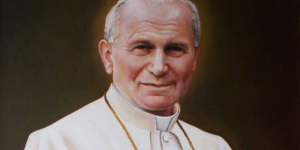 John Paul II, in the encyclical Evangelium Vitae (1995, 53): «God proclaims himself absolute lord of man’s life, created in his image and likeness (cf.Gen 1,26-28). Therefore, human life has a sacred and inviolable character, in which the very inviolability of the Creator is reflected. Precisely for this reason, God becomes a severe judge of any violation of the commandment “thou shalt not kill” (Ex 20:13), which is at the basis of social coexistence. God is the defender of the innocent (cf.Gen 4,9-15; Is 41,14; Jr 50.34; Psalm 19/18,15). Also in this way, God demonstrates that “he takes no delight in the destruction of the living” (Wis 1:13). Only Satan can enjoy it: because of his envy, death entered the world (cf.Wis 2,24). Satan, who is “a murderer from the beginning”, and also “a liar and the father of lies” (Jn 8:44), deceiving man, leads him to the confines of sin and death, presented as achievements or fruits of life.
–And what is the eternal destiny that God gives to “his” children who die without baptism, and specifically to those who have been aborted? This is a question of immense importance. It is about the eternal destiny of children who, without having reached the use of reason and freedom, die without baptism, and of those who are involuntarily or criminally aborted. TheInternational Theological Commission (CTI), dependent on the Congregation for the Doctrine of the Faith, published an extensive study on The Hope of Salvation for Infants Who Die Without Being Baptised. Card. William J. Levada, prefect of the Congregation of Faith, presented the text to Pope Benedict XVI, who authorized its publication (I-19-2007). It is a topic that today, the document points out, calls more than ever for the response of faith and hope in Christ.
«In our times the number of children who die without having been baptized is growing significantly. Partly because the parents, influenced by cultural relativism and religious pluralism, are not practicing, partly also as a consequence of fertilization in vitro and abortion. Because of these phenomena, the question about the fate of these children is raised with new urgency.[…] Parents experience great pain and feelings of guilt when They do not have the moral certainty of the salvation of their children, and people find increasingly difficult to accept that God is just and merciful if he excludes children, who have not personally sinned, from eternal salvation, whether they are Christians or not. From a theological point of view, the development of a theology of hope and an ecclesiology of communion, together with the recognition of the greatness of God’s mercy, question an excessively restrictive interpretation of salvation” (2).
The immediate precedents of this document are the Vatican II and the Catechism of the Church.
 –The Second Vatican Council (1965): «Christ died for all and the ultimate vocation of man is really only one, that is, the divine vocation. Consequently, we must maintain that The Holy Spirit offers everyone the possibility of being associated with this paschal mystery in a way known only to God.» (GS 22; cf. LG 16 and AG 5). It offers to everyone: not only those integrated into the Church through baptism.
–The Catechism of the Catholic Church (1992) applies this principle to the question we are dealing with:
1261. «As for children who died without Baptism, the Church can only entrust them to divine mercy, as it does in the rite of funerals for them..Indeed, the great mercy of God, who “wants all men to be saved” (cf.1 Tim 2,4) and the tenderness of Jesus with the children, which made him say: “let the children come to me, do not prevent them” (Mk 10,14), allow us “trust that there is a way of salvation for children who die without Baptism”.
–The International Theological Commission (2007) sets out, in summary, its conclusion at the beginning of the aforementioned document.
“The principle according to which God wants the salvation of all human beings allows us to hope that there will be a way of salvation for children who died without baptism (cf. Catechism n. 1261). This statement invites theological reflection to find a logical and coherent connection between various statements of the Catholic faith: the universal saving will of God / the uniqueness of the mediation of Christ / the necessity of baptism for salvation / the universal action of grace in relation to the sacraments / the link between original sin and deprivation of the beatific vision / the creation of the human being “in Christ”.
«The conclusion of the study is that There are theological and liturgical reasons to motivate the hope that children who die without Baptism can be saved and introduced into eternal happiness., although there is no explicit teaching of Revelation on this problem. None of the considerations that the text proposes to motivate a new approach to the issue can be used to deny the need for baptism or to delay its administration. Rather, there are reasons to expect that God will save these children».
Document Outline The Hope of Salvation for Infants Who Die Without Being Baptised
I highlight some phrases in it that seem most important to me.
Beginning, presentation of the document.
«Traditional teaching resorted to the theory of limbo, understood as a state in which the souls of children who die without baptism do not deserve the reward of the beatific vision, because of original sin, but do not suffer any punishment, since they have not committed personal sins. This theory, developed by theologians since the Middle Ages, has never entered into the dogmatic definitions of the Magisterium, although the Magisterium itself has mentioned it in its teaching until the Second Vatican Council. It therefore remains a possible theological hypothesis..
Introduction
(1-7).The Church prays for the eternal salvation of children who die unbaptized. And this is very significant.
“Bearing in mind the principle lex orandi, lex credendi, the Christian community takes into account that there is no mention of limbo in the liturgy. The liturgy includes the feast of the Holy Innocents, venerated as martyrs although they had not been baptized, because they were killed “for Christ”. There has been [after Vatican II] an important liturgical development with the introduction of funerals for children who died without baptism. We do not pray for the condemned. The Roman Missal of 1970 introduced a funeral Mass for unbaptized children whose parents wished to present them for Baptism. The Church entrusts to the mercy of God children who die without Baptism” (5).
1. «Historia quæstionis». History and hermeneutics of Catholic teaching
(8-10) Biblical foundations.
The absence of explicit teaching in the New Testament on the destiny of unbaptized children is evident (9). But fundamental truths are given in it that allow us to establish theological theses well-founded in Revelation.
(11-14) The Greek Fathers.
«Very few Greek Fathers have dealt with the fate of children who die without Baptism (11). Gregory of Nyssa is the only one who dedicates a work to him, in which he says that “the premature death of newborn children is no reason to assume that they will suffer torment” in the afterlife (12).
(15-20) The Latin Fathers.
In the Latin Church the Fathers, following Saint Augustine, who combats the errors of Pelagius, maintain a rigorist conviction, thinking that “God condemns those who have only original sin in their souls. Even children who have not sinned of their own free will” (20).
(21-25) Medieval Scholasticism.
“Since children who have not achieved the use of reason [and a fortiorithe aborted] have not committed actual sins, theologians came to the common opinion according to which these unbaptized children do not experience any pain, and even enjoy full natural happiness due to their union with God in all natural goods (Thomas Aquinas, Duns Scotus).”(23) «The expression “children’s limbo” was coined between the 12th and 13th centuries to designate “the resting place” of these children» (24).
(26) The modern post-Tridentine era.
Against the Jansenists, “Pius VI defended the right of Catholic schools to teach that those who die only with original sin are punished with the absence of the beatific vision (“penalty of damage”), but not with sensible suffering (punishment of fire, “penalty of meaning”)” (Auctorem fidei, 1794).
(27-31) From Vatican I to Vatican II. (32-41) Problems of a hermeneutical nature.
2. «Inquirere via Domini». Investigate the ways of God.
(42-52) Theological principles. The universal saving will of God carried out through the sole mediation of Jesus Christ in the Holy Spirit. (53-56) The universality of sin and the universal need for salvation. (57-60) The need of the Church. (61-67) The need for sacramental Baptism. (68-69) Hope and prayer for universal salvation.
3. «Spes orans». Reasons for hope
(70-79)The new context. (80-87) God’s Merciful Philanthropy. (88-95) Solidarity with Christ. (96-99) The Church and the communion of saints. (100-101) Lex orandi, lex credendi.
«Before Vatican II, in the Latin Church, there was no funeral rite for unbaptized children, who were buried in unconsecrated ground. Strictly speaking, there was no funeral rite for baptized children either, although in this case a Angel Mass, and naturally they were given a Christian burial. Thanks to the post-conciliar liturgical reform, The Roman Missal now contains a Mass for children who die without baptism, and special prayers for this case are also found in the Ordo exsequiarum..Although in both cases the tone of the prayers is particularly cautious, in fact Today the Church expresses in the liturgy hope in the mercy of God to whose loving care the child is entrusted.This liturgical prayer reflects and at the same time shapes the sensus fidei of the Latin Church about the fate of children who die without baptism: lex orandi, lex credendi. It is significant that in the Greek Catholic Church there is only one funeral rite for children, baptized or not, and the Church prays for all deceased children that they may be welcomed into the bosom of Abraham, where there is no pain or anguish, but only eternal life” (100).
(102-103) Hope.
“Our conclusion is that the many factors we have considered offer serious theological and liturgical reasons to hope that children who die without baptism will be saved and will be able to enjoy the beatific vision.We emphasize that these are reasons for hope in the prayer, more than certain knowledge. There are many things that simply have not been revealed to us (cf.Jn 16,12). We live in faith and hope in the God of mercy and love who has been revealed to us in Christ, and the Spirit moves us to pray in constant thanksgiving and joy (cf.1 Thes 5:18)» (102).
I end by recalling what the Virgin Mary said to the children of Fatima (13 July 1917): “When you pray the Rosary, say after each mystery: O my Jesus, forgive us, save us from the fire of hell; lead all souls to Heaven, especially those most in need.” “When you recite the Rosary, you will say after each mystery: O my Jesus, forgive us, save us from the fire of hell, lead all souls to Heaven, especially those most in need.” Aborted children and those who, before reaching the use of reason, die without baptism, are human beings who have souls. Let us be obedient to the exhortation of the Virgin of Fatima, and pray: O my Jesus, lead all souls to Heaven.
Author: Pbro. José María Iraburu
