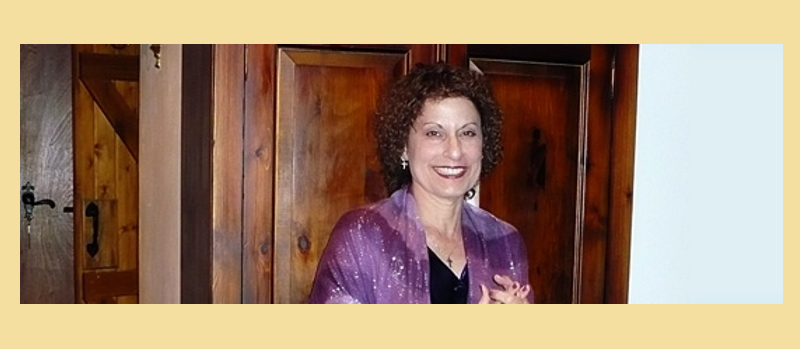
The American journalist and writer, author of a biography of Flannery O’Connor and a mystery novel, had been raised a Catholic.
The paths by which God calls people to conversion are quite varied. At times, spectacular. And at others, paradoxical.
The case of Lorraine Murphy falls among the latter, because it was the induced abortion she underwent that was the first breach that allowed her to see the wrong road her life was taking.
Today she lives in Georgia (United States), where she is a librarian at the university, and works as a freelance journalist and as a writer. She has published seven books, among them a biography of the writer Flannery O’Connor and a mystery novel entitled Death of a liturgist.
From an Italian family, she had grown up in a one hundred percent Catholic environment — family, school and surroundings — so much so that she recounts the shock she felt as a teenager on seeing, in a bookshop at the Miami train station, Bertrand Russell’s book Why I Am Not a Christian.
From Catholic girl to young atheist
And the truth is that years later she too ceased to be one, when at the university, where she was studying English literature so as to become a writer one day, all her professors took aim at the faith.
“It was 1964 when I arrived on campus. I was a dainty girl, a virgin who went to church”: two years later, she herself describes that she had turned into a hippie signed up to the “death of God” thesis, who saw the Mass as a relic of her childhood much like a teddy bear. “I despised everything my parents cherished, from virginity before marriage to abstinence from drugs”: she became a feminist, an enemy of marriage and motherhood, and gave herself over to “free love”.
“Feminists like me did not realize back then how happy we were making dishonorable men by practicing sex without commitment”, says Lorraine: “I was too blind to see the truth. Although I strove to be the model easy girl of the sixties, in my heart I was still the little girl who had gone to a Catholic school and dreamed of finding someone traditional who would love her and marry her”.
Lorraine laments that in her childhood and adolescence no one gave her arguments to counter atheist ideas. When she earned her doctorate and became a professor, she herself turned into their propagandist before her students.
Her child’s life saved her
But everything began to change in the face of an unexpected pregnancy: “It did not take me long to decide what I had to do. After all, I had expounded at length on the subject of abortion in my classes, and it seemed absolutely clear to me that the rights of the woman always prevail over those of the child”.
So she set the process in motion, “which would be as simple and straightforward as pulling a tooth, according to the feminist talking points. In reality, the abortion became one of the most horrendous moments of my life, physically and emotionally, something I would relive and lament through all the years that followed. This terrible event became the first crack in my feminist armor, and I began to ask myself whether everything I had held about feminism was true”.
A candle in St. Patrick’s
That abysmal moment was the launching point for Lorraine. She met a good man, a Christian of no specific denomination though not very observant, and married him. And although she remained an atheist, she began to stop viewing the things of religion with such detachment.
Until one day, on returning from a business trip to New York, her husband, who had never been inside a Catholic church, left her dumbfounded: “I went into St. Patrick’s Cathedral and lit a candle for your parents and my father”. “Then a chill ran through me as I realized that I had never prayed for my parents, who had died years before”.
From that moment on, she confesses, “things moved very quickly”. They lived near a Catholic church and began going to Mass there: “I began to re-read the Scriptures, and it seemed to me that Christ was coming out of those pages to take hold of my heart”.
One night, with that troubled heart, she went to the priest for confession, and in particular to receive forgiveness “for that horrible black sin that had kept me in chains for years”.
Even so, Lorraine went on rejecting the Church’s teaching on contraception, homosexuality and women’s priesthood, and although she rejected the abortion she herself had committed, she still thought women ought to have that option.
The cancer
But in the year 2000 she was diagnosed with cancer, and on asking for spiritual assistance she met a priest with whom she began to receive better formation, and who helped her when she thought, through tears, that she was going to die: “Finally, Father Richard López gave me the foundations I needed to abandon my cafeteria Catholicism”.
“My husband and I will soon celebrate 29 years of marriage. And although we have not been blessed with children, we have been blessed in many other ways, in particular our faith”, concludes Lorraine Murray: “And when I reflect on my journey, I believe that God called me back to the Church with the help of my parents and with the prayers of that little soul who never came to be born, but who will never be forgotten”.
Read here the full testimony of Lorraine Murray (in English).
Source: Religión en Libertad
