The writer Vittorio Messori joins the debate
ROME, July 27, 1999 (ZENIT).- The debate over the meaning of the Crusades is not subsiding. This is also because the turn-of-the-millennium distance between the West and Islam evokes suggestive scenarios.
According to the well-known Catholic writer Vittorio Messori, a “black legend” about the Crusades was constructed by the Enlightenment thinkers “as a weapon of psychological warfare against the Roman Church.” Messori has written in the “Corriere della Sera,” Italy’s leading newspaper, that “it is, in fact, in eighteenth-century Europe that, completing the work of the Reformation, the rosary of ‘Roman infamies’ is established and made canonical.”
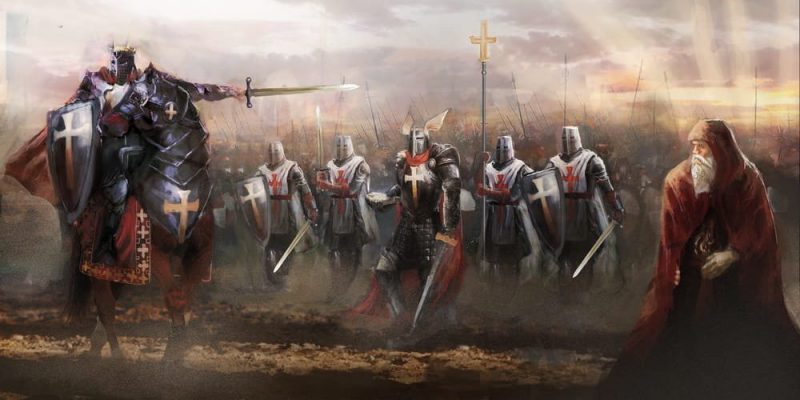
“As far as the Crusades are concerned, anti-Catholic propaganda even invented the name: just like the term Middle Ages, chosen by ‘enlightened’ historiography to indicate the parenthesis of darkness and fanaticism between the splendors of Antiquity and those of the Renaissance. Of course, those who, nine hundred years ago, stormed Jerusalem would have been quite surprised if someone had told them that they were carrying out what would be called the ‘First Crusade.’ For them it was an itinerary, a ‘pilgrimage,’ a journey, a passage. Those same ‘armed pilgrims’ would have been even more surprised if they had foreseen that they would be credited with the intention of converting the ‘infidels,’ or of securing trade routes for the West, or of creating European ‘colonies’ in the Middle East…”.
Messori reveals that, unfortunately, “in the West, the obscure invention ‘crusade’ has ended up trapping some men of the Church herself in a sense of guilt, men who do not know how things really happened.” Moreover, Messori explains, “in the East, the legend has turned against the whole West: we all pay — and will pay still more — the consequences, with the desire for revenge of the Muslim masses who call for vengeance against the ‘Great Satan.’ That is not only the United States, but the whole of Christendom; precisely that of the ‘Crusades’: is it not perhaps Westerners themselves who insist on saying that it was a terrible, unforgivable aggression against the pious, devout, meek followers of the Koran?”.
“And yet — the well-known writer reveals — there is a question we must ask ourselves: within the more than thousand-year framework of relations between Christendom and Islam, who was attacked and who was the aggressor? When, in 638, Caliph Omar conquers Jerusalem, it had already been Christian for more than three centuries. Shortly afterward, the followers of the Prophet invade and destroy the glorious churches first of Egypt and then of North Africa, bringing Christianity to extinction in the places that had had bishops such as Saint Augustine. Then came Spain, Sicily, Greece, what would later be called Turkey, where the communities founded by Saint Paul himself were turned into heaps of ruins. In 1453, after seven centuries of siege, Constantinople itself, the second Rome, capitulates and is Islamized. The Islamic steamroller reaches the Balkans and, as if by a miracle, is stopped and forced to retreat before the walls of Vienna. If the massacre of Jerusalem in 1099 is rightly execrated, one must not forget Mohammed II in 1480 at Otranto, a simple example of a bloody procession of sufferings.”
Messori concludes his reflection by asking some questions: “Even today: what Muslim country recognizes, for those who are not its own, civil rights or freedom of worship? Who is indignant at the genocide of the Armenians yesterday and of the Christian Sudanese today? According to the devotees of the Koran, is the world not divided into ‘territory of Islam’ and ‘territory of war,’ that is, all the places that are still not Muslim and must become so, by fair means or foul?”.
“A simple review of history — Messori writes — even in its broad outlines, confirms an evident truth: a Christendom in a continuous defensive posture with regard to Muslim aggression, from the beginnings until today (in Africa, for example, a bloody offensive is under way to Islamize the ethnic groups that the heroic sacrifices of generations of missionaries had brought to baptism). Granted — and probably not conceded — that someone in history must apologize to another, should it perhaps be Catholics who ask forgiveness for that act of self-defense, for that attempt to keep at least open the route of pilgrimage to the places of Jesus, which was the cycle of the Crusades?”.
