The controversy over the Crusades has not abated. The fact that this year marks the 900th anniversary of the First Crusade has become, in the eyes of a certain anti-Catholic publicistic current, an argument for discrediting the Church and her teachings.
Articles have appeared in which the Crusades are described as holy wars, and the massacres of Jews that occurred on that occasion as the antechamber of the Holocaust. The Church has been accused of having always tried to eliminate her adversaries in the name of orthodoxy. «La Repubblica», the second newspaper by circulation in Italy, wrote that «the Franks massacred seventy thousand people in a mosque», which would lead one to suppose that the mosque was as large as a modern football stadium.
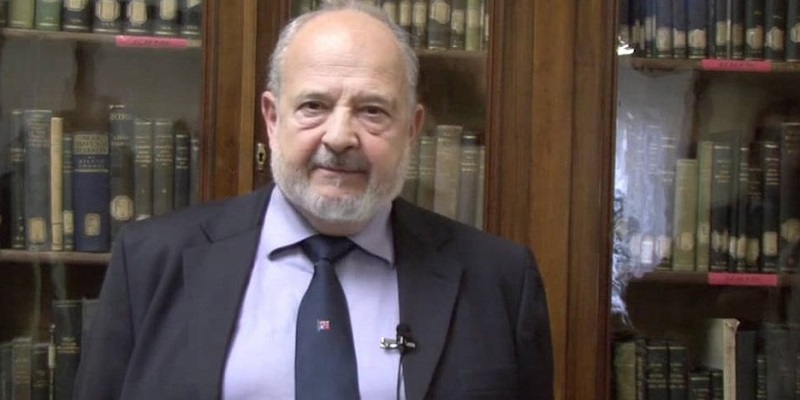
In order to try to avoid nonsense and errors, the historian Franco Cardini, a profound expert on medieval events, has written an article in today’s «Avvenire» entitled «Crusades, not wars of religion».
Professor Cardini explains that the interpretation of the Crusades as antecedents of the wars of religion and ideological wars has been upheld in Enlightenment circles. It is a widely misunderstood and pretextual controversy.
According to Professor Cardini, «the Crusades were never “wars of religion”; they never sought forced conversion or the suppression of infidels. The excesses and violence carried out in the course of the expeditions — which did exist and must not be forgotten — must be evaluated within the framework of the normal, though painful, phenomenology of military events, always bearing in mind that some theological reason justified them. The Crusade corresponds to a movement of armed pilgrimage that slowly took shape and developed over time — between the eleventh and thirteenth centuries — and must be understood by placing it within the context of the long encounter between Christendom and Islam, which produced positive cultural and economic results. How else can one explain the fact of frequent friendships and even military alliances between Christians and Muslims in the history of the Crusades?».
To confirm his theses, Professor Cardini recalls the contribution of Saint Bernard of Clairvaux (1090-1153), who, against lay chivalry — such as that of the twelfth century, made up of greedy, violent and amoral men — proposed the creation of «a new chivalry» in the service of the poor and of pilgrims. Saint Bernard’s proposal was revolutionary: a new chivalry made up of monks who would renounce every form of wealth and personal power and who, even in war, would learn that the enemy may even be killed, when there is no other option, but that he must not be hated. Hence the teaching not to hate even in battle.
The Crusade understood as a «holy war» against Muslims would also be, according to Cardini, an exaggeration. «In reality — the professor emphasizes — what mattered in the expeditions at the service of the brothers in Christ, threatened by the Muslims, was the recovery of peace in the West and the implementation of the idea of aid to distant co-religionists. The Crusade meant being reconciled with one’s adversary before setting out, renouncing dispute and revenge, accepting the idea of martyrdom, placing oneself and one’s possessions at the disposal of the community of believers, and projecting oneself into an experience in light of which, for a certain number of months and perhaps years, the following of Christ and the memory of the living Christ on the earth that had been the theatre of his earthly existence would be placed at the summit of one’s own experience».
