The event and its context
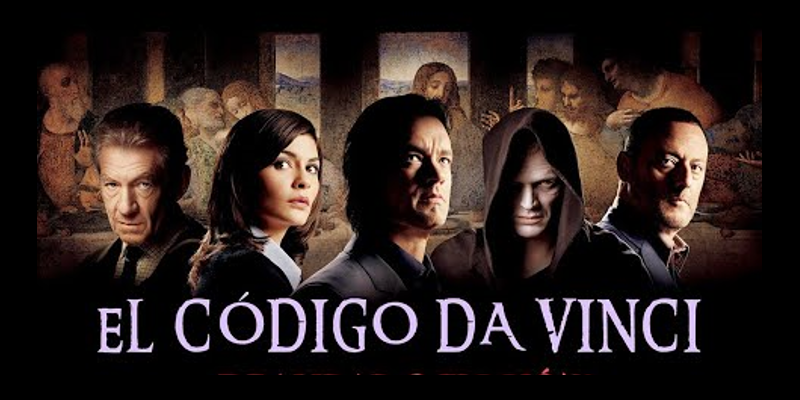
The Da Vinci Code is an anti-Catholic fiction novel that is proving to be a bestseller around the world. With more than 30 million copies sold, translated into 30 languages and with the film rights in the hands of Columbia Pictures and director Ron Howard (with Russell Crowe as the protagonist), it is already an event typical of mass culture. The protagonists find themselves involved in an adventure thriller, deciphering the secret symbology in Leonardo Da Vinci’s painting. And the message that the novel transmits is basically the following:
1.. Jesus is not God: no Christian thought that Jesus is God until Emperor Constantine deified him at the Council of Nicaea in 325.
2.. Jesus had Mary Magdalene as a sexual partner; His children, carriers of his blood, are the Holy Grail (king’s blood = royal blood = Holy Grail), founders of the Merovingian dynasty in France (and ancestors of the novel’s protagonist).
3.. Jesus and Mary Magdalene represented the masculine-feminine duality (like Mars and Athena, Isis and Osiris); Jesus’ early followers worshiped “the sacred feminine”; This adoration of the feminine is hidden in the cathedrals built by the Templars, in the secret Order of the Priory of Sion – to which Leonardo Da Vinci belonged – and in a thousand other secret cultural codes.
4.. The evil Catholic Church invented by Constantine in 325 persecuted the tolerant and peaceful worshipers of the feminine, killing millions of witches in the Middle Ages and the Renaissance, destroying all the Gnostic gospels that they did not like and leaving only the four gospels that suited them well retouched. In the novel, the Machiavellian Opus Dei tries to prevent the heroes from bringing the secret to light: that the Grail is the children of Jesus and the Magdalene and that the first god of the Gnostic “Christians” was female.
All this is not sold as a uchronia or a history-fiction novel in an alternative past or an imaginary Europe. It is intended to be sold as scholarship, historical research and serious documentation work.
In a note at the beginning of the book, the author, Dan Brown, states: “All descriptions of art, architecture, documents and secret rituals in this novel are reliable.“. As we will see, this is false: errors, inventions, misrepresentations and simple hoaxes abound throughout the novel. The pretense of erudition falls to the ground when reviewing the bibliography he has used: serious books on history or art are scarce in Brown’s library, and parasciences, esotericisms and conspiratorial pseudohistories shine instead.
But that does not prevent the press from praising the “historical work” behind the book. For example, the Chicago Tribune marveled at how the book contains “Fascinating history and documented speculation worth several doctorates“; the New York Daily News said “Your research is impeccable.“; the critic of El Periódico de Catalunya (12/12/03) Ramón Ventura says that “To understand the novel as an anti-Christian pamphlet is to fail to understand what it is: an adventure story through the little-known spaces of history, where the mysteries of religion are combined with the enigmas of art; Dan Brown writes with the passion and erudition of Matilde Asensi in The Last Cato“.
The editor of the book in Spain, Aránzazu Sumalla, who has found a gold mine for her small publishing house Umbriel (The Da Vinci Code sells 2,400 books a day in Spain, 125,000 in the first 50 days), does not understand that the Opus Dei website negatively criticizes the book, which presents the Opus as a destructive sect willing to murder and other magical techniques, with the detail that the murderer Silas is a numerario and wears a sackcloth. According to the editor “It is a work of fiction“. But Dan Brown, on his own website, says very clearly that he has not just written a novel full of nonsense to entertain: “As I have mentioned before, the secret I reveal has been whispered for centuries. It’s not mine. It is true that it may be the first time that the secret is revealed in the format of a popular thriller, but the information is not new. My sincere hope is that The Da Vinci Code, in addition to entertaining people, serves as an open door for them to begin their investigations.“.
The result is that sales of pseudohistorical books about the Church, the Gnostic gospels, women in Christianity, pagan goddesses, etc. have skyrocketed: the book website Amazon.com is the first to benefit, linking The Da Vinci Code with neopagan, radical feminist and new age pseudohistory books. Fiction is the best way to educate the masses, and disguised as science (history of art and religions in this case) it deceives readers better. As the saying goes: “slander, something remains, and if you slander with data that sounds scientific – even if it is invented – there is more.”
Did Constantine invent Christianity?
Brown’s entire “historical” basis rests on one date: the council of Nicaea in the year 325. According to his theses, before this date, Christianity was a very open movement, which accepted “the divine feminine”, which did not see Jesus as God, which wrote many gospels.
In this year, suddenly, Emperor Constantine, a worshiper of the -male- cult of the Unconquered Sun, took over Christianity, banished “the goddess”, turned the prophet Jesus into a solar god-hero and mounted a Stalinist-style raid to make the gospels he did not like disappear.
For any reader with some historical culture, this hypothesis is absurd for at least two reasons:
1.. We have texts that demonstrate that Christianity before 325 was not as the novel says and that Gnostic texts were as alien to Christians as “new age” publications are today: parasitic and external.
2. Even if Constantine had wanted to change the faith of millions in this way, how could he have done it in a council without not only millions of Christians but hundreds of bishops realizing it? Many of the bishops of Nicaea were veteran survivors of Diocletian’s persecutions, and they bore the marks of imprisonment, torture or forced labor on their bodies to maintain their faith. Were they going to let an emperor change his faith? Wasn’t that the cause of the persecutions since Nero: Christian resistance to being assimilated as just another cult? In fact, if Christianity before 325 had been as described by Brown’s characters and many current neognostics, it would never have suffered persecution since it would have fit perfectly with so many other pagan options. Christianity was always persecuted for not accepting the religious impositions of political power and proclaiming that only Christ is God, with the Father and the Holy Spirit.
Is Jesus God?
In the novel, the character of the English historian Teabing claims that at Nicaea it was established that Jesus was “the Son of God.” A review of the canonical gospels, written almost 250 years before Nicaea, shows about 40 mentions of Jesus as the Son of God. What Brown is doing is copying from one of the pseudohistorical books that he has plagiarized the most to make his best-seller, Holy Blood, Holy Grail, in which it is stated that “at Nicaea it was decided by vote that Jesus was a god, not a mortal prophet“.
The truth is different. Christians have always thought that Jesus is God and this is how he appears in the gospels and in Christian writings long before Nicea. For example, and to the chagrin of Mormons, Jehovah’s Witnesses or Muslims (three current creeds that deny that Jesus was God) we can read how Thomas says upon seeing the resurrected Jesus:
[John 20:28] Ho Kurios mou ho Theos mou (My Lord and my God)
Or in Romans 9:5; letter dictated by Saint Paul to Tertius in the house of Gaius, in Corinth, in the winter of 57 to 58 AD:
“Of them [the Jews] are the patriarchs, and as a man the Christ has arisen from them, who is God, and is above all.“.
Or in Titus 2:13:
“We hope that the glory of the great God and our Savior Jesus Christ will be manifested“.
Or in 2Peter1,1:
“Simon Peter, servant and apostle of Jesus Christ, to those who through the justice of our God and savior Jesus Christ have received a faith as precious as ours“.
And coming out of the gospels we have the texts of some Fathers of the Church long before Nicaea:
“For our God, Jesus Christ, was conceived in the womb of Mary, of the lineage of David, but by the Holy Spirit, according to the plan of God.“[Letter to the Ephesians from Saint Ignatius of Antioch, c.35-c.107 AD].
“If you had understood what was written by the prophets, you would not have denied that He [Jesus] was God, Son of the only, unbegotten, insurmountable God” [Dialogue with Tryphon, Saint Justin Martyr, c.100-c.165 AD].
“He [Jesus Christ] is the holy Lord, the Wonderful, the Counselor, the Beautiful in appearance, and the Mighty God, coming on the clouds as judge of all men“[Against Heresies, book 3, Saint Irenaeus of Lyon, c. 130 -200 AD].
“He alone [Jesus] is both God and Man, and the source of all our good things“[Exhortation to the Greeks, by Saint Clement of Alexandria, 190 AD].
“Only God is without sin. The only man without sin is Christ, because Christ is also God“[On the Soul 41:3, by Tertullian, year 210 AD].
“Although [the Son] was God, he took flesh; and having been made man, he remained as he was: God“[On First Principles 1:0:4; by Origen, c.185-c.254 AD].
These quotes – and many others – demonstrate that Christians were clear about the divinity of Christ long before Nicaea. In fact, in Nicaea the debate was about the teachings of Arius, a heretical priest from Alexandria who, since 319, taught that Jesus was not God, but a minor god. Of about 250 bishops, only two voted in favor of Arius’s position, while the rest affirmed what is recited today in the Creed, that the Son of God was begotten, not created and that he is of the same nature (substance, homoousios) as the Father, that is, that God the Son is God, just as God the Father is also God, the same God but different Persons. Despite this unanimity of the council fathers, the historian Teabing in the novel says that Christ was “designated God” by a narrow margin of votes!
A historian who doesn’t know history
Teabing also says a number of things about how the Christianity invented by Constantine was nothing more than paganism. “Nothing in Christianity is original“says the character. We write the statements from The Da Vinci Code underlined and then comment on each one.
-The Egyptian solar disks became halos of Catholic saints.
Christian art has to express biblical concepts, such as the luminous faces of Moses (at Sinai) and Jesus (at the Transfiguration).
To do this they use a common resource, halos or nimbuses that were already used in Greek and Roman art. Roman emperors, for example, appear on coins with radiant heads.
-The pictograms of Isis nursing her miraculous baby Horus were the model for the images of the Virgin Mary with the Child Jesus.
The image of a mother breastfeeding is common to Egyptians, Romans, Aztecs or any other culture that represents motherhood. Isis, in the first centuries of our era, was no longer a popular goddess of Egyptian agriculture, but rather a mystery cult of an initiatory type for Greco-Roman elites, a cult that, by the way, did not include sexual rituals that the author likes so much. Christian artists, when representing Mary with Jesus (a mother with a child), used the artistic models of the society in which they were.
-“The miter, the altar, the doxology and the communion, the act of eating God, were taken directly from earlier pagan mystery religions.”
The bishops’ miter can hardly be inspired by ancient mystery religions: it does not appear in the West until the middle of the 20th century. X and in the East it was not used until the fall of Constantinople in 1453.
The altar is – like Christianity itself – of Jewish origin, not pagan. There are 300 references to altars in the Old Testament. The sacrificial altar of the Temple in Jerusalem is the reference point of ancient Judaism and Christian symbolism. Nothing to do with pagan cults.
The Doxology (doxa=glory; logos=word) is nothing more than the prayer of the Gloria: “Glory to God in the highest and on earth peace among men; We praise you, we bless you, we adore you.” uses purely Christian language, with Trinitarian concepts and continually using passages from the New Testament. Nothing to do with pagan mystery cults.
Communion and “eating God”: It seems that at the higher levels of the cult of Mithras there was a sacred meal of bread and water or bread and wine. There is no data to indicate that the Mithraists considered that in that meal they “ate a god” or anything similar. Again, the origin of blessing and sharing bread is Jewish, as Jean Danielou explains in detail in his study The Bible and the Liturgy. It seems that Jesus instituted the Christian Eucharist during a chabourah, a sacred Jewish meal. There is no relationship with pagan mystery cults.
-Sunday, a Christian sacred day, was stolen from the pagans
False. From the beginning, Christians saw the day after the Sabbath, that is, the first day of each week, as the most important day of their gathering. They were already doing so in the time of Saint Paul (see Acts 20:7: “and on the first day of the week, when we were gathered together to break bread.”, or 1 Cor 16:2, when Paul asks to gather the collections and tithes on the first day of the week). Danielou, in The Bible and the Liturgy, dedicates his entire chapter 16 to talking about “The Eighth Day”, with quotes from Ignatius of Antioch, the Epistle of Barnabas, the Didache, all authors from the late 1st century and early 2nd century. They all speak of the “dies domenica” (Day of the Lord). Saint Justin, around 150 AD, is the first Christian to use the Latin name Day of the Sun to refer to the first day of the week.
Already at the council of Hispanic bishops of Elvira, in 303 AD, it was proclaimed: “if someone in the city does not come to church three Sundays in a row, they will be excommunicated for a short time, so that they can correct themselves.” Only 20 years later, in 321, Constantine officially declared Sunday as a day of rest and abstention from work. In other words, Sunday is a Christian “invention”, which was later adopted by civil society, and not a pagan holiday stolen by Christians, just the opposite of what Brown’s novel says.
-The newborn Hindu god Krishna was also offered gold, frankincense and myrrh.
Extracted, apparently, from the pseudohistory book The World’s Sixteen Crucified Saviors, written by Kersey Graves in 1875 and reviled even by atheists and agnostics, although very popular and copied on the Internet. Graves never provides documentation of his claims. This one about gold, frankincense and myrrh seems simply an invention. It doesn’t appear anywhere in Hindu literature. The Bhagavad-Gita (1st century AD) does not mention Krishna’s childhood. Gifts do not appear in the stories about the child Krishna in the Harivamsa Purana (c.300 AD) and the Bhagavata Purana (c.800-900 AD).
-The god Mithras, born on December 25 as Osiris, Adonis and Dionysus, with the titles “Son of God” and “Light of the World”, buried in rock and resurrected 3 days later, inspired many elements of Christian worship.
In fact, the pagan holiday of December 25 in Rome was invented by Emperor Aurelius in 274, many years after Latin Christians celebrated December 25 as the date of Christ’s birth.
Although in the novel they speak of Mithras as a god “dead, buried in rock and resurrected three days later”, this statement is not recorded in any text or ancient tradition about Mithras. Apparently it is another of the borrowings taken from the nineteenth-century pamphlet by Kersey Graves, specifically from chapter 19 of The World’s Sixteen Crucified Saviors. Of course, Graves does not provide documentation.
Gnosticism at the service of radical feminism
Why is the world going so badly, are there wars, violence and pollution? The response of radical feminism and The Da Vinci Code is simple, the fault lies with Christianity, which is sexist:
“Constantine and his male successors successfully converted the world from matriarchal paganism to patriarchal Christianity through a propaganda campaign that demonized the sacred feminine, eliminating the goddess from modern religion.” As a consequence, “Mother Earth has become a world of men, and the gods of destruction and war take their tribute. The male ego has spent two millennia without balancing its feminine scales. an unstable situation marked by testosterone-fueled wars, a plethora of misogynistic societies, and a growing lack of respect for Mother Earth”
This would have been avoided by following Gnostic “Christianity”, some of whose groups and tendencies considered the divine as masculofeminine, harmonious relations of positions (ying-yang), or even androgynous. Jesus -according to the Gnostics of the 16th century. II and the feminist newagers of the 20th century. XX- needs a feminine opposite to complete him; His consort would be Mary Magdalene. And some documents that support it: the apocryphal gospels, imaginative Gnostic texts without a historical basis.
While the canonical gospels are from the s. I, no Gnostic text is prior to the s. II. Many are from the s. III, IV or V. In the middle of the s. II the Church was already clear that the gospels of Matthew, Mark, Luke and John were those inspired by the Holy Spirit, and it only doubted the canon of a couple or three texts. The idea in the novel is false that in 325, with Constantine, from among “more than 80 gospels considered for the New Testament”, only four were chosen: these four had already been selected for 200 years, as we read in the texts of Justin Martyr (150 AD) and Saint Irenaeus.
In The Da Vinci Code there is material of many types: new age, occultism, conspiracy theories, neopagans, wiccas, astrology, oriental and Amerindian borrowings. but the gnostic-feminist cocktail is the basis of Macedonia. There is little real research on the Holy Grail, but a lot of bloodletting.
Thus, we are quoted a text that truly exists, the Gospel of Mary Magdalene, a late Gnostic work, written by authors of a Gnostic sect, from outside Christianity. In it, Mary kisses Jesus on the mouth and that causes the envy of the apostles. According to Teabing, the novel’s historian, “Jesus was the first feminist. “He wanted the future of his church to be in the hands of Mary Magdalene.”
What no one cites is verse 114 of the famous Gnostic text Gospel of Thomas, where Jesus says that He will make Mary Magdalene “a living spirit like you, men. For every woman who makes herself a man will enter the kingdom of heaven.” Ancient Gnosticism is recycled by antagonists of the current Church, but to do so they have to reject some things about ancient Gnosticism, which was actually sexist, elitist, despised the body and all material things and is difficult to sell as “authentic Christianity.”
Thus, the author’s enthusiasm for the “fertility rites”, which the protagonists so admire – and practice – has nothing to do with fertility, obviously, but with sexual pleasure. It is a sign of the times, but also a Gnostic and Cathar heritage: engendering, giving life to new bodies, is bad. Just the opposite of Christianity! Sex without conception. Presumably the next novel will deal with cloning, that is, conception without sex.
Many other errors
Sandra Miesel, a Catholic journalist specializing in popular modern literature, cannot help but list the book’s miscellaneous errors, as an example of its “impeccable” documentation.
a.. It is said that the planet Venus moves drawing a pentagram, the so-called “pentagram of Ishtar”, symbolizing the goddess (Ishtar is Astarte or Aphrodite). Contrary to what the book says, the figure is not perfect and has nothing to do with the Olympics. The Olympics were held every four years and in honor of Zeus, nothing to do with the cycles of Venus or the goddess Aphrodite.
b.. The novelist says that the five rings of the Olympics are a secret symbol of the goddess; The reality is that when the first modern Olympics were designed, the plan was to start with one and add a ring in each edition, but they stayed at five.
c.. In the novel they present the long, hollow central nave of a cathedral as a secret tribute to the female womb, with the ribs as sexual folds, etc. It is taken from the pseudohistory book “The Templar Revelation”, where it is stated that the Templars created the cathedrals. Of course it is false: the cathedrals were commissioned by the bishops and their canons, not the Templars. The model of the cathedrals was the church of the Holy Sepulcher or the ancient Roman basilicas, rectangular buildings for civil use.
d.. The Priory of Sion really exists, it is a French association registered since 1956, possibly originating after World War II, although they claim to be heirs of Freemasons, Templars, Egyptians, etc. The list of Grand Masters given in the novel is not credible: Leonardo Da Vinci, Isaac Newton, Victor Hugo.
e.. The novel says that the tetragrammaton YHWH, the name of God in Hebrew letters, comes from “Jehovah, an androgynous physical union between the masculine Jah and the pre-Hebrew name of Eve, Havah.” Apparently, no one has explained to Brown that YHWH (which we know today is pronounced Yahweh) began to be pronounced “Jehovah” in the Middle Ages when the vowels of “Adonai” were interpolated between the consonants.
f.. Tarot cards do not teach doctrine of the goddess; They were invented for games of chance in the 15th century and did not acquire esoteric associations until the end of the 18th century. The idea that the diamonds in the French deck represent pentacles is an invention of the British occultist A.E. Waite. What will the esotericists say about the Spanish deck with its cups – feminine sexual symbols – and its swords – phallic symbols, perhaps like clubs -?
g.. Pope Clement V did not eliminate the Templars in a Machiavellian plan nor did he throw their ashes into the Tiber: the Tiber is in Rome and Clement V is not, because he was the first pope in Avignon. The entire initiative against the Templars belonged to the French king, Philip the Fair. Freemasons, Nazis and now Neognostics want to be heirs of the Templars.
h.. Mona Lisa does not represent an androgynous being, but Madonna Lisa, wife of Francesco di Bartolomeo del Giocondo. Mona Lisa is not an anagram of the Egyptian gods Amun and Isa (Isis).
i.. In Leonardo’s The Last Supper, the chalice does not appear and the young and handsome Saint John, the beloved disciple, appears. The novel says that the handsome young man is actually Mary Magdalene, that she is the Grail. The truth is that the chalice does not come out because the painting is describing the Last Supper as it appears in the Gospel of Saint John, without the institution of the Eucharist, more specifically when Jesus warns “one of you will betray me” (John 13:21).
j.. The novel talks about Leonardo receiving many commissions from the Church and “hundreds of lucrative Vatican commissions.” In reality, Leonardo spent little time in Rome and was hardly sent any commissions.
k.. In the novel Leonardo is presented as an ostentatious homosexual. In reality, although in his youth he was accused of sodomy, his sexual orientation is not entirely clear.
l.. The heroine, Sophie Neveu, uses Leonardo’s painting “The Madonna of the Rocks” as a shield and presses it so close to her body that it bends: it is amazing, because it is a painting on wood, not on canvas, and it is almost two meters high.
m.. According to the protagonists of the novel, “during three hundred years the Church burned an astonishing five million women at the stake.” This is a figure repeated in neopagan, Wicca, new age and radical feminist literature, although other websites and current witchcraft texts speak of 9 million. Neopagans need a “shoah” of their own.
When we turn to serious historians, it is estimated that between 1400 and 1800 between 30,000 and 80,000 people were executed in Europe for witchcraft. Not all were burned. Not all of them were women. And most did not die at the hands of Church officials, not even Catholics. The majority of victims were in Germany, coinciding with the peasant and Protestant wars of the 20th century. XVI and XVII. When a region changed denomination, accusations of witchcraft and mass hysteria abounded. The civil, local and municipal courts were especially enthusiastic, especially in Calvinist and Lutheran areas. In any case, witchcraft has been persecuted and punished with death by Egyptians, Greeks, Romans, Vikings, etc… Paganism always killed witches. Feminist Neopaganism’s idea that witchcraft was a pre-Christian feminist religion has no historical basis.
And one could continue dissecting the errors and simple deceptions of this lying best-seller. Not to mention its literary quality. But is a novel worth so much effort? The answer is yes: for thousands of young people and adults, this novel will be their first, perhaps only, contact with the ancient history of the Church, a history watered by the blood of martyrs and the ink of evangelists, apologists, philosophers and Fathers. It would not be worthy of the Christians of the s. XXI to cede without struggle or response to neo-paganism the space that the Christians of the first centuries won with their committed fidelity to Jesus Christ.
Author: Pablo J. Ginés Rodríguez
Fountain: Aciprensa.com
Author’s notes:
For this article I have used a lot of material from Carl Orlson, one of those responsible for the website www.envoymagazine.com
Article published in Info – Spes
Information Bulletin of the S.P.E.S Foundation.
No. 61 – January 2003
Courtesy of: José María Baamonde
Email: infospes@yahoo.es
