The Church has declared that one cannot be both Catholic and a Freemason, because the two contradict each other in what is essential. Here we present the reasons.
Freemasonry is a parallel pseudo-religion incompatible with Christianity. Its religious elements include temples, altars, prayers, a moral code, worship, ritual garments, feast days, the promise of recompense after death, hierarchy, initiation rites and funeral rites.
Freemasonry took its name from the old guild of masons. These were the craftsmen who worked stone in the construction of great buildings. With the decline of the construction of the great cathedrals in Europe and the spread of Protestantism, the masons’ guilds began to decline and, in order to survive, began to admit members who were not masons by trade. In time, these latter became the majority and the guilds lost their original purpose. They became fraternities for making business contacts and discussing the new ideas spreading through Europe.
The foundation of Freemasonry took place in 1717, when four guilds united in London to form the Grand Masonic Lodge as a universal league of humanity. From there it soon passed to France, where the “Grand Orient of France” was founded in 1736.
The great mixture creates a new anti-Catholic identity.
The first Freemasons were English Protestants. They felt “liberated” from a dogmatic Church that requires assent to revealed truths. With the new freedom, fascination with speculation and syncretism grew. They took Adam and the patriarchs as patrons and arbitrarily credited themselves with the greatest constructions of antiquity, including Noah’s Ark, the Tower of Babel, the Pyramids and the Temple of Solomon. They mixed the teachings of ancient religions and freely borrowed from cultic groups such as the Rosicrucians, the Egyptian priests and the pagan superstitions of Europe and the East. The goal was to create a new “gnosis” of immortality.
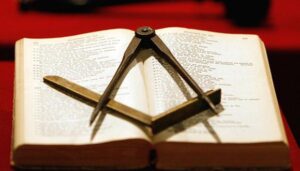
As part of its syncretism, Freemasonry has no scruple about placing the Bible as well upon its “altar”. Lodges may also receive members of any religion. These bring their own sacred books, to which the same value is given as to the Holy Bible. In the end, all of them are relegated to a secondary place.
The true Masonic philosophy is “secular humanism”, a merely human ideology that advocates rationalism and naturalism. According to it, “nature” is guided by reason, which by itself leads to all truth and, consequently, to a utopia of “liberty, equality and fraternity”. This was to be the “novus ordo seculorum” (a new secular order). Freemasonry comes to see itself as “the universal religion”, while the Christian churches are relegated to the category of mere “sects”. In other words, Freemasonry presents itself as the new Catholic Church (catholic = universal).
Freemasonry not only exploits animosity against the Church and anticlericalism, but fosters and institutionalizes them.
Freemasonry has no place for the God of revelation. God appears as a concept and not as a person. God is the “Great Architect” who founded Freemasonry. Man becomes his own god, the same seduction of the ancient serpent: “Eat, and you will be like gods”. In fact, in 1887 the Masonic lodge of the “Grand Orient” (from which Freemasonry in Latin America is generally inspired) formally eliminated the need for its members to believe in God or in the immortality of the soul. The Christian symbols of culture received a secular interpretation. Thus the cross became a mere symbol of nature without any greater transcendence. The letters “INRI” on the cross of Jesus came to mean “Igne Natura Renovatur Integra” (the fire of nature renews everything), which is absurd. (Their true meaning is: “Iesus Nazarenus Rex Iudaeorum”, Jesus of Nazareth, King of the Jews).
Jesus according to Freemasonry. Some Freemasons say they “believe” in Jesus Christ, but, if they are consistent with Freemasonry, they do not believe in Him in the Christian sense, which recognizes Him as God. They regard Him simply as the greatest apostle of humanity for having overcome the fanaticism of the Romans and of the priests. Jesus is “the Great Master”, but, so as not to offend other religions, the name of Jesus was prohibited in the lodge.
Secrecy and the rites of initiation. The ancient masons jealously guarded the secrets of their craft. With the new Freemasonry, the desire for secrecy increased and was strictly imposed on members in the rites of initiation. Candidates must take oaths not to reveal in any way the “secrets” of Freemasonry, under penalty of self-mutilation or execution. The Mason expresses the desire to seek “light”. Then he is assured that he will receive the light of spiritual instruction which he could not receive in another church, and that he will have eternal rest in the “celestial lodge” if he lives and dies according to Masonic principles.
Freemasonry has an extensive hierarchy composed of 33 degrees. The “Entered Apprentice” Mason (first degree) swears: “I will reveal none of the secrets of Freemasonry, under penalty of having my throat cut”. The “Fellow Craft” Mason (second degree) swears: “I will never reveal any of the secrets of Freemasonry to those who are not Masons, not even to Apprentices, and this under penalty of having my heart torn out and my body thrown to the crows”. Upon reaching the thirtieth degree (called “Kadosh”), one must trample the papal tiara and the royal crown, symbolizing the repudiation of their greatest enemies, the Church and the State. Then one swears to liberate humanity “from the bonds of despotism” (which refers above all to the Catholic Church).
Each Mason is unaware of what is taught and done in the higher degrees. Here lies the great irony and the deception of the devil: Masons consider themselves free thinkers, able to hold opinions without reference to the Bible or the Church (which they consider a tyranny), and yet they are bound to the lodge under the severest threats.
Masonic influence is powerful both in politics and in business. When Masons have taken control of a government, as in France in 1877 and in Portugal in 1910, they have established laws to restrict the activities of the Church. The American continent has also been deeply affected by Freemasonry. Many leaders, both of the Spanish crown and of the independence movements, were Masons. Freemasonry remains very present among groups of power.
Freemasonry and Fatima. It was in a Portugal dominated by Masons that the Virgin of Fatima appeared in 1917. As a consequence, religious orders were suppressed, the properties of the Church were confiscated and an attempt was made to cut off her contact with Rome. It is worth noting that the Virgin appears on the bicentenary of the foundation of Freemasonry. Before a world deceived by secret societies, the Virgin offers us her secrets.
The Virgin comes to warn us of the dangers in which humanity finds itself. Grave errors threaten our salvation. The Virgin asks us to renounce sin and return to God. In 1917 Communism takes power. But the warning from heaven goes beyond the evil of Communism. It goes to the root, which is the modern philosophy that rebels against God and is known by the general name of Secular Humanism. This philosophy first produced Freemasonry. Later, and as the logical consequence of Freemasonry, Communism appears.
In 1917, the year of the apparitions, there were revolts in Rome inspired by Freemasonry, which cried out for the end of the papacy. In the same year the Code of Canon Law appeared (see below), which explicitly condemns Freemasonry. Meanwhile, the little shepherds were directly threatened by Freemasonry. Artur de Oliveira Santos, who threw Lucia, Jacinta and Francisco into prison and threatened to kill them, was a member of the feared Masonic authority that governed Portugal.
———————————————————————————————————————————————————————
What the Church says about Freemasonry
The Church’s opposition to Freemasonry is based on:
-Its violation of the First Commandment. Masons have a concept of divinity opposed to that of Judeo-Christian revelation. They do not accept the Triune God, the one true God. Their deity is impersonal: the false god of reason.
-Its violation of the Second Commandment. The grave abuse of oaths in the name of God. Formally they invoke the deity in their rites of initiation in order to subject man, under direct sanctions, to objectives contrary to the divine will.
-Its rejection of the Catholic Church, which it seeks to destroy. (Its objective of destroying the Church is widely documented).
On April 24, 1738 (21 years after the foundation of Freemasonry), Clement XII wrote In eminenti, the first encyclical against Freemasonry. Since then, Catholics have been forbidden to enter Freemasonry. (The Orthodox and some Protestant groups have also on various occasions forbidden their members to enter Freemasonry).
Other papal documents on Freemasonry:
Benedict XIV, Providas, May 18, 1751.
Pius VII, Ecclesiam a Jesu Christo, Sept. 13, 1821.
Leo XII, Quo Graviora, March 13, 1825.
Pius VIII, Traditi Humilitati, encyclical, May 24, 1829.
Gregory XVI, Mirari Vos, encyclical, August 15, 1832.
Pius IX, Qui Pluribus, encyclical, Nov. 9, 1846.
Leo XIII, Humanum Genus, encyclical, April 20, 1884.
Leo XIII, Dall’Alto dell’Apostolico Seggio, encyclical.
Leo XIII, Inimica Vos, encyclical, December 8, 1892.
Leo XIII, Custodi di quella fede, encyclical, December 8, 1892.
Some points of the encyclical Humanum Genus, written by Leo XIII in 1884. This is the most extensive and revealing of the encyclicals on Freemasonry. It unveils the Masonic deception and its true objectives:
The goal of Freemasonry is to overthrow the entire religious and political order of the world produced by Christian teaching and to replace it with a new order according to its ideas.
Its ideas proceed from mere “naturalism”. The fundamental doctrine of naturalism is that nature and human reason must be the masters and guides of everything.
Freemasonry claims to be man’s “natural” religion. That is why it says it has its origin at the beginning of history.
The Masonic concept of God is opposed to that of the Catholic Church. They accept of God only a purely philosophical and natural knowledge. (God is then the image of man. That is why they have no clear distinction between the immortal spirit of man and God).
They deny that God has taught anything.
They do not accept the dogmas of religion or truth that cannot be understood by human intelligence.
They care little for duties toward God. They pervert them with erroneous and vague opinions.
Freemasonry promulgates a syncretism that mixes everything from the mysteries of the Kabbalah of the ancient East to the technological manipulations of Western modernism.
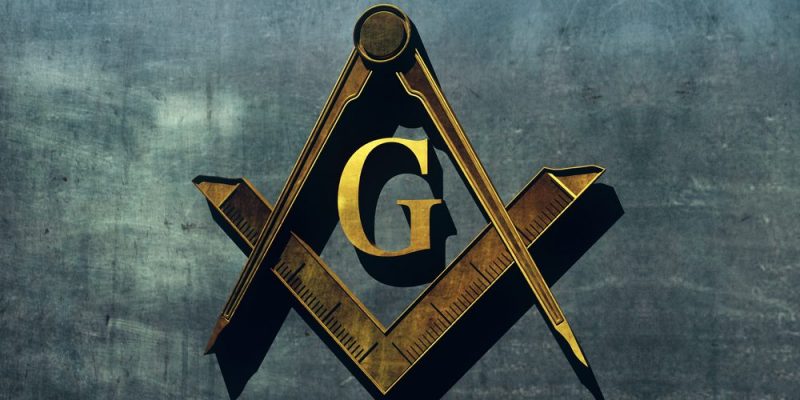
The Masonic logos of the compass and square are symbols of a rationalism that seeks to identify itself with everything that is “natural”.
Its calendar numbers the “Years of Light” (from the first day of creation, or “Years of the World”).
It teaches that the Catholic Church is a sect.
Its opposition to the Catholic Church precedes the Church’s opposition to it.
Incompatibility between Catholicism and Freemasonry:
Catholicism is a revealed and essentially supernatural religion. Therefore the Church must teach revealed doctrine with authority.
Freemasonry promises perfection by means of the natural order alone and sees the natural order as the highest destiny.
From the above it follows that Catholicism and Freemasonry are essentially opposed. If either one ceased to oppose the other, it would cease to be what it is.
The encyclical makes a reflection based on Saint Augustine’s “two cities”, which represent two opposing kingdoms at war. On one side is Jesus Christ; on the other is Satan. The force behind Freemasonry, the cause of its deceptions and of its hatred for the truth of Jesus, can only be Satan, the prince of lies.
The Pope teaches that the abandonment of Christian virtues is the principal cause of the evils that threaten society. (ref. Misericors Dei Filius, June 23, 1883)
———————————————————————————————————————————————————————
Other pronouncements of the Church concerning Freemasonry
The old Code of Canon Law (the official law of the Church) of 1917 explicitly condemns Freemasonry.
Canon 2335: “Persons who join associations of the Masonic sect or any other of the same kind that conspires against the Church and legitimate civil authority incur excommunication simply reserved to the Apostolic See.”
———————————————————————————————————————————————————————
Declaration on Freemasonry by the German Episcopal Conference
Published in L’Osservatore Romano (the Vatican newspaper), July 9, 1980.
Official conversations were held between the Catholic Church and Freemasonry during the years 1974-1980 by mandate of the German Episcopal Conference and the united Grand Lodges.
In the course of these conversations an attempt was made to determine whether Freemasonry had undergone changes over time such as would allow Catholics to belong to it today. The conversations took place in a climate of cordiality and with great frankness and objectivity.
The first three stages (degrees) of membership in the sect were studied. After careful study of these first three stages, the Catholic Church found that fundamental and insuperable contrasts exist. In its essence Freemasonry has not changed. Membership in Freemasonry calls into question the foundations of the existence of Christ; the detailed examination of Masonic rituals and fundamental affirmations, as well as the objective finding that Freemasonry has undergone no change today, leads to this obvious conclusion:
Membership in the Catholic Church and at the same time in Freemasonry is not compatible.
———————————————————————————————————————————————————————
On February 17, 1981, the Sacred Congregation for the Doctrine of the Faith promulgated a clarification on the status of Catholics who associate with Freemasonry, in which the traditional position of the Church concerning Freemasonry is reaffirmed.
———————————————————————————————————————————————————————
The current Code of Canon Law (promulgated in 1983) does not speak explicitly of Freemasonry, but limits itself to the following general warning against this type of association:
Canon 1374: “A person who joins an association which plots against the Church is to be punished with a just penalty; however, a person who promotes or directs an association of this kind is to be punished with an interdict.”
Some bishops thought that this canon no longer applied to Freemasonry. They considered that it had evolved and no longer “plotted” against the Church. They suggested that the prohibition against Catholics entering Masonic lodges could be abrogated. The official declarations of the Church since 1983 have made it very clear that this is not possible.
———————————————————————————————————————————————————————
The following declaration expresses, in summary, the current official position.
Declaration on Masonic Associations, Quaesitum est.
Sacred Congregation for the Doctrine of the Faith.
November 26, 1983.
It has been asked whether there has been any change in the Church’s decision in regard to Masonic associations since the new Code of Canon Law does not mention them expressly, unlike the previous Code.
This Sacred Congregation is in a position to reply that this circumstance is due to an editorial criterion which was followed also in the case of other associations likewise unmentioned inasmuch as they are contained in wider categories.
Therefore the Church’s negative judgment in regard to Masonic association remains unchanged since their principles have always been considered irreconcilable with the doctrine of the Church and therefore membership in them remains forbidden. The faithful who enrol in Masonic associations are in a state of grave sin and may not receive Holy Communion.
It is not within the competence of local ecclesiastical authorities to give a judgment on the nature of Masonic associations which would imply a derogation from what has been decided above, and this in line with the Declaration of this Sacred Congregation issued on 17 February 1981 (cf. AAS 73 1981 pp. 240-241; English language edition of L’Osservatore Romano, 9 March 1981).
In an audience granted to the undersigned Cardinal Prefect, the Supreme Pontiff John Paul II approved and ordered the publication of this Declaration which had been decided in an ordinary meeting of this Sacred Congregation.
Rome, from the Office of the Sacred Congregation for the Doctrine of the Faith, 26 November 1983.
Joseph Card. RATZINGER, Prefect.
+ Fr. Jerome Hamer, O.P., Titular Archbishop of Lorium, Secretary.
(official Vatican.va text).
The 1983 declaration (above) establishes with complete clarity that the Church’s condemnation of Freemasonry remains in force. Contrary opinions do not change the reality of things.
———————————————————————————————————————————————————————
Why Freemasonry?
Freemasonry is the product of the estrangement from God into which men have fallen. Its influence over Hispanics is favored by machismo, which regards Christian practice as something proper only to women. Participation in the Masonic lodge has been presented as an alternative for men, where, instead of submitting to God, they talk about business and make contacts according to their interests. This has deepened the crisis of false masculine identity. The consequences have been grave both for the family and for society.
From syncretism to spiritual blindness. It must be kept in mind that many enter Freemasonry seeking to benefit from its powerful network of contacts and influence. It is a great temptation to perceive the opportunities that open up in business and employment for members of the lodge. Masons usually help one another and have some charitable works. There is also the attraction for men of believing that they are entering an elite group of free thinkers.
Without doubt, many are confused and believe that they can be Catholics and Freemasons. They are sincerely dismayed when they learn the Church’s position against Freemasonry. When the reasons are explained to them, they cannot believe it. They say that their lodge is not like that. It is true that some lodges no longer have the traditional aggressiveness against the Church, but the philosophy remains the same. One must also take into account that lower-ranking members do not know the dark reality of Freemasonry because it is hidden from them until they rise in degree and are more influenced and committed.
A Mason who calls himself Catholic wrote an article claiming that the degrees of Freemasonry are complementary to the beliefs of “any religion that believes in God”. He could not understand the “fanaticism” of “some” in the Church who condemn Freemasonry (“some”, read: all the popes since the year 1738). Later, in the same article, one reads: “Freemasonry has inspired me to be tolerant and to learn from other religions. I have read with great interest the Kabbalah, the Koran… all Masons worship the same God.”
It seems from this writing that in his lodge they do not directly attack the Catholic Church, but something happened that is sometimes worse: they managed to confuse him in such a way that he does not see the difference between reading the Bible and the Kabbalah (writings of occultism). He seeks both readings “with great interest”. He has confused tolerance (respect for the beliefs of others) with syncretism (a mixture of beliefs that joins truth and error).
In modern Freemasonry, in general, there is less open aggressiveness against the Church. There is no doubt that there have been some changes, but in any case the same principles remain latent. Why remain in an association that is essentially mistaken and harmful to the soul?
———————————————————————————————————————————————————————
Jesus Christ is the Way, the Truth and the Life
Discovering the reality about Freemasonry is very painful for its members and relatives. But pain can lead to good if it helps toward conversion of life.
We must sincerely love Freemasons, whether they are relatives, friends or strangers. We must also appreciate and recognize the good they do.
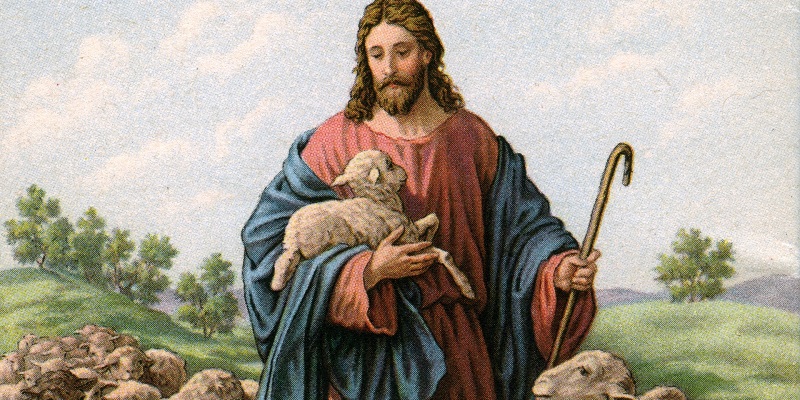
The Church’s condemnation is not a lack of charity, but a true expression of love. To teach the truth and warn against error is a great act of love. That is why the Church has the duty to alert her children to the danger that the grave errors of Freemasonry bring upon their souls and to the consequences for eternal life. That is also what Jesus did. We see the example of Jesus with tax collectors and with sinners in general. He loves the sinner while condemning error and sin.
———————————————————————————————————————————————————————
Cardinal Paul Poupard (President of the Council for Culture – Vatican): “Freemasonry puts all worldviews into the same package. That is what I call ‘absolute relativism’. And the Christian cannot admit that, because only Jesus Christ is the truth. It had to be said clearly. No worldview can be placed in the same position as the truth of Christ.”
