Did the Church Fathers believe in the doctrine of salvation by Faith Alone?
During the period when I felt drawn to Protestantism, I never paused to ask this question, considering that this doctrine had no foundation in Scripture. However, today answering it can be clarifying — for even if a fundamentalist might consider it irrelevant to know what the first Christians believed about this, there are fundamental reasons why it is not. If this doctrine was a novelty of the sixteenth century, there would ultimately be no justification whatsoever for the “Reformation.”
As Catholics we must be open to legitimate developments in Christian doctrine, but whoever has taken the time to study history and the patristic texts will arrive at a stark conclusion: the doctrine of salvation by Faith Alone (Sola Fides) was not believed before Luther; it was explicitly anathematised and rejected by the first Christians.
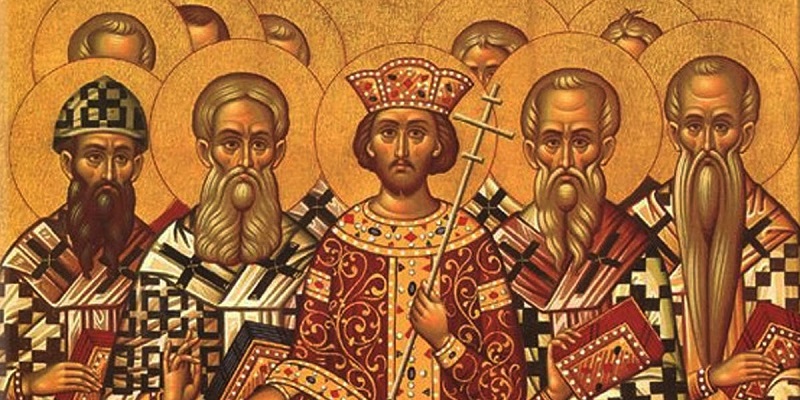
And this is the crux of the matter, for if this were a true doctrine it would imply that the Church had been preaching error throughout her entire history. A Protestant may find it easy to accept this, since we have already seen that most fundamentalists believe the Church became “paganised” following the conversion of the Emperor Constantine the Great and his decree on freedom of worship in the Edict of Milan. However, centuries before Constantine, this doctrine was rejected as heretical.
What follows is a compilation of patristic texts from the most eminent Fathers and ecclesiastical writers of the Church, beginning with the direct disciples of the Apostles, by which I intend to demonstrate that the consensus of the Fathers held:
Although man has free will, he cannot be saved without God’s grace. God by his grace takes the first initiative in salvation, and exercising this freedom man responds and cooperates with grace. (Understanding grace as God’s gratuitous and unmerited favor.)
God calls all men to salvation and pours out his grace upon all through Christ, because he wills all men to be saved. Those who are condemned are so by their own will.
The grace of God moves man to believe in Christ and to obey. Without grace he can do neither, nor does he even have the initiative to do so.
Thus salvation is by grace, but we must cooperate by making use of our freedom or free will.
Through faith the man is justified. In being justified he is not merely declared righteous but made righteous (regenerated).
The justified man, moved by grace, must then live according to God’s will, doing good and keeping the commandments, but he is free not to do so and to fall from the state of God’s grace.
In this sense, to be saved it is not enough merely to believe (Faith Alone), but to believe and then to act. Works and the keeping of the commandments are necessary for salvation, but not as payment for it, because it is grace.
The Didache (c. 65–80 A.D.)
Already in this primitive testimony of the faith of the Church it is noted that it will avail nothing to have had faith throughout one’s life if at the last moment we are not perfect:
“Watch for your life’s sake. Let not your lamps be quenched, nor your loins unloosed; but be ready, for you know not the hour in which our Lord comes. And be frequently gathered together, seeking the things which are befitting to your souls: for the whole time of your faith will not profit you, if you be not made perfect in the last time.”[1]
Clement of Rome (? – c. 101 A.D.)
Clement has frequently been cited by Protestant apologists as a supporter of the doctrine of Faith Alone, on the basis of the following text:
“In conclusion, they were all glorified and magnified, not through themselves or their own works or the righteous doing which they wrought, but through His will. And so we, who through His will have been called in Christ Jesus, are not justified through ourselves, nor through our own wisdom, or understanding, or godliness, or works which we have wrought in holiness of heart; but through faith, whereby, from the beginning, Almighty God has justified all men.”[2]
Clement in fact says the same thing as the Council of Trent when it declares that “nothing which precedes justification — whether faith or works — merits the grace of justification. For if it is by grace, it is no longer on the basis of works; otherwise, as the Apostle says, grace is no more grace”[3]. Trent thus teaches that nothing prior to justification, including works of any kind, merits justification.
In other texts, however, Clement speaks of how the Prophets were declared righteous not only by believing, but by obeying:
“Let us therefore attach ourselves to those to whom grace has been given from God. Let us clothe ourselves with concord and humility, ever exercising self-control, standing far off from all whispering and evil-speaking, being justified by our deeds, and not our words.”[4]
“Let us take Enoch as an example; who, being found righteous in obedience, was translated, and death was never known to happen to him.”[5]
“Abraham, who was called the friend of God, was found faithful, inasmuch as he rendered obedience to the words of God.”[6]
Clement is an excellent exponent of the Catholic doctrine of justification. Man is justified by faith, but is saved on condition that he keeps the commandments and fulfils the will of God in its fullness (works are not merely the product of faith, but a condition for salvation):
“Let us therefore earnestly strive to be found in the number of those that wait for Him, in order that we may share in His promised gifts. But how, beloved, shall this be done? If our understanding be fixed by faith towards God; if we earnestly seek the things which are pleasing and acceptable to Him; if we do the things which are in harmony with His blameless will; and if we follow the way of truth, casting away from us all unrighteousness and iniquity, along with all covetousness, strife, evil practices, deceit, whispering, and evil-speaking, all hatred of God, pride and haughtiness, vainglory and ambition. For they that do these things are hateful to God; and not only they that do them, but also those that take pleasure in them that do them. For the Scripture saith: But to the sinner God said, Wherefore dost thou declare my statutes, and take my covenant in thy mouth, while thou hatest instruction and castest my words behind thee?”[7]
Clement also warns of the danger of losing salvation, and so admonishes that to be saved one must persevere to the end, living a life worthy of God and obeying the commandments:
“Watch, dearest brethren, lest His many benefits turn for us into judgment, if we do not walk worthy of him, and do in concord those things that are good and well-pleasing in His sight. For the Scripture saith somewhere: The spirit of the Lord is a candle searching the inner parts of the belly.
Let us consider how near He is, and that none of the thoughts we cherish or the reasonings we pursue escapes His knowledge. It is right, therefore, that we should not be deserters from His will.”[8]
(Note that in the previous text Clement acknowledges that one can fall from the state of grace and be condemned — unlike the Protestant doctrine of “Once Saved, Always Saved”.)
“Since, therefore, all things are seen and heard by God, let us fear Him, and forsake those wicked works which proceed from evil desires; so that, through His mercy, we may be protected from the judgments to come. For whither can any of us flee from His mighty hand? Or what world will receive any of those who run away from Him?”[9]
“For, as God liveth, and the Lord Jesus Christ liveth, and the Holy Spirit — the faith and hope of the elect — he who with humility and constant gentleness hath without regret performed the decrees and commandments given by God shall both be enrolled and chosen among the number of those who are saved through Jesus Christ.”[10]
He is also a clear exponent of the Catholic doctrine of merit:
“It is therefore right that we should be prompt and ready in well-doing; for of Himself He doth admonish us: Behold, the Lord cometh, and His reward is with Him, even before His face, to render to every one according to his work. He exhorts us, therefore, who believe on Him with our whole heart, not to be slothful or careless in every good work.”[11]
But as if that were not enough, he recognizes that through charity sins can be forgiven:
“Blessed are we, beloved, if we keep the commandments of God in the harmony of love; that so through love our sins may be forgiven us.”[12]
Polycarp (c. 75–155 A.D.)
There is preserved a letter addressed to the Church at Philippi (the translation by J. B. Lightfoot may be consulted online[13]), in which he establishes as the condition for salvation not only faith, but the faithful fulfilment of God’s will and obedience to the commandments:
“Wherefore, gird up your loins, serve God in fear and truth; forsake the empty and vain talk and the error of the crowd; believe in Him who raised up our Lord Jesus Christ from the dead and gave Him glory and a throne at His right hand. To Him all things in heaven and on earth are subject. Him every spirit serves. He comes as Judge of the living and the dead. His blood God will require of those who do not obey Him. But He who raised Him up from the dead will raise up us also, if we do His will, and walk in His commandments, and love what He loved, keeping ourselves from all unrighteousness, covetousness, love of money, evil speaking, false witness; not rendering evil for evil, or railing for railing, or blow for blow, or cursing for cursing; but being mindful of the words of the Lord in His teaching: Judge not, that ye be not judged; forgive, and it shall be forgiven to you; be merciful, that ye may obtain mercy; with what measure ye mete, it shall be measured to you again. And: Blessed are the poor, and those that are persecuted for righteousness’ sake, for theirs is the Kingdom of Heaven.”[14]
The Shepherd of Hermas (c. 141–155 A.D.)
Hermas recounts having a vision of a tower being built upon the waters, with stones being brought to build it. Notably, not all the stones are used: some are cast far from the tower, others shattered, others placed near the tower but left unused because they are rotten, and others rejected for their shape as not fitting the construction. Later the Lady explains that the Tower symbolizes the Church and the stones symbolize different types of Christians.
“Those that went into the building without being squared are they whom the Lord approved, because they walked in the uprightness of the Lord and kept His commandments.”[15]
“-And who are those that were rejected and cast away? These are they who have sinned, but are willing to repent; on which account they were not cast far from the tower, because when they have repented they will be useful for the building…
Wouldst thou know who are the stones that were broken in pieces and cast far from the tower? These are the sons of iniquity: they became believers hypocritically, and no wickedness departed from them. Therefore they have no salvation, for on account of their wickedness they are not fit for the building…”[16]
“As regards the others, which thou sawest lying in great numbers on the ground and not entering the building — of these, the gnawed stones represent those who have known the truth, but did not persevere in it, nor were they joined to the saints. That is why they are useless. — And who are represented by the cracked stones? — These are they who harbour some resentment against one another in their hearts, and do not keep peace among themselves… The chipped stones represent those who have believed and keep the greater part of their conduct within righteousness, but have also their portions of iniquity. That is why they are chipped and not whole.”[17]
“As for the other stones which thou sawest cast far away and falling upon the road, and rolling from the road into pathless places — these represent those who have believed, but who afterwards, dragged by their doubts, abandon their way, which is the true one. Imagining, then, that they can find a better road, they go astray and pass miserably wandering through pathless solitudes.”[18]
He thus establishes that it is not enough to believe, but also to persevere and keep the commandments — otherwise one will come to represent one of those rotted stones cast far from the tower.
Later, when the author of the Shepherd asks the Shepherd, the angel of penance, whether he would be saved, he answers in the affirmative, on condition that he keep the commandments and persevere in them:
“I — said he — am set over repentance, and to all who repent I give understanding. Or does it not seem to thee — said he — that this very repentance is a kind of understanding? Yes — he continued —, repentance is great understanding. For the sinner who does penance understands that he has done evil before the Lord; the remorse for the deed he committed rises in his heart, and he repents and no longer does evil, but gives himself in manifold ways to the practice of good, and humbles and torments his soul for having sinned. Thou seest, then, how repentance is a kind of great understanding.
For this very reason, sir — said I —, I wish to question thee about everything exactly; first, because I am a sinner and wish to know what works I must practise in order to live, for my sins are many in number and of very varied forms. Thou shalt live — he answered me — if thou keep my commandments and walk in them. And whosoever shall keep these commandments shall live unto God.”[19]
Ignatius of Antioch (? – c. 107 A.D.)
For Saint Ignatius it is not enough to proclaim faith; one must persevere in it to the end, and so faith and charity must be bound together in unity. The reward of the athlete of God is eternal life, where he will receive the recompense of his good works. He also establishes that salvation is available to the man who by his free will chooses between life and death, but that if one is not even willing to die for Christ, one does not have eternal life:
“None of these things is unknown to you, if ye have perfect faith and love towards Jesus Christ, which are the beginning and end of life. The beginning, I mean, is faith; the end, love. And these two, bound together in unity, are God; while all other things that pertain to perfection and holiness follow from them. No man making a profession of faith sinneth; nor does he that possesses love hate any one. The tree is made manifest by its fruit; so those that profess themselves to be of Christ shall be made manifest by their works. For the matter is not now one of mere profession of faith, but of being found in its power unto the end.”[20]
“Be sober, as an athlete of God. The prize is incorruption and eternal life, of which thou art also persuaded. In all things and for all things, I am thy ransom — I and my chains, which thou hast loved.”[21]
“Attend to the bishop, that God also may attend to you. I offer myself as a ransom for those who are submissive to the bishop, to the presbyters, and to the deacons. And may it be granted me to have my portion with them in God! Labour together with one another; strive together, as the stewards of God, as His assistants and servants.
Strive to please the Captain under whose banners ye serve, and from whom ye shall receive your wages. Let none of you be declared a deserter. Let your baptism endure as your armour; the faith as a helmet; the charity as a spear; the patience as a complete panoply. Let your deposits be your good works, from which ye shall afterwards receive magnificent savings.”[22]
“Now, these things are approaching their end, and these two things together are set before us: death and life, and each one shall go to his own place. It is as if there were two coinages, one of God and the other of the world, each bearing its own stamp impressed upon it: the unbelievers, that of this world; but the faithful, through charity, the stamp of God the Father engraved by Jesus Christ. If we are not ready to die for Him, to imitate His passion, we shall not have His life in us.”[23]
Justin Martyr (c. 100–165 A.D.)
For Saint Justin, man is not saved by faith alone, but by walking in virtue and by the merit of his actions:
“We are your best helpers and allies in securing peace, for we profess doctrines such as this: that it is not possible for an evildoer, a covetous man, a conspirator — any more than a virtuous man — to be hidden from God, and that each man goes, according to the merit of his actions, to punishment or to eternal salvation. For if all men knew this, no one would choose wickedness even for a moment, knowing that he was going to eternal condemnation by fire; but would by all means restrain himself and adorn himself with virtue, in order to obtain the good things of God and escape the punishments.”[24]
“…now, as to attaining immortality, we have been taught that only they attain it who live holily and virtuously near to God, just as we believe that those who live wickedly and do not repent shall be punished in everlasting fire.”[25]
“But let those who are found not living as He taught be declared not to be Christians, however much they may repeat with the tongue the teachings of Christ; for He said that those who are to be saved are not those who merely speak, but those who also do the works. And indeed He said thus: Not every one that saith to me “Lord, Lord”, shall enter into the Kingdom of Heaven, but he that doeth the will of my Father which is in heaven.”[26]
He also holds a clear view of free will and, nearly 1400 years in advance, rejects the Calvinist position in which man is virtually a puppet unable to resist grace — from which they conclude that whoever is condemned is so because God never poured his grace upon him but abandoned him to his wickedness:
“From what has been said by us above, no one should draw the conclusion that we affirm that whatever happens, happens by a necessity of fate, because we say that events are known beforehand. We shall untie this difficulty as well. We have learned from the Prophets, and we affirm that this is the truth, that punishments and torments, as well as good rewards, are given to each one according to his works; for if it were not so, and all things happened by fate, there would be no free will at all. And indeed, if it is determined that this man be good and that other evil, neither does the former deserve praise nor the latter blame. And if the human race has not the power, by free determination, to flee what is shameful and to choose what is noble, it is not responsible for whatever actions it performs. But that man is virtuous and sins by free choice, we demonstrate by the following argument: we see the same person passing from one contrary to the other. Now, if it were determined that he be either bad or good, he would not be capable of contraries, nor would he change so frequently. In truth, it could not be said that some are good and others bad, since we would then be asserting that fate is the cause of good and bad alike and acts in contradiction with itself; or one would have to take as true what we hinted at above, namely, that virtue and wickedness are mere words, and that only by opinion is something held to be good or bad — which, as true reason demonstrates, is the height of impiety and iniquity. What we do affirm to be an ineluctable destiny is that a worthy reward awaits those who have chosen the good, and a likewise worthy punishment those who have chosen the contrary. For God did not make man after the manner of the other creatures — trees, for instance, or quadrupeds — which can do nothing by free determination; for in that case he would not be worthy of reward or praise, not having of himself chosen the good but having been born already good; nor, had he been evil, would he be justly punished, not having been so freely, but having been unable to be anything other than what he was.”[27]
Theophilus of Antioch (? – c. 200 A.D.)
Only three books survive, written approximately in 180 A.D. (To Autolycus), but already in the first book he speaks of how we will be judged according to our works, and of how those who persevere in good works obtain eternal life:
“And if thou wilt, read thou also with interest the Scriptures of the Prophets, and they will guide thee more clearly to escape the eternal punishments and obtain the eternal good things of God. For He who gave us the mouth for speech, and formed the ear to hear, and made the eyes to see, will examine all things and will judge with justice, rendering to each one according to his merits. To those who, in patience, seek incorruption by good works, He will grant the grace of eternal life, of joy, peace, rest, and a multitude of good things…”[28]
Irenaeus of Lyon (c. 130–202 A.D.)
For Saint Irenaeus grace is likewise resistible, because God made man free; and since God pours his grace upon all men, whoever is condemned is so by his own choice, just as whoever is saved is so because he perseveres in good works:
“This phrase: “How often would I have gathered thy children together, and thou wouldest not!” (Mt 23:37) well set forth the ancient law of human liberty; for God made man free, who, even as he had a soul from the beginning, also enjoyed liberty, so that he might freely receive the Word of God, without being forced by Him. For God never imposes Himself by force, since good counsel is ever present with Him. And therefore does He give good counsel to all. To men as well as to angels He granted the power of choice — for angels too are rational — so that those who obey Him might preserve for ever this good as a gift of God kept by themselves. On the other hand, that good shall not be found in those who disobey Him, and they shall receive the just punishment; for God indeed kindly bestowed this good upon them, but they neither cared to preserve it nor held it precious, but despised His supreme goodness. Therefore, abandoning this good and in a certain sense rejecting it, they shall deservedly incur the just judgment of God, as the Apostle Paul testifies in his Letter to the Romans: “Dost thou despise the riches of His goodness, patience and generosity, not knowing that the goodness of God leadeth thee to repentance? By thy hardness and impenitent heart thou treasurest up for thyself wrath for the day of wrath, when the just judgment of God shall be revealed” (Rom 2:4-5). And in contrast he says: “Glory and honour for him that worketh good” (Rom 2:10).
God therefore has given that which is good, as the Apostle tells us in this epistle, and they who work it shall receive glory and honour, because they have done that which is good when they had it in their power not to do it; but those who do it not shall receive the just judgment of God, because they did not work good when they had it in their power so to do. But if some had been made by nature bad, and others good, these latter would not be deserving of praise for being good, for such were they created; nor would the former be reprehensible, for thus they were made. But since all men are of the same nature, able both to hold fast and to do what is good, and also having the power to cast it from them and not to do it, justly do sensible men (how much more God!) praise the latter and bear witness that they have chosen justly and persevered in the good; while they reprove the former and rightly condemn them for having rejected what is good and just.
On this account also did the Prophets exhort all men to act justly and to do good, as we have so often explained; because this manner of conduct lies in our own hands but, having so many times fallen into forgetfulness through our great negligence, we stood in need of good counsel. Therefore the good God counselled us what is good by means of the Prophets.”[29]
He also emphasises that salvation is obtained through great effort and “struggle”:
“For this reason the Lord says that the kingdom of heaven belongs to the violent: “The violent take it by force,” meaning those who strive, struggle and are continually watchful: these take it by force. For this reason the Apostle Paul wrote to the Corinthians: “Do you not know that in a race all the runners compete, but only one receives the prize? So run that you may obtain it. Every athlete exercises self-control in all things — they to receive a perishable wreath, but we an imperishable. I run in this way, not aimlessly; I do not box as one beating the air; but I pommel my body and subdue it, lest after preaching to others I myself should be disqualified.” Being a good athlete, he exhorts us to compete for the crown of incorruption, and to value that crown which we win by struggle, and which does not fall upon us from without. The more we struggle for something, the more precious it seems to us; and the more precious it is, the more we love it. For we do not love in the same way what comes to us automatically and what we have built with great effort. And since the most precious thing that could happen to us is to love God, for this reason the Lord taught and the Apostle handed down that we must attain it by striving for it. Otherwise our good would be irrational, since we would not have won it by exercise. Sight would not be so desirable a good to us if we did not know the evil of blindness; health becomes more precious to us when we experience illness; so too light compared with darkness, and life with death. In the same way the Kingdom of heaven is more precious to those who know the kingdom of earth; and the more precious it is, the more we love it; and the more we love it, the more glory we shall have before God.”[30]
He rejects what would be known more than a millennium later as the doctrine of “Once Saved, Always Saved”:
“Therefore that presbyter used to say: we ought not to be puffed up, nor reproach the ancients; rather we must fear, lest after coming to the knowledge of Christ we do what is displeasing to God, and in consequence our sins be no longer forgiven us, but we be shut out of His Kingdom. Paul said in this regard: “If He spared not the natural branches, perhaps neither will He spare thee, for thou art a wild olive grafted into the branches of the olive tree, and thou receivest of its sap.”[31]
Clement of Alexandria (c. 150–215 A.D.)
His rejection of the doctrine of Faith Alone is so transparent that no commentary is needed:
“There are also other sheep,” saith the Lord, “which are not of this fold” — deemed worthy of another fold and mansion, in proportion to their faith. “But my sheep hear my voice,” understanding intuitively the commandments. And these are to be taken in a magnanimous and worthy acceptation, along with also the recompense which is the fruit of labour. So when we hear, “Thy faith hath saved thee,” we do not understand Him to say absolutely that those who have believed shall be saved, unless also works follow. But it was to the Jews alone that He spoke this utterance, who kept the law and lived blamelessly, and who lacked only faith in the Lord. No one, then, can be a believer and at the same time licentious; but though he quit the flesh, the believer must overcome the passions, so as to be capable of reaching his own mansion. Now to know is more than to believe, as to be dignified with the highest honour after being saved is a greater thing than being saved. Consequently the believer, through great discipline, divesting himself of the passions, passes to the mansion which is better than the former one, bearing with him the greatest torment: the repentance for the sins committed after baptism.”[32]
Hippolytus of Rome (? – c. 235 A.D.)
Saint Hippolytus, like the rest of the Fathers, acknowledges that man prepares himself for eternal life through faith, by means of his good works:
“And in like manner, those from among the Gentiles, by faith in Christ, prepare for themselves eternal life through good works.”[33]
“He, in administering the righteous judgment of the Father to all, will render to each one what is just according to his works… the justification will be seen in rendering to each one what is just; for those who have done good shall justly receive eternal joy, and the lovers of iniquity shall receive eternal punishment. But the just shall remember only the good works by which they reached the Kingdom of Heaven, in which there is no sleep, no sorrow, no corruption.”[34]
Origen (c. 185–254 A.D.)
Origen is careful to warn that Christians must be instructed to understand that it is not enough merely to believe, but also to act:
“Now let us consider the just judgment of God, in which each one is rewarded according to his works. First, we must reject the heretics who say that souls are good or bad by nature, and maintain in their place that God will reward each one according to his works and not according to his nature. Second, believers will be instructed not to think it sufficient merely to believe; they must realise that the just judgment of God will reward each one according to his works.”[35]
“Let no one think that someone who has faith enough to be justified and to have glory before God can at the same time have wickedness dwelling in him. For faith cannot coexist with unbelief, nor righteousness with wickedness, just as light and darkness cannot dwell together.”[36]
He also acknowledges that justified believers can fall from the state of grace when by their own will they commit grave sins and fail to keep the commandments:
“…Even in the Church, if any one is “circumcised” by the grace of baptism and then becomes a transgressor of the law of Christ, the circumcision of baptism counts for him as uncircumcision, because “faith without works is dead”.”[37]
“The Saviour also, saying, “But I say to you, do not resist evil,” and, “Whoever is angry with his brother shall be liable to judgment,” and, “Everyone who looks at a woman to lust after her has already committed adultery with her in his heart,” and so in the other commandments, conveys nothing else than that it is within our power to observe what is commanded. Therefore we are justly liable to condemnation if we transgress the commandments that we are capable of keeping.
And therefore He Himself also declares: “He that heareth my words, and doeth them, is like a wise man who built his house upon the rock.” Also the declaration: “He who hears these things and does not do them is like a foolish man who built his house upon the sand.”
Even the words which He addressed to those on His right hand, “Come to me, ye blessed of my Father,” “For I was hungry, and ye gave me food; I was thirsty, and ye gave me drink,” show clearly that it depended on themselves to be worthy of praise for doing what was commanded and receiving what was promised; or deserving of censure those who, having heard or received the contrary, were told, “Depart from me, ye cursed, into eternal fire.”
Let us also observe what the Apostle Paul teaches us about having power over our own will, being possessors of either of the causes of our salvation or of our ruin:
“Or despisest thou the riches of His goodness, and forbearance, and longsuffering, not knowing that the goodness of God leadeth thee to repentance? But after thy hardness and impenitent heart treasurest up unto thyself wrath against the day of wrath and revelation of the righteous judgment of God, Who will render to every man according to his deeds: to them who by patient continuance in well doing seek for glory and honour and immortality, eternal life; but unto them that are contentious, and do not obey the truth, but obey unrighteousness, indignation and wrath. Tribulation and anguish upon every soul of man that doeth evil, of the Jew first, and also of the Greek; but glory, honour, and peace to every man that worketh good, to the Jew first, and also to the Greek.”
They will find also innumerable passages of holy Scripture which clearly show that we have free will. For otherwise the commandments given to us would be a contradiction — to observe those things which might save us, or to transgress those which would condemn us — if the power of keeping them were not given to us.”[38]
In his most important work, known as De Principiis or Peri Archon (Περί αρχών), he writes:
“The apostolic teaching is that the soul, having a substance and life of its own, shall, after its departure from the world, be rewarded according to its deserts, being destined to obtain the inheritance of eternal life and blessedness, if its actions shall have procured this for it, or to be delivered up to eternal fire and punishments, if the guilt of its crimes shall have brought it down to this.”[39]
Cyprian of Carthage (c. 200–258 A.D.)
Saint Cyprian also establishes as conditions for salvation the keeping of the commandments and good works:
“To prophesy, to cast out devils, and to do great acts upon the earth is certainly a sublime and an admirable thing; but one does not attain the kingdom of heaven although he is found in all these things, unless he walks in the observance of right and just dealing.
The Lord rebukes and says, “Many shall say to me in that day, Lord, Lord, have we not prophesied in Thy name, and in Thy name have cast out devils, and in Thy name done many wonderful works? And then will I profess unto them, I never knew you: depart from me, ye that work iniquity.” There is need of righteousness, that one may deserve well of God the judge; we must obey His precepts and warnings, that our merits may receive their reward.”[40]
“For we believe that the merits of martyrs and the works of the just are of great avail with the Judge, but only when the day of judgment shall come, when, after the conclusion of this life and the world, His people shall stand before the tribunal of Christ.”[41]
In De opere et eleemosynis (On Works and Almsgiving) he writes:
“The Holy Spirit speaks in the sacred Scriptures and says, “By almsgiving and faith sins are purged” — not, certainly, those sins which had been previously contracted, for those are purged by the blood and sanctification of Christ, but those which are contracted afterwards. Moreover, He says again: “As by the laver of the water of salvation the fire of Gehenna is extinguished, so by almsgiving and good works the flame of sins is subdued.” Because in baptism remission of sins is granted once for all, the constant and ceaseless exercise of good works, after the likeness of baptism, once more bestows the mercy of God…; those who after the grace of baptism have gone astray may once more be cleansed.”[42]
In this text he speaks of how forgiveness is obtained even for sins committed after baptism, by means of good works — a concept entirely foreign to Protestant doctrine. It is also noteworthy that he cites as Scripture not only Proverbs (16:6) but also Sirach (3:30), and in chapter 5 he cites Tobit — two books removed from Protestant Bibles as “apocryphal.”
Quasten comments on this same text:
“Cyprian here teaches the efficacy of good works for salvation. Since no one is exempt “from some wound of conscience”, everyone is obliged to practice charity. There can be no excuse for anyone. Those who fear that their riches will diminish through the exercise of generosity and that they will in future be exposed to poverty and want, should know that God takes care of those who help others. “Let no one, dearest brethren, stop and hinder Christians from the exercise of good and righteous works, with the consideration that any one may be excused from them on behalf of his children, since in spiritual expenses we should think only of Christ, who has declared that it is He who receives them, preferring not our equals, but the Lord, before our children”. “If you really love your children, if you fully show them the sweetness of your paternal affection, you ought to be all the more charitable, so that by your good works you may commend your children to God”. This treatise of Cyprian was one of the favourite readings of Christian antiquity. The acts of the general Council of Ephesus (431) quote several passages, although we know of no Greek translation of this work.”[43]
“The remedies for propitiating God are given in the words of God Himself; the divine instructions have taught what sinners ought to do, that by works of righteousness God is satisfied…”[44]
Lactantius (c. 250–317 A.D.)
In the Divinae institutiones, with reference to free will, he warns that we can either attain eternal life through virtue or lose it through vice — again, nothing of Faith Alone:
“For this purpose He gave us life, that we may either lose that truth and that eternal life by our vices, or gain it by our virtue.”[45]
Hilary of Poitiers (c. 315–367 A.D.)
Saint Hilary speaks of how persevering in faith is also a gift of God, yet this does not exclude free will:
“To persevere in faith is a gift of God, but the first movement of faith begins in us. Our will must be such that of its own accord it does so; God will give the increase after the beginning has been made. Our weakness is such that we cannot carry it to completion by ourselves, but He rewards the beginning inasmuch as it has been made freely.”[46]
“Human weakness is powerless if it expects to accomplish anything by itself. The duty of such a nature is simply this: to make a beginning with the will, in order to devote itself to the service of good. The divine mercy is such that it will assist those who are willing, strengthening those who have begun and aiding those who are striving. The beginning, however, is ours, so that He may bring us to perfection.”[47]
He rejects in advance the Calvinist doctrine of predestination, in which election is attributed to an inscrutable divine judgment. For Saint Hilary this distinction is based on merit — again, nothing of Faith Alone:
“For according to the Gospel, many are called, but few chosen… The election therefore is not a matter of accidental judgment. It is a distinction made by means of a selection based on merit. Blessed, then, is he who chooses God: blessed for the reason that he is worthy of the choosing.”[48]
Athanasius of Alexandria (c. 295–373 A.D.)
He affirms that at the judgment it will be seen whether we have persevered in faith and kept the commandments:
“For this is not productive of virtue, nor is it any token of goodness. For none of us is judged by what he knows not, and no man is called holy by reason of his learning and his knowledge, but each one will be called to judgment on these points — whether he has kept the faith and truly observed the commandments.”[49]
“He is to come, no more to suffer, but to bestow upon us the fruits of His own Cross — which is the resurrection and the incorruption — and no longer to be judged, but to judge all, according to what each has done in mortal life, whether good or evil… So the Lord Himself also says, “They shall see the Son of Man sitting at the right hand of Power, and coming in the clouds of heaven in the glory of the Father”… According to the blessed Paul: “For we must all appear before the judgment seat of Christ; that every one may receive the things done in his mortal life, whether it be good or bad.””[50]
In his work Against the Arians, in chapter 25 of the third discourse, he declares that it is possible to fall from the state of grace and lose salvation by committing grave sins without doing penance:
“What the Word has by nature, as I said, in the Father, He wishes to be given to us through the Spirit irrevocably; knowing that the Apostle says, “Who shall separate us from the love of Christ?” for “the gifts of God” and “the grace of His calling are irrevocable”. This is the Spirit who is in God, and not the one we see in ourselves; and as we are sons and gods because the Word is in us, so we shall be in the Son and in the Father, and we shall be accounted to be one with the Son and the Father, because the Spirit who is in us is in the Word and in the Father.
When therefore a man falls from the Spirit through some wickedness, if he repents upon his fall, the grace remains irrevocably to such as are willing; otherwise, he who has fallen is no longer in God (because that Holy Spirit and Paraclete who is in God has deserted him), but the sinner shall be in him to whom he has subjected himself, as came to pass with Saul: for the Spirit of God departed from him, and an evil spirit afflicted him.”[51]
“Therefore the meditation of the law is necessary, my beloved, and continual converse with virtue, “that the man of God may be perfect, thoroughly furnished unto every good work.”
For these things there is the promise of eternal life, as Paul wrote to Timothy, calling him to constant exercise and meditation, and saying: “Exercise thyself unto godliness. For bodily exercise profiteth little; but godliness is profitable unto all things, having promise of the life that now is, and of that which is to come.””[52]
Cyril of Jerusalem (c. 315–386 A.D.)
He conceives of salvation from a perspective entirely opposed to that of the Reformers. To be saved one must not only believe, but persevere united to Christ as the branch to the vine — otherwise the possibility of Jesus cursing us for bearing no fruit remains ever present. The Christian’s part is therefore to bear fruit, lest he be cut off:
“Thou art made partaker of a holy Vine: if thou abide in the Vine, thou growest as a fruitful branch; but if thou abide not, thou wilt be consumed by fire. Let us therefore bear fruit worthily. May it not befall us as it befell that unfruitful vine, lest, when Jesus comes, He curse it for its barrenness. But may all be able to say: “But I am like a green olive tree in the house of God; I have trusted in the love of God for ever and ever.” It is not a sensible olive tree, but an intelligible one, the bearer of light. It is His to plant and to water, but thine to bear the fruit. Therefore despise not the grace of God: guard it devoutly when thou hast received it.”[53]
Basil of Caesarea (c. 329–379 A.D.)
For Saint Basil, not even the mere renunciation of sin suffices for salvation — the fruits (works) are also required:
“The mere renunciation of sin is not sufficient for the salvation of penitents, but fruits worthy of repentance are also required of them.”[54]
“Whoever obeys the Gospel must be purged of all defilements of flesh and spirit, so that he may be acceptable to God in the order of the good works of holiness.”[55]
“It is according to thy merits to “be always with the Lord”, and if thou hopest to be caught up “in the clouds to meet the Lord in the air, to be always with the Lord”.”[56]
He also acknowledges that those who will be saved are those who were faithful, and speaks of how those who receive the Holy Spirit can be separated from Him if they begin to live a sinful life:
“They, then, who were sealed by the Spirit unto the day of redemption, and have preserved pure and undefiled the first-fruits they received of the Spirit, are they who will hear the words, “Well done, good servant; since thou hast been faithful over a few things, I will set thee over many things.” Even as those who have grieved the Holy Spirit by the wickedness of their ways, or have not wrought for Him who gave to them, shall be deprived of what they have received, and their grace shall be given to others; or, according to one of the evangelists, shall be utterly cut asunder — the meaning of which is, to be separated from the Spirit.”[57]
“God is the Creator of the universe, and the just Judge who rewards all the actions of life according to their merits.”[58]
“Eternal rest awaits those who have struggled through this life attentive to the dispositions of the law, not as a payment owed for their works, but bestowed as a gift of God in His magnificence on those who have hoped in Him.”[59]
Gregory of Nyssa (c. 331–394 A.D.)
To illustrate the necessity of works for salvation, Saint Gregory employs the figure of the hoplite’s armour — the elite soldier of the Greek army who wore a special breastplate consisting of two plates protecting both sides of the torso. Gregory compares the hoplite well-armed on both sides to the Christian who has both faith and works:
“Paul, joining virtue to faith and weaving them together, constructs from them the breastplate of the hoplite, arming the soldier properly and securely on both sides. A soldier cannot be considered satisfactorily armed when one part of the armour is not joined to the other. Faith without works of righteousness is not sufficient for salvation, nor, however, is it right to live secure in oneself for salvation if it is separated from faith.”[60]
Ambrose (c. 340–397 A.D.)
Saint Ambrose speaks of how works will be placed at the judgment in a balance by which it will be decided whether we are saved or condemned — so that eternal life is based not only on knowledge of divine things but also on the fruit of good works:
“The merits of each one of us will be placed in a balance, in which a little weight, whether of good works or of evil conduct, will tip it to its destiny — if evil prevails, alas for me! if good prevails, pardon is received. No man is free from sin, but where good prevails, evil withdraws, is eclipsed, and is covered. Therefore, in the day of judgment our works will either succour us or sink us into the depths with the weight of a millstone…”[61]
“But the Holy Scriptures say that eternal life rests on the knowledge of divine things and on the fruit of good works. The Gospel bears witness to both these statements. For the Lord Jesus spoke thus of knowledge: “This is eternal life, that they might know thee, the only true God, and Jesus Christ, whom thou hast sent.” On works He gave this answer: Every one who forsakes house, brothers, sisters, father, mother, wife, children, or lands for my name’s sake shall receive a hundredfold and shall inherit eternal life.”[62]
John Chrysostom (c. 347–407 A.D.)
He is emphatic in reminding that to have eternal life it is not enough to believe, because if one does not lead an upright life faith avails nothing for salvation:
“«Is it then sufficient», said one, «to believe in the Son, in order to have eternal life?» By no means. And hear this declaration of Christ Himself, when He says, «Not every one that saith unto me, Lord, Lord, shall enter into the Kingdom of Heaven»; and the blasphemy against the Spirit is enough to cast a man into hell. But why speak I of a portion of doctrine? Though a man believe rightly in the Father, the Son, and the Holy Ghost, yet if he lead not a right life, his faith shall avail him nothing toward salvation. Therefore when He saith, «This is life eternal, that they may know Thee, the only true God», let us not suppose that the (knowledge) spoken of is sufficient for our salvation…Although it has been said here, «He that believeth on the Son hath everlasting life»… not even from this do we assert that faith alone is sufficient for salvation. And the directions for living given in many places of the Gospel show this.”[63]
““Do not think”, he says, “that because you have believed, this is sufficient for your salvation… unless you exhibit an irreproachable manner of life.””[64]
Jerome (c. 340–420 A.D.)
Saint Jerome, like other Fathers, declares that the baptised can fall from the state of grace and lose their salvation through the choices of their free will. Those who through grace endure trials will receive the crown of life:
“It does not accord with divine justice to forget the good works and the ministrations which thou hast done and dost perform toward the saints for His name’s sake, and to remember only the sins. The Apostle James also, knowing that the baptised may be tempted and fall of their own free choice, says: “Blessed is the man that endureth temptation: for when he hath been approved, he shall receive the crown of life, which the Lord hath promised to them that love him.” And that we may not think that we are tempted of God, as we read in Genesis that Abraham was, he adds: “Let no man say when he is tempted, I am tempted of God: for God cannot be tempted with evil, neither tempteth he any man. But every man is tempted when he is drawn away of his own lust, and enticed. Then when lust hath conceived, it bringeth forth sin: and sin, when it is finished, bringeth forth death.” God created us with free will, and we are not forced by necessity either to virtue or to vice. Otherwise, where there is necessity, there is no crown. As in good works it is God who brings them to perfection, for it is not of him that willeth, nor of him that runneth, but of God who mercifully gives us His aid that we may be able to reach the goal.”[65]
Augustine of Hippo (354–430 A.D.)
Saint Augustine is frequently cited by Protestants — both Lutherans and Calvinists — as an exponent of the doctrine of Faith Alone and for his texts related to predestination. However, there exist very clear texts by Augustine himself on purgatory, prayer for the dead, and doctrines opposed to Faith Alone.
Most of the texts cited by Protestants are passages in which Saint Augustine combats Pelagianism — a heresy which taught that man is saved by works and not by grace. One example concerns free will: Luther declared it to be “pure falsehood” (in De Servo Arbitrio); yet when Augustine is accused by the Pelagians of denying free will, he defends himself vigorously:
“You assert that in another of my books I said: «Free will is denied if grace is defended, and grace is denied if free will is defended.» Pure calumny. I did not say this; what I said was that this question presents such enormous difficulties that it could seem that one is denied if the other is admitted. And since my words are few I will repeat them, so that my readers may see how you distort my writings and with what bad faith you take advantage of the ignorance of those who are slow and dull of understanding, to make them believe you have responded to me simply because you cannot keep silent.
Towards the end of the first book, dedicated to the virtuous Pinianus, whose title is De gratia contra Pelagium, I said: «In this question which treats of free will and the grace of God it is so difficult to define the boundaries that, when free will is defended, the grace of God seems to be denied, and when the grace of God is defended, free will seems to be destroyed». But you, honest and truthful man, suppress the words I said and put others of your own invention. I said, yes, that this question was difficult to resolve, not that it was impossible. And far less did I affirm, as you falsely accuse me, that if grace is defended free will is denied, or if free will is defended the grace of God is denied. Cite my exact words, and your calumnies evaporate.”[66]
“It is not true, as you say, «that we call Pelagians or Celestians everyone who acknowledges free will in man and affirms that God is the Creator of children»; rather, we give this name to those who do not attribute the liberty to which we have been called to divine grace; and to those who refuse to acknowledge Christ as the Saviour of children; and to those who do not admit in the just the need to address to God any petition of the Lord’s Prayer. These, yes, we call Pelagians and Celestians, because they share in their criminal errors.”[67]
“You say that «I praise the continence of Christian times not to inflame men with love of virginity, but to condemn marriage, instituted by God». But so that no one may believe you are tormented by the suspicion of a wrong interpretation of my sentiments, you tell me, as if in approval: «If you sincerely exhort men to virginity, you must confess that the virtue of chastity can be observed by those who wish, so that anyone can be holy in body and in spirit». I answer that I admit it, but not in your sense. You attribute this power solely to the strength of free will; I attribute it to the will aided by the grace of God. Nevertheless I ask: over what does the spirit exercise its power not to sin, if not over an evil which, if it overcomes, makes us fall into sin? And so as not to have to say, with the Manicheans, that this evil comes from an evil nature foreign to us with which we are mixed, it remains for us to confess that there is in our nature a wound that must be healed, and whose stain makes us guilty if it is not washed clean by the sacrament of regeneration.”[68]
He also rejects in advance the Lutheran doctrine in which man is justified and saved by mere fiducial faith:
“James, moreover, is so energetically opposed to those wiseacres who say that faith without works avails for salvation, that he compares them to the demons, saying: Thou believest that there is one God; thou doest well: the devils also believe, and tremble. What could be said more briefly, more truly, and more forcibly — when we read also in the Gospel that the demons said this when they confessed that Christ is the Son of God, and were rebuked by Him, whereas Peter is praised for his confession? Says James: What doth it profit, my brethren, though a man say he hath faith, and have not works? can faith save him? And he adds: For faith without works is dead. How far are they deceived who promise themselves perpetual life with a dead faith?”[69]
“Now, if the wicked man were saved by the fire on account of his faith alone, and if this were the way in which the passage of the blessed Paul should be understood — «But he himself shall be saved, yet so as through fire» — then faith without works would be sufficient for salvation. But then what the Apostle James says would be false. And also false would be another saying of the same Paul: «Be not deceived», he says, «neither fornicators, nor idolaters, nor adulterers, nor the effeminate, nor abusers of themselves with mankind, nor thieves, nor covetous, nor drunkards, nor revilers, nor extortioners, shall inherit the kingdom of God».”[70]
He also rejects the Calvinist position and declares that it is man himself, by his own choice, who loses grace and becomes wicked — Calvinism held that those not predestined never received grace, because had they received it they could not have resisted it and would have been saved:
“But if anyone already regenerate and justified should, of his own will, fall back into his evil life, assuredly that man cannot say: I have not received; for he lost the grace he received from God, and by his own free choice made himself wicked.”[71]
“He granted forgiveness, and He will pay the crown. Of forgiveness He is the donor, and of the crown the debtor — but why a debtor? Did He receive anything?…The Lord made Himself a debtor not by receiving something, but by promising something. One does not say to Him «Pay for what thou hast received», but «Pay for what thou hast promised».”[72]
Perhaps his clearest statement on this point is found in his treatise on grace and free will:
“Faith without good works is not sufficient for salvation. Unintelligent people, however, with respect to the words of the Apostle: «we hold that a man is justified by faith, without the works of the law», have thought this to mean that faith is sufficient for a man, even when he leads an evil life, without good works. Impossible is it that such a person should be deemed a vessel of election by the Apostle, who, after declaring that in Christ Jesus neither circumcision availeth anything, nor uncircumcision, but the faith which worketh by love. It is that faith, unfaithful to God, of the unclean demons — who even «believe and tremble», as the Apostle James says. Therefore they do not possess the faith by which the man lives — the faith which works by love in such wise that God rewards it according to its works with eternal life. But inasmuch as we have our good works from God, from whom also come our faith and our love, the same great teacher of the Gentiles has designated eternal life as a gift of His grace.
And hence there arises another problem of no small importance which, with the grace of God, we must resolve. If eternal life is given to good works, as Scripture most clearly states: «For the Son of Man… shall render to every man according to his works», how can eternal life be grace, if grace is not given for works but freely, according to the Apostle: «Now to him that worketh, the reward is not reckoned according to grace, but according to debt»? And elsewhere: «So too at this present time there is a remnant saved according to the election of grace», and immediately after: «And if by grace, then is it no more of works; otherwise grace is no more grace». How, then, shall eternal life be grace, if it answers to works? Or is it perhaps that the Apostle does not call eternal life grace? Nay rather: so clearly does he call it so, that it is altogether undeniable. Nor does this question require an acute mind. It is enough to be an attentive listener. For when he said: «For the wages of sin is death», he immediately added: «but the gift of God is eternal life in Christ Jesus our Lord».
This problem, in my opinion, can only be resolved by understanding that our good works, to which eternal life is given, also belong to the grace of God, since our Lord Jesus Christ says: Without me ye can do nothing. And the same Apostle, in saying: For by grace are ye saved through faith; and that not of yourselves: it is the gift of God; not of works, lest any man should boast, saw that men might understand works as unnecessary and faith alone sufficient, and also that men might boast of their good works, as if they sufficed of themselves to perform them; and so he added: for we are his workmanship, created in Christ Jesus unto good works, which God hath before prepared that we should walk in them. What, then, does this mean — that the Apostle, commending grace and asserting that it does not come from works, lest any man should boast, then gives the reason and says: we are his workmanship, created in Christ Jesus unto good works? How then not of works, lest any man should boast? But mark and understand: not of works as thine own and of thine own procuring, but as works in which the Lord hath fashioned thee — that is, formed and created thee — for this is what he says: We are his workmanship, created in Christ Jesus unto good works, not with that creation which gave life to men, but with that other which already presupposes the man, and of which the Psalm speaks: Create in me, O God, a clean heart; and of which the Apostle says: Therefore if any man be in Christ, he is a new creature: old things are passed away; behold, all things are become new. And all this is from God. We are fashioned — that is, formed and created — for good works, which we have not prepared ourselves, but God, that we might walk in them. Thus, dearest brethren, if our good life is nothing but the grace of God, then without any doubt eternal life, which is given to the good life, is the gift of God; both, certainly, are gratuitous. But only that which is given is grace; and that which is given in this case, since it is the reward of the good life, is grace rewarding grace, as a recompense according to justice — so that it may be fulfilled, since it is true, that God shall render to every man according to his works.”[73]
It is not difficult to see why Luther could not appeal to the testimony of the Church Fathers in his favor during the Protestant Reformation — a testimony that was not only hostile to him but declared him a heretic. Hence he was forced to take refuge in Sola Scriptura (a doctrine likewise rejected by the primitive Church and the Fathers) so as to take biblical texts selectively and interpret them in his own way. Yet not even there do the Augustinian friar’s doctrines find support. It is no wonder that he called the Epistle of James an “epistle of straw” and attempted to remove it from the New Testament along with Hebrews, Jude, and Revelation — but to justify the doctrine of Faith Alone he would have had to mutilate half the Bible.
Notes
- The Didache 16, 1-2. Daniel Ruiz Bueno, Padres Apostólicos, Biblioteca de Autores Cristianos 65, Fifth Edition, Madrid 1985, pp. 92-93. ↩
- Clement of Rome, Letter to the Corinthians XXXII, 3-4. Daniel Ruiz Bueno, Padres Apostólicos, Biblioteca de Autores Cristianos 65, Fifth Edition, Madrid 1985, p. 207. ↩
- Trent, Session VI, Decree on Justification, ch. 8. ↩
- Clement of Rome, Letter to the Corinthians XXX, 3. Ibid., p. 205. ↩
- Clement of Rome, Letter to the Corinthians IX, 3. Ibid., p. 185. ↩
- Clement of Rome, Letter to the Corinthians X, 1. Ibid., p. 186. ↩
- Clement of Rome, Letter to the Corinthians XXXV, 4-8. Ibid., p. 210. ↩
- Clement of Rome, Letter to the Corinthians XXI, 1-4. Ibid., p. 198. ↩
- Clement of Rome, Letter to the Corinthians XXVIII, 1-2. Ibid., p. 204. ↩
- Clement of Rome, Letter to the Corinthians LVIII, 2. Ibid., p. 231. ↩
- Clement of Rome, Letter to the Corinthians XXXIV, 2-4. Ibid., p. 209. ↩
- Clement of Rome, Letter to the Corinthians L, 5. Ibid., p. 224. ↩
- http://escrituras.tripod.com/Textos/EpPolicarpo.htm ↩
- Polycarp of Smyrna, Letter to the Philippians 2. Ibid., p. 662-663. ↩
- The Shepherd of Hermas, Third Vision, 5,3. Ibid., p. 954. ↩
- The Shepherd of Hermas, Third Vision, 5,4. Ibid., p. 955. ↩
- The Shepherd of Hermas, Third Vision, 6,2-4. Ibid., p. 955-956. ↩
- The Shepherd of Hermas, Third Vision, 7. Ibid., p. 957. ↩
- The Shepherd of Hermas, Fourth Commandment, 2,2-4. Ibid., p. 977. ↩
- Ignatius of Antioch, Letter to the Ephesians XIV,1-2. Ibid., p. 455. ↩
- Ignatius of Antioch, Letter to Polycarp II,3. Ibid., p. 498. ↩
- Ignatius of Antioch, Letter to Polycarp VI,1-2. Ibid., p. 500-501. ↩
- Ignatius of Antioch, Letter to the Magnesians V,1-2. Ibid., p. 462. ↩
- Justin Martyr, First Apology I,12,1-2. Daniel Ruiz Bueno, Padres Apologetas Griegos, Biblioteca de Autores Cristianos 116, Third Edition, Madrid 1996, p. 191-192. ↩
- Justin Martyr, First Apology I,21,6. Ibid., p. 205-206. ↩
- Justin Martyr, First Apology I,16,8. Ibid., p. 199. ↩
- Justin Martyr, First Apology I,43,1-8. Ibid., p. 228-229. ↩
- Theophilus of Antioch, Ad Autolycum I,14. Ibid., p. 781. ↩
- Irenaeus of Lyon, Against Heresies IV, 37,1-2 ↩
- Irenaeus of Lyon, Against Heresies IV, 37,7 ↩
- Irenaeus of Lyon, Against Heresies IV, 27,2 ↩
- Clement of Alexandria, Stromata VI, XIV. Early Church Fathers, http://www.ccel.org/print/schaff/anf02/vi.iv.vi.xiv ↩
- St. Hippolytus, Commentary on Proverbs. Early Church Fathers, http://www.ccel.org/print/schaff/anf05/iii.iv.i.vi.i ↩
- St. Hippolytus, Against Plato, on the Universe 3. Early Church Fathers, http://www.ccel.org/print/schaff/anf05/iii.iv.ii.iii ↩
- Origen, Commentary on Romans 2:5. Commentary on Romans [2:5]; Bray, 57-58. Dave Armstrong, The Church Fathers Were Catholic, p. 136 ↩
- Origen, Commentary on Romans 4:2. Commentary on Romans [4:2]; Bray, 109-110. Dave Armstrong, The Church Fathers Were Catholic, p. 137 ↩
- Origen, Commentary on Romans 2:25. Commentary on Romans 2:25; Bray, 76. Dave Armstrong, The Church Fathers Were Catholic, p. 136 ↩
- Origen, De Principiis III,1,6. New Advent, Fathers of the Church, http://www.newadvent.org/fathers/04123.htm; Early Church Fathers, http://www.ccel.org/print/schaff/anf04/vi.v.iv.ii ↩
- Origen, De Principiis, Preface 5. Early Church Fathers, http://www.ccel.org/print/schaff/anf04/vi.v.i; New Advent, Fathers of the Church, http://www.newadvent.org/fathers/04120.htm ↩
- Cyprian of Carthage, On the Unity of the Church 16. On the Unity of the Church, 16; ANF, Vol. V, 423. New Advent, Fathers of the Church, http://www.newadvent.org/fathers/050701.htm; Early Church Fathers, http://www.ccel.org/print/schaff/anf05/iv.v.i ↩
- Cyprian of Carthage, On the Lapsed [Treatise III], 17; ANF, Vol. V. New Advent, Fathers of the Church, http://www.newadvent.org/fathers/050703.htm; Early Church Fathers, http://www.ccel.org/print/schaff/anf05/iv.v.iii ↩
- Cyprian of Carthage, On Works and Almsgiving, Treatise VIII, 2. Johannes Quasten, Patrología I, Biblioteca de Autores Cristianos 206, Fifth Edition, Madrid 1995, p. 653. ↩
- Ibid. ↩
- Cyprian of Carthage, On Works and Almsgiving, Treatise VIII, 2. Early Church Fathers, http://www.ccel.org/print/schaff/anf05/iv.v.viii ↩
- Lactantius, The Divine Institutes VII, 5. New Advent, Fathers of the Church, http://www.newadvent.org/fathers/07017.htm; Early Church Fathers, http://www.ccel.org/print/schaff/anf07/iii.ii.vii.v ↩
- Hilary of Poitiers, Commentary on Psalm 118[119]:Nun, 20. William A. Jurgens, The Faith of the Early Fathers, Vol. I, The Liturgical Press, Minnesota 1970, p. 386. ↩
- Hilary of Poitiers, Commentary on Psalm 118[119]:Ain, 10. Ibid., pp. 386-387. ↩
- Hilary of Poitiers, Commentary on Psalm 64 [65], section 5. Ibid., p. 386. ↩
- Athanasius, Life of St. Anthony 33. New Advent, Fathers of the Church, http://www.newadvent.org/fathers/2811.htm; Early Church Fathers, http://www.ccel.org/ccel/schaff/npnf204.xvi.ii.xi.html ↩
- Athanasius of Alexandria, On the Incarnation of the Word 56, 4. Early Church Fathers, http://www.ccel.org/print/schaff/npnf204/vii.ii.lvi ↩
- Athanasius of Alexandria, Against the Arians 3, 25. Early Church Fathers, http://www.ccel.org/print/schaff/npnf204/xxi.ii.iv.iii ↩
- Athanasius of Alexandria, Festal Letters XI, 7. Early Church Fathers, http://www.ccel.org/print/schaff/npnf204/xxv.iii.iii.ix ↩
- Cyril of Jerusalem, Catechesis I, 4. http://www.mercaba.org/tesoro/CIRILO_J/Cirilo_03.htm; Early Church Fathers, http://www.ccel.org/print/schaff/npnf207/ii.v ↩
- Basil the Great, The Morals I, 3. Dave Armstrong, The Church Fathers Were Catholic, p. 142. ↩
- Basil the Great, The Morals II, 1. ↩
- Basil the Great, On the Holy Spirit XVIII. Early Church Fathers, http://www.ccel.org/print/schaff/npnf208/vii.xxix; New Advent, Fathers of the Church, http://www.newadvent.org/fathers/3203.htm ↩
- Basil the Great, On the Holy Spirit XVI, 40. Early Church Fathers, http://www.ccel.org/print/schaff/npnf208/vii.xvii; New Advent, Fathers of the Church, http://www.newadvent.org/fathers/3203.htm ↩
- Basil the Great, Homily I, 4. Early Church Fathers, http://www.ccel.org/print/schaff/npnf208/viii.ii; New Advent, Fathers of the Church, http://www.newadvent.org/fathers/32011.htm ↩
- Basil the Great, On the Psalms 114, no. 5. William A. Jurgens, The Faith of the Early Fathers, Vol. II, The Liturgical Press, Minnesota 1979, p. 22. ↩
- Gregory of Nyssa, Homilies on Ecclesiastes 8. William A. Jurgens, The Faith of the Early Fathers, Vol. II, The Liturgical Press, Minnesota 1979, p. 45-46. ↩
- Ambrose, Letter II, to Constantius, a bishop. Dave Armstrong, The Church Fathers Were Catholic, p. 144. ↩
- Ambrose, On the Duties of the Clergy, Book II, 2, 5. Early Church Fathers, http://www.ccel.org/print/schaff/npnf210/iv.i.iii.ii; New Advent, Fathers of the Church, http://www.newadvent.org/fathers/34012.htm; Official Vatican Website, http://www.vatican.va/spirit/documents/spirit_20010605_ambrogio_en.html ↩
- John Chrysostom, Homilies on the Gospel of John 31, 1. Early Church Fathers, http://www.ccel.org/print/schaff/npnf114/iv.xxxiii; http://www.newadvent.org/fathers/240131.htm ↩
- John Chrysostom, Homilies on the Epistle to the Corinthians 23, 2. Early Church Fathers, http://www.ccel.org/print/schaff/npnf112/iv.xxiv ↩
- Jerome, Against Jovinian II, 3. New Advent, Fathers of the Church, http://www.newadvent.org/fathers/30092.htm; Early Church Fathers, http://www.ccel.org/print/schaff/npnf206/vi.vi.II ↩
- Augustine of Hippo, Reply to Julian IV, 47. Obras Completas de San Agustín, Vol. XXXV, Biblioteca de Autores Cristianos 457, Madrid 1984, pp. 702-703 ↩
- Augustine of Hippo, Reply to Julian III, 2. Ibid., p. 574 ↩
- Augustine of Hippo, Reply to Julian V, 65. Ibid., p. 825 ↩
- Augustine of Hippo, On Faith and Works 14, 23. Obras Completas de San Agustín, Vol. XXXIX, Biblioteca de Autores Cristianos, Madrid 1988, p. 578 ↩
- Augustine of Hippo, Enchiridion (Manual of Faith, Hope and Charity) XVIII, 3. Early Church Fathers, http://www.ccel.org/print/augustine/enchiridion/chapter18 ↩
- Augustine of Hippo, Admonition and Grace 6, 9. William A. Jurgens, The Faith of the Early Fathers, Vol. III, The Liturgical Press, Minnesota 1979, p. 157 ↩
- Augustine of Hippo, Commentary on the Psalms 83, 16. Ibid., p. 19 ↩
- Augustine of Hippo, On Grace and Free Will XVIII-XX. Early Church Fathers, http://www.ccel.org/print/schaff/npnf105/xix.iv.xviii; http://www.ccel.org/print/schaff/npnf105/xix.iv.xix; http://www.ccel.org/print/schaff/npnf105/xix.iv.xx; http://www.newadvent.org/fathers/1510.htm ↩
