A precise definition of the development of Christian doctrine is given by the Catholic apologist Dave Armstrong in his book Development of Catholic Doctrine:
“The Catholic Church defines the development of Christian doctrine as the growth in depth and clarity of the understanding of the truths of divine revelation. It is important to understand that the substantial or essential truths at the core of each doctrine (as part of the one deposit given by Christ to the apostles) remain immutable. The Catholic Church preserves the deposit, and is its Guardian…” .
He goes on to explain that this growth is the result of the Church’s pious reflections, theological study, and often research (frequently occasioned by the battles against heresy), practical experience, and the collective wisdom of the bishops of the Church and the Pope, especially when they are accompanied by an Ecumenical Council.
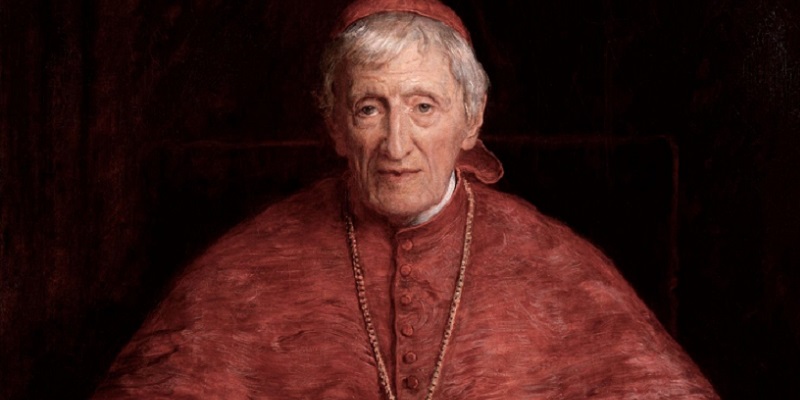
This concept, which has been very well developed by Cardinal John Henry Newman in his essay on the development of Christian doctrine, is frequently misunderstood by fundamentalist Protestants, and by radical traditionalists, because both make the mistake of understanding it as what it is not: an evolution of Christian doctrine.
It is important to emphatically highlight the difference between development and evolution, because both are incompatible concepts, both philosophically and linguistically. Evolution is the transformation or change of something into a different thing, whereas in development that something or someone remains the same individual. A simple example to understand it: one could speculate that a Triceratops evolved into a rhinoceros, or a saber-toothed cat into a modern tiger (once they have evolved they are distinct species), but the same cannot be said of a baby who becomes a man, who remains in himself the same human person, or of a seed, which grows until it becomes a leafy tree.
Some examples in the development of Christian doctrine:
The Trinity
It will not be uncommon to find fundamentalists (Jehovah’s Witnesses, Unitarians, etc.) denying this dogma of faith. They allege that neither in Scripture nor in the writings of the early Fathers is the word “Trinity” mentioned. We might be much more troubled to find that some of the early Fathers did not always teach a completely orthodox doctrine, verging to a greater or lesser degree on subordinationism (Tertullian, Origen, Saint Justin Martyr, etc.). From a deeper study it is deduced that what has happened is that the understanding of this truth of faith has grown, even being fostered by the continual christological controversies that have arisen throughout history (Sabellianism, Arianism, Monothelitism, Monophysitism, etc.).
For more information you may read:
The doctrine of the Most Holy Trinity in the early Church and the Fathers of the Church
The Petrine Primacy
With regard to the doctrine of the Petrine Primacy, exactly the same thing occurs. Protestants object, alleging that they do not find a Pope in the modern style in the first Christian centuries (whom they identify with someone bearing the title of “Pope,” with splendid and pompous vestments, giving orders in a dictatorial manner and demanding that all Christians follow his decrees without question). A detailed study of history makes it possible to see that, while it is true that the style of the Papacy has been changing throughout history, its essence—which consists in exercising the ministry of supreme shepherd with power of jurisdiction to maintain universal unity and orthodoxy within the Christian Church—is and has always been the same.
For more information you may read:
The Primacy of Peter in history
Where did Jesus call Peter “Pope”?
Matthew 16:18, the Primacy of Peter and the Fathers of the Church, by José Miguel Arráiz
The Eucharist, the Real Presence of Christ in the Eucharist
There has been no shortage of the misguided who have taken to saying that “that business of Transubstantiation is an invention of Saint Thomas Aquinas.” It has been the development of Christian doctrine that has made it possible, by means of a more explicit terminology, to explain this Sacred Mystery.
For more information you may read:
Transubstantiation and the early Church
The Sacrament of Penance
I have lost count of how many times Protestant friends have objected to me that in the early Church there was no confessional as we know it today, and much less references to the secret of confession. We might even be astonished to learn that in the primitive penitential discipline sins had to be confessed before the community (as attested in the Didache), or that the decision as to whether the sin had to be confessed publicly was left in the hands of the priest. The important thing is to distinguish that, although auricular confession as we know it today may have been developing in its outward form over time, its essence—which lies in the reconciliation of the sinner by means of the authority of the Church—is the same and remains.
For more information you may read:
The sacrament of penance in history
Mariology
Another warhorse of Protestants, who do not find in the writings of the first Christians references to our Holy Mother as Mother of God, Assumed into heaven body and soul, Queen of Heaven, Queen of the angels, etc., etc. They even find it enormously difficult to comprehend that the development of Mariology is due precisely to the development of the christological doctrines. It is not a question of taking glory away from God to give it to Mary, but of glorifying Him for what He has done in her.
For more information you may read:
Mary today and in the early Church
The virginity of Mary in history
The development of the Biblical Canon
What better example than the Biblical Canon, whose development and definitive definition had to wait for the Council of Trent (In the oldest Catalogue of the books of the New Testament, dated to the second century—the Muratorian fragment—the Epistles to the Hebrews, James and 2 Peter are not mentioned).
For more information you may read:
History of the canon of the O.T.
History of the canon of the N.T.
Additional examples
The same has occurred in every Christian doctrine; among other examples that can be mentioned are:
Purgatory, the early Church and the Fathers of the Church
Sola Fides, the early Church and the Fathers of the Church
Hell in the Bible and the Fathers of the Church
Sola Scriptura, Tradition and the early Church
Lefebvrism, sedevacantism and radical traditionalism, the same problem
The same problem is had by the Lefebvrists, sedevacantists and radical traditionalists, with the difference that they left Tradition frozen at the Magisterium prior to the Second Vatican Council. Pope John Paul II warned against this imperfect notion of Tradition, referring to the schismatic Lefebvrist act:
The root of this schismatic act can be discerned in an incomplete and contradictory notion of Tradition. Incomplete, because it does not take sufficiently into account the living character of Tradition, which, as the Second Vatican Council clearly taught, “comes from the apostles and progresses in the Church with the help of the Holy Spirit. There is a growth in insight into the realities and words that are being passed on. This comes about in various ways. It comes through the contemplation and study of believers who ponder these things in their hearts. It comes from the intimate sense of spiritual realities which they experience. And it comes from the preaching of those who have received, along with their right of succession in the episcopate, the sure charism of truth.”
Apostolic Letter given motu proprio “Ecclesia Dei” of His Holiness John Paul II
For more information you may consult:
The fundamental problem of Lefebvrism
To conceive of Tradition in this way, we would still have to celebrate Mass in Aramaic around a table, confess our sins before everyone, and make women wear on their head a symbol of dependence. We would have to reprove the Pope for not dressing like the apostle Peter, and who knows what other things.
Conclusion
It is illogical that Protestants (divided to the extreme after having rejected Tradition and the Magisterium) have made themselves vulnerable to every wind of doctrine, exposing themselves to falling into all the heresies overcome throughout history. But it is also illogical that radical traditionalists should attempt to freeze Tradition at a specific moment in time, accepting its previous development but rejecting the later one. Not without reason did Cardinal Ratzinger, ten years after the close of the Council, in 1975 say: “It must be stated first of all that the Second Vatican Council is supported by the same authority as Vatican I and the Council of Trent, namely, the Pope and the college of bishops in communion with him. As to its contents, it must be recalled that the Second Vatican Council is in the strictest continuity with the two preceding councils and takes up their doctrine literally on decisive points.” The Ratzinger Report, chapter 2, by Cardinal Joseph Ratzinger
For more information you may consult:
Apologia of the Second Vatican Council
Author: José Miguel Arráiz
