
A reader asks:
Is it possible to vote for or promote a law that accepts abortion—but restricts it—as an alternative to another, more permissive law that is in force or in the process of being voted on?
Answer:
This is the question that has profoundly challenged, and continues to challenge, the conscience of Christian and non-Christian politicians and legislators in recent decades.
Ángel Rodríguez Luño, professor of Moral Theology at the Pontifical University of the Holy Cross, in Rome, has responded to this question in an article published by the Italian edition of “L’Osservatore Romano” on September 6, in which he asks theologians to help people understand the underlying issue.
In order to better understand the argument, which may also affect laws on genetics, Zenit interviewed Professor Rodríguez Luño. These were his answers.
—Voting in favor of a law that partially accepts abortion, even though it improves the situation, has been criticized by some exponents of the pro-life movement. They consider that abortion is something so evil that no exception to its rejection is possible. How do you respond to this criticism?
—Rodríguez Luño: This is not a criticism at all, for what I think and what I have written are fully in agreement with what is stated in the question. A law that legalizes abortion, even if for a smaller number of cases than another, is a gravely unjust law, to which no Catholic can give a favorable vote, and in whose application no formal cooperation and no kind of immediate material cooperation is permissible.
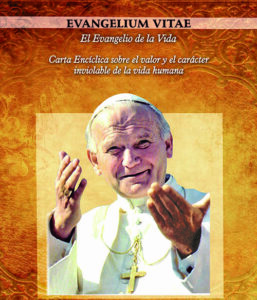 What no. 73 of the encyclical “Evangelium vitae” says is something quite different, namely: if a member of a legislative assembly who is totally opposed to abortion cannot completely abrogate a gravely unjust law, but can abrogate it in part, he may and generally must do so, provided that he does not cause scandal and does not make himself truly responsible for keeping in force the unjust legislative provisions that he is unable to abrogate.
An example will make this clear. Let us think of the legislative assembly of a country in which a very permissive abortion law is in force. That assembly has 100 members of parliament, divided into three groups: group A, of 40 members, accepts the current law and does not want to change it under any circumstances; group B, of 30 members, thinks that abortion should be legal in some cases, but considers that the current law is very permissive and should be modified; nevertheless, it is not willing to approve a law that prohibits any kind of abortion. Group C, of 30 members, is opposed to any kind of abortion. If in this situation a few members of parliament from group C, who are Catholics, present to the assembly a motion that abrogates all the articles of the law hitherto in force which those of group B are willing to eliminate, so that, if it is approved, abortion will be illegal in many cases that were until now legal, although it will continue to be legal in a very few restricted cases, the members of parliament of group C (who are Catholics) have three possible courses of action before them: to vote against the motion, to abstain, or to vote in favor. If they vote against the motion just presented, they make themselves responsible for the very permissive law remaining in force, and this is not acceptable to Catholic morality. If they abstain, the abrogating motion does not reach a majority and is not approved, and therefore they make themselves in some way responsible for the very permissive law remaining in force, which is likewise not morally acceptable. If they vote in favor of the motion, it reaches the necessary majority of votes, the previous law is partially abrogated, and the resulting new law is much stricter.
What I have written, on the basis of what “Evangelium vitae” has said (no. 73), is that the members of parliament who presented the abrogating motion have acted morally well, and that the Catholics of group C may, and generally must, vote in favor of the abrogating motion, provided that their position completely opposed to any kind of abortion is clear to all. And the foundation of the moral judgment contained in no. 73 of the encyclical is not that the more restrictive law is acceptable to Catholic morality. That is not it. It is a gravely unjust law with which it is not possible to collaborate in any way. The foundation of the moral judgment of “Evangelium vitae” is that the moral object of the action of the members of parliament who presented the abrogating motion, and that of the action of the whole of group C, is not to uphold by their vote the articles that remain in force and that they have no possibility of abrogating, but rather that the moral object of their action (“what they really do”) is solely to abrogate the articles of the previous law that it is possible to abrogate, and to avoid upholding by their vote the previous, more permissive law. This is not collaboration with an abortion law (it is not “cooperation with evil”), but the exercise of the duty to abrogate, insofar as it is possible, a gravely unjust law.
To put it even more graphically: the parliamentary majority that sustains the articles of the previous law which still remain in force after the abrogating motion has been approved is made up of group A and group B (40 + 30); the parliamentary majority that has abrogated the more permissive articles is made up of group B and group C (30 + 30). Group C, in which the Catholic members of parliament are found, is responsible only for the abrogation of some articles, that is, for having eliminated all that they could eliminate, and not for the fact that what they could not eliminate remains in force.
This case is the first of the three considered in my article. The other two are different, but the moral principle by which they are resolved is the same. The moral reasoning I have proposed must be read very carefully, because it is a difficult and delicate question.
—How can we avoid the danger of a growing laxism over time if we accept the possibility of approving imperfect laws?
—Rodríguez Luño: In my article I have never used the expression imperfect laws, which I consider rather unclear. “Evangelium vitae” does not use that expression either. Almost all the authors who use it put it in quotation marks to indicate that it is simply an abbreviated and convenient way of referring to a complex problem that everyone knows. In my article it appears only when citing two publications on the subject. In one it is in quotation marks, in the other it is not, but a reading of that article cited by me in a note confirms what I say.
Coming to the substance of the question, I clarify that the laws which some call imperfect are, as follows from my answer to the first question, simply unjust—more or less unjust, but unjust. They are not morally acceptable in any respect. What I have proposed is a set of criteria for keeping alive and truly effective the tension not only not to grow accustomed to evil, but to go on eliminating it insofar as it becomes possible to do so, certainly with the idea of eliminating it completely. But it is not always possible to eliminate everything at once, and one may take progressive steps, provided that this can be done without becoming truly responsible for gravely unjust laws or actions.
—To whom does the decision to judge whether a particular law satisfies the conditions set out by the Pope in his encyclical belong?
—Rodríguez Luño: What is to be judged is not a law, but the real meaning (“the moral object”) of the act of voting in specific circumstances. I do not believe that this judgment belongs to anyone in particular. What is at stake is to reach the certainty that this action, in these circumstances, is really a partially abrogating act, and that the voter does not make himself truly responsible for what has not been abrogated. If a politician does not reach that certainty, and has doubts, he may seek advice from persons sufficiently prepared to guide him truthfully. This does not prevent the Bishop of the diocese or the Episcopal Conference from considering that, in a concrete case, it may be fitting that they themselves pronounce that judgment, for the peace of everyone’s conscience and to avoid confusion; in this case, that judgment of the legitimate ecclesiastical authority binds the conscience of a Catholic. But, in itself, it seems to me that it is not a question of authority or of permissions, but of truth and of the certainty that this truth has been reached.
—Can we apply what “Evangelium vitae” says to other fields, such as genetic research?
—Rodríguez Luño: In principle I see no objection to applying it to other fields, provided that the aforementioned moral principle is properly understood and faithfully applied. If an unjust law cannot be totally abrogated, it is generally right to proceed to its partial abrogation, provided that this can be done without giving scandal (which requires making one’s own conduct understandable) and without making oneself truly responsible for something unjust.
—What advice can you offer to politicians who must work in a secular state where many do not accept the validity of Christian moral principles?
—Rodríguez Luño: The question is too broad to allow a complete answer. In my judgment, what is important is to be coherent with one’s own Christian identity to the very core. In democratic states there exist channels by which citizens take part in the election of those who govern and in the shaping of socio-political orientations and of public opinion. Politicians and citizens who are Catholics must use those channels—which are equally available to all other citizens—to order social and political life according to the criteria which, according to their well-formed Christian conscience, most and best contribute to the common good of the country in which they live. What must be avoided, in my opinion, is allowing oneself to be intimidated by slogans that do not withstand rational examination, or living with a perpetual splitting of conscience, a kind of mental schizophrenia, according to which what they consider in conscience good and necessary for the common good is one thing, and what they consider good and necessary for the common good in their public conduct is something quite different or even contrary. If other citizens do not agree with the criteria of a Christian conscience, let Catholics rigorously set out their own reasons, let them wage for them the same civic battle (using licit and legal means) that others wage for theirs.
This does not mean that all Catholics in fact have, or must have, the same political ideas. On many political problems, diverse solutions are compatible with the Christian conscience, and each Catholic will hold the one that seems best to him. When I speak of coherence, I am referring to coherence with what the Christian conscience necessarily requires or prohibits.
ROME, September 26, 2002 (ZENIT.org)
Author: Fr. Miguel Ángel Fuentes
Source: El teólogo responde
