
Homo sacra res homini, man is a sacred thing to man, wrote Seneca. “The human embryo is something divine, inasmuch as it is a man in potency,” wrote Aristotle. Both thinkers are foreign to the Judeo-Christian culture; nevertheless, they intuited that, even with the limitations and miseries that accompany existence in this world, human life holds an immeasurable, practically divine value, from its beginning to its natural end. Yet the Christian revelation will be necessary in order to find the clear and solid foundation of such an assertion. The sacredness of human life makes itself present for at least three reasons: the reason of origin, of nature, and of destiny.
Sacred by its origin
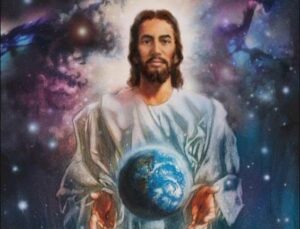 On the first page of Genesis, beneath an apparently naïve and mythical garb, historical events are narrated: the creation of the universe and of man. God shapes a portion of clay —resembling, in His work, the potter—, breathes, and infuses into it a breath of life, the immortal spirit. Matter is animated in a new, superior way: the first human creature is born, in the image and likeness of the Creator. Man is not properly a product of matter, even though matter is one of his components; he possesses a spiritual soul, irreducible to the corporeal. Souls are created directly by God, without intermediaries. For this reason it can be said with all rigor that each human life is sacred, since from its beginning it involves the action of the Creator.
God is the first origin of all that exists. But He has also granted to His creatures the capacity and power to make and propagate good, being causal origins one of another, by generation or composition. Nevertheless, the origin of each human person is most singular, for although the parents intervene in its genesis, laying the material, biological base, at the same time God intervenes producing from nothing the spiritual soul and infusing it into the tiny body begotten by the parents. The spirituality of the soul essentially distinguishes man from the other creatures of this world; it makes the human body not like other bodies, but a personal body, with very distinct specific characteristics, apt to be transformed by sanctifying grace into a temple of the Holy Spirit. But already from the moment of conception, the soul governs the whole development of the embryo and, barring accidents or assaults, will lead it to the relative perfection attainable on earth.
Man begets and, simultaneously, God creates; in such a way that, in generation, the work of God is far greater than the work of man. Saint Augustine says that it is God who gives vigor to the seed and fruitfulness to the mother, and He alone —creating it— places the soul. For this reason, another Father of the Church makes us this most beautiful suggestion: When one of you kisses a child, by virtue of religion he ought to discern the hands of God that have just formed him, for it is a work still recent (of God), whom, in some manner, we kiss, since we do so with what He has made. Thus, human life, from its conception, possesses a divine, sacred value.
And the life of the Christian in the grace of God, even more so: The historian Eusebius of Caesarea recounts that the martyr of Alexandria in Egypt, Leonides, father of Origen —the first of his seven sons, one of the most illustrious talents humanity ever had—, joyful at the admirable precocity of such a son, and giving thanks to God for having granted him, while the child slept, would bend over him and kiss his breast, thinking that the Holy Spirit dwelt within him (Eusebio de C., Historia Eccl., 1, VI, c. II, 11). This is the secret of the Christian’s supernatural life: being vitalized by grace, that is, by the action of the Holy Spirit.
Sacred by nature
 What results from the creative action of God with the participation of the parents in generation? An image of God. This is the great revelation about human nature: God created man in his own image (… ), male and female he created them (Gen 1, 27). This —John Paul II explains— is what is meant to be recalled when it is affirmed that human life is sacred. It also explains why the Second Vatican Council affirms that man is the only creature that God has willed for its own sake. For God, each and every human being possesses an exceptional value, unique, unrepeatable, irreplaceable.
From when? From the moment he is conceived in his mother’s womb (John Paul II, Enc. Redemptor hominis, no. 13). Our life —the Pope teaches— is a gift that springs from the love of a Father, who reserves for every human being, from his conception, a special place in his heart, calling him to the joyful communion of his house. In every life, even the newly conceived, and even in the weak and suffering one, the Christian is able to recognize the yes that God has addressed to him once and for all, and is able to commit himself to making this yes the norm of his own attitude toward each of his neighbors, in whatever situation he may find himself.
Today, after important findings of experimental genetics and of philosophical and theological research, we can and must improve that sentence of Aristotle —which Saint Thomas made his own— in the following way: the human embryo is something divine inasmuch as it is already a man in act. However tiny it may appear to our gaze, it enfolds a grandiose, admirable, most complete structure, animated by an immortal soul, which constitutes a sacred macrocosm.
We are in danger of losing sensitivity before the grandeur of motherhood/fatherhood. To cooperate with God in procreation is to intervene actively in a prodigious miracle, because, in a certain sense, it is a greater miracle —says Thomas Aquinas in The Four Opposites— to create souls, though this may cause less wonder, than to give sight to a blind man; nevertheless, since this is rarer, it is held to be more admirable. Saint Augustine is even more amazed before the formation of a new human being than before the resurrection of a dead man. When God raises a dead man, He recomposes bones and ashes; yet —explains that great man of theological knowledge— you, before coming to be man, were neither ash nor bones; and you have been made, having previously been absolutely nothing.
If it depended on us that God should raise a dead person (a relative, a friend, or a stranger), we would surely do everything within our power, however costly it might be. If God said to us: do this, and this man will return to life; we would feel a profound emotion and would find ourselves happy to be cooperators in a prodigious, divine deed. Well, of even greater moment is the conception of a new human being. From where there was nothing, an image of God arises.
Sacred by its divine end and meaning
Every human life is fruit of the love of the Trinity, which calls each man (male or female) to the eternal joyful communion with the three divine Persons (Cfr. Mt 25, 21.23). Every person has been ordered to a supernatural end, that is, to share in the divine goods that surpass the comprehension of the human mind (DS 3005).
All human beings —says John Paul II— should value the individuality of each of the persons as a creature of God, called to be a brother of Christ by virtue of the incarnation and universal redemption. For us the sacredness of the person is founded upon these premises. And upon these premises is founded our celebration of life, of all human life. Strictly speaking, the attitudes hostile to natality are not only deficient in knowledge of mathematics (because they do not perceive the tremendous problem that looms with the aging of the population) but are also in-human, and, of course, absolutely foreign to Christianity. One must have lost sight of what man is and of the meaning of life to fall into that sort of nihilism which prefers nothingness to being; or to subscribe to the paradoxical hedonism which despises eternal goods in order to maintain, at all costs, certain provisional comforts. It must be remembered that the problem of natality, like any other concerning human life, must be considered, above the partial perspectives of a biological or sociological order, in the light of an integral vision of man and of his vocation, not only natural and earthly, but also supernatural and eternal (Paul VI, Humanae vitae)
An abominable crime
 Human life is, then, both by its origin, and by its nature, and by its end or meaning, a creature very much of God, very especially His own. To attack that life is to attack God, as to defy Him face to face. Truly I say to you that whatever you did to one of these my least brethren, you did it to me (Cfr. Mt 25, 40). These words of Jesus Christ speak to us of the unheard-of point reached by His loving solidarity with each one of us. He respects our freedom infinitely, but whoever uses it against His image —male or female—, whether he wills it or not, uses it against God Himself. And before Him, more than before human tribunals and histories, one will have to answer.
It is thus well understood that, above rather unmentionable interests, the Church of Christ has always taught -also today because it is a perennial truth-, that procured abortion is an abominable crime: God, the Lord of life, has conferred on men the surpassing ministry of safeguarding life in a manner which is worthy of man. Therefore from the moment of its conception life must be guarded with the greatest care while abortion and infanticide are unspeakable crimes (Vat II, GS 51,3). Formal cooperation in an abortion constitutes a grave offense. The Church attaches the canonical penalty of excommunication to this crime against human life. “A person who procures a completed abortion incurs excommunication latae sententiae,” (CIC, can. 1398) “by the very commission of the offense,” (CIC, can 1314) and subject to the conditions provided by Canon Law (cfr. CIC, can. 1323-24). The Church does not thereby intend to restrict the scope of mercy. Rather, she makes clear the gravity of the crime committed, the irreparable harm done to the innocent who is put to death, as well as to the parents and the whole of society.
Infanticide (cfr. GS 51,3), fratricide, parricide, the murder of a spouse are especially grave crimes because of the natural bonds they break. Concerns of eugenics or of public health cannot justify any homicide, even if it were ordered by the authorities themselves (CEC 2268).
It is understandable that there are limit-situations in which the strong temptation arises to give way and to kill or to kill oneself. Neither procured abortion nor suicidal euthanasia are the whims of merely deranged people. But understanding and compassion cannot become accomplices of a murder. Of the human person, his moral conscience can ask an act of heroism at the service of the dignity of the person and of society. And civil laws must echo this. The State cannot exempt itself from defending absolutely and positively the life of its subjects in particular and of all in general. It is a question of the common good, the essential end of the State. And this can be understood from mere juridical reason, as the Encyclical Evangelium vitae shows.
There is no useless human life
 For the Christian there is no useless human life, however much appearances may suggest the contrary. Every person, whatever his physical or psychic state, is eternally called to be eternally happy in heaven. Although it is sometimes hard to understand, pain too enters into the plans of God, who directs it to the good of those who love Him.
A passing and light tribulation —says the apostle Paul— produces an immense and incalculable treasure of glory (2 Cor 4, 13-15). What then to say of a grave and lasting tribulation, such as a life with grave physical or psychic deficiencies may be, both for the one who suffers it and for those who must protect and cherish it? We are poor in words to express its grandeur and the eternal honor they will attain. I consider, brethren —Saint Paul insists—, that the sufferings of this present life cannot be compared with the future glory that is to be manifested in us (Rom 21, 8-18). The Apostle rejoiced in his sufferings, because thus he fulfilled in his flesh a portion of what Christ willed to suffer in His Body, which is the Church, for the good of its members and of all humanity (Cfr. 1 Cor 12, 27).
For this reason, the Church —the Pope affirms— firmly believes that human life, though weak and sick, is always a splendid gift of the God of goodness. Against the pessimism and the egoism that darken the world, the Church stands in favor of life.
Author: Rev. Fr. Antonio Orozco Delclós
Source: Encuentra.com
