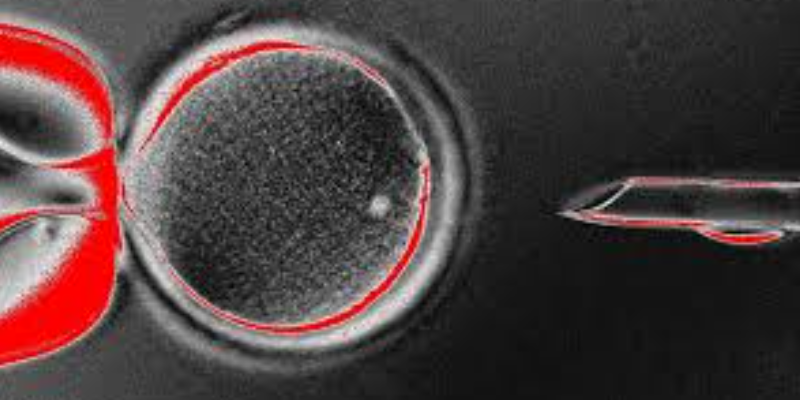
On the subject of cloning, many questions — of science and of conscience, that is, of ethics — remain unaddressed.
This past January 21, the House of Lords of the British government gave the green light to the cloning of human cells for therapeutic purposes. The matter must not have been at all simple, because days before the vote, religious leaders of all kinds — Catholics, Anglicans, Jews, Muslims, Hindus… — made an appeal to the House of Lords and signed a joint declaration, showing their disagreement with what was about to be approved. At the same time, an editorial of January 17 in The Daily Telegraph harshly criticized the British prime minister, Blair, reproaching him for his “evasive attitude which, four times over, avoided meeting with the signatories of the public declaration, in spite of the incessant propaganda of his cabinet to appear as a model of a government committed to a multicultural, multiethnic, and multireligious society”. In the end, the government asked the parliamentarians to vote according to conscience. Something serious was at stake when freedom of conscience was expressly appealed to in a political forum; it is well known that “where there is smoke, there is fire”.
Afterward, to judge by some press articles, it seems that the result of the vote had rung the bell — as in long-distance races, when only one lap remains — so that other governments would quicken their pace and not be the last to reach the finish line.
Where is the problem? It is necessary first to know what happens, on the scientific level, in human cloning, in order then to make a calm assessment, on the ethical, rational level, of the problem: one must see clearly into the fact (what happens in cloning), in order then to see clearly into the judgment according to law (whether or not to give it the green light). For reasons of space, the considerations that follow will be very summarized.
Let us see, then, what cloning consists of: it amounts to producing living beings genetically identical to the cell of origin. A similar biological fact, but not the same, is the splitting of twins, which had already been achieved years ago, in the zootechnical field, of animal experimentation. Indeed, since 1993, experiments in twin-splitting of human embryos of very few cells have been known. But the ordinary citizen only began to hear the term “cloning” four years ago, when the journal Nature published the birth of the sheep Dolly.
We were, in effect, faced with a new fact, for a twofold reason: in the first place because it was no longer a matter of a twin-splitting, but of a true and proper cloning: that is, of asexual reproduction (without prior sexual union), and agamic reproduction (without the meeting of the two gametes, as happens after sexual union, if fertilization takes place). It is aimed at producing individuals (Dolly) biologically identical to the adult individual (the “mother of Dolly”), from which the entire nuclear genetic patrimony is received. That is, Dolly came from a somatic cell, already differentiated, of her mother, and not from two sexual gametes. And therein lay the second great novelty: in the fact that, until then, this true and proper cloning was considered impossible, because it seemed that the DNA (the deoxyribonucleic acid, which forms the genetic patrimony) of the adult, already differentiated cells would have lost its initial pluripotency to originate diverse tissues and direct the development of a new individual. This fact immediately gave rise to thoughts of the possibility of its application to man. Above all, the possibility was seen of using cloning, not with a reproductive purpose — to originate new beings genetically identical to the donor — but a therapeutic one. This possibility is enormously tempting because, apart from economic benefits, it will allow the production — from the so-called “stem cells” of the clonal embryo — of cultures of differentiated cells, with a view to transplants. They will have the advantage of avoiding rejection problems, since they are cells with a genetic patrimony identical to that of the donor subject, who will be, in turn, the future beneficiary of the transplant. Moreover, it is also hoped to achieve treatment of diseases for which today we lack effective resources: Alzheimer, Parkinson, etc.…
Almost from the first moment, the international scientific community — beginning with the researchers who produced Dolly — rejected human cloning for reproductive purposes; it was described as “offensive” and “repugnant” to the human species. There are many arguments that justify these descriptions, although it is not possible to go into them now. We are going to deal, instead, with cloning for therapeutic purposes, the object of the debate and of the recent approval by the British government. Now the ethical problem will begin to be glimpsed; but first one must get to the bottom of the biological fact and of what that culture of “stem cells” implies.
To obtain those differentiated cells with a view to the regeneration of tissues and future transplants, it is necessary to manipulate the embryo; this has already been done for some years now, not with clonal embryos, but with those left over from in vitro fertilizations. It is an operation of authentic “scrapping” of the embryo, although, to be sure, of high biotechnology and scientific precision. Perhaps the word “scrapping” is the most precise term, with the difference that we are not making use of the materials of an old ship or roughing out a piece of wood, but an incipient human life. Because that is what the operation consists of: from the embryo of a few days of life (in the so-called blastocyst phase), the cells of its inner mass (the “stem cells”) are separated, in order to multiply them and, in a second stage, to guide their development to form diverse tissues for therapeutic purposes. In a few words: the embryo is sacrificed. This is the biological reality and the scientific datum, that is, the crude and hard truth.
Therein resides the crux of the question and the ethical problem. One must ask: are the therapeutic ends, however good they may be, obtained at the expense of that incipient life, worth more than this very life that must be immolated? Or, to put it in classical terms: does the end justify the means? Of course, a good end, but in exchange for something evil like the sacrifice of nascent lives. Put this way, without veils or make-up to hide the truth, it sounds a little harsh; and at bottom this is what led, in 1984, to a great debate on the ethical liceity of experimenting with human embryos. It was not then a matter of cloning, because it had not yet arisen; but what was at stake was the necessary condition for drawing therapeutic profit from cloning: that is, the destruction of nascent lives. It was then necessary to calm the conscience of public opinion and, of course, of not a few researchers, who wished to press ahead in the race undertaken. And the “final solution” was to rule — not because the data of biology said so, but because it was convenient in order to press ahead without halting the research — that until the 14th day, from the moment of fertilization, one could not properly speak of an embryo nor consider that cluster of cells as a human life in development. I am referring — as anyone initiated in this matter knows — to the famous Warnock report, which also saw the light — like Dolly — in the United Kingdom.
This last point is at the base of the whole problem. That is why its biological dimension and its ethical assessment require a more careful consideration, which will be the object of a forthcoming article. When all is said and done, it is the neuralgic question of the whole matter: the juridical protection of the human embryo, in the face of Promethean objectives, the result of its manipulation. It matters, then, to know whether or not human life begins at the very moment of fertilization; and, depending on the answer, whether or not it is ethically licit to experiment with the fruit of that fertilization, however good the ends we may set ourselves.
We see that the protective ethical barriers are falling, even though steps forward continue to be taken, without having properly resolved the starting point. Much is at stake for us, and it would not be good for us to have happen what is told of the new president of a certain country. In his inaugural address, he said in a dramatic tone: “this country finds itself at the edge of the abyss..”. And months later, in another speech, he pronounced: “we have taken a great step forward, and we will continue in the same direction”. Without ironies or alarmism that are out of place, but with a rational and calm discourse — in order to keep seeing clearly into the fact and then into the law — let us conclude that progress without rigorous ethical orientation will necessarily lead to taking false steps, contrary to human dignity, even if they are steps forward.
HUMAN CLONING: A PROGRESS WITHOUT ETHICS? (and II)
Every person, sooner or later, must put his conscience and his moral responsibility into play, especially in the face of the decisive challenges of our time. In this regard Ratzinger recounts an event featuring the Nobel laureate, Sakharov, in 1955. He had taken part in important thermonuclear experiments, but the successive military tests cost the lives of a soldier and a two-year-old girl. Invited to a celebratory banquet, Sakharov allowed himself a toast in which he expressed his hope that Russian weapons would never again explode over cities. A high official, director of the program, retorted that this question was none of his concern, because scientists ought to limit themselves to perfecting weapons, and not to judging how they ought to be employed. To which the Nobel laureate replied: “no man can refuse his share of responsibility in those matters on which the existence of humanity depends”. This holds also for the subject of human cloning that we are now dealing with.
Although cloning presents its own aspects, at the center of the problem are — as we said in the preceding article — the experiments on embryos. And that, therefore, the key point resided in determining whether or not one can speak of human life — susceptible, in the affirmative case, of juridical protection — in the first 14 days of the embryo’s life. This subject was debated in 1984 by the Warnock Committee, appointed by the British government. In the final ruling — known as the Warnock report — it was decreed (thus: it was “decreed”) that the beginning of human life did not take place until the 14th day, from fertilization. For this, it was necessary to invent the term “pre-embryo” — not yet “human individual” — thus giving free rein to experimentation. Later, in 1990, the English Chambers transformed it into law. Nevertheless, all this was done by sidelining ethical assessments and, moreover, by marginalizing biological data that speak in favor of the existence of a human life from the very moment of fertilization. As proof of this, a few testimonies, both biological and from the scientists themselves, will suffice.
In the first place, several members of the Warnock Committee itself later acknowledged this fact. Thus, the embryologist A. MacLaren honestly admitted that it was precisely she who introduced the term “pre-embryo”, and that she did so under the influence of “a certain pressure foreign to the scientific community”; and knowing, as D. Davies, also a member of the same Committee, acknowledged, that she was “manipulating words to polarize an ethical discussion” (D. Davies, Embryo research: Nature 320 (1986) 208). All comment is superfluous. But the final result of that subterfuge was the legal recognition in not a few countries of experimentation on embryos. Thus history is written.., and it is the same thing that some now wish to do with regard to cloning for therapeutic purposes: they want history to repeat itself.
But let us continue with other testimonies. An important voice in this matter is the Frenchman J. Testart, in no way suspected of prudishness when it comes to biomedical experiments, since he worked on the team that in 1982 made possible the birth of Amandine, the first “test-tube baby” of France. Testart, who some time later would leave those paths, states in his book “The Capricious Fourteen Days of the Pre-embryo” that the British embryologists responsible for the Warnock report “were obliged to do so in order to justify an extra-scientific point of view that suited them: the Ethics Committee of the American Department of Health and Education, without any reference to biological considerations, had decreed that an interval of fourteen days after fertilization was needed, without the product of conception acquiring any moral status”. Unfortunately, the die was cast for the embryo…
Along lines similar to those of Testart, many other scientists express themselves. The one who was my professor in the Faculty of Medicine of Madrid, Botella Llusiá, referring to the newly fertilized embryo, writes: “there is one thing that, as a biologist, or objectively, by my own knowledge, I can indeed affirm: …from the very moment of the fusion of the gametes it is already a human life. Not only can we see under the microscope (…) the sperm unite with the oocyte, but today we know the genome of each of them and we know that, by fusing their DNA molecules, they give rise to a new being, the embryo, whose genome in turn is its own, and different from that of the father and of the mother. There a new life has been born, today we have already seen it born before our eyes. (…) And this biological certainty — not anthropological, nor theological — allows me, and those who wish to follow me, to condemn abortion at whatever moment it takes place and without limitation of time. And moreover it is an argument that serves believers and agnostics alike”. Scientific reason thus belies the subterfuge of the “pre-embryo”.
The genetic code that each of us was when we were only a single cell, and which is enclosed in the DNA of the chromosomes, is compared by Lejeune to a mini-cassette on which a symphony is written: that of life. On the tiny mini-cassettes that are our chromosomes, various scores of the work that is our human symphony are written. And once the information necessary to express the whole symphony has been gathered (which happens at the moment of the fusion of the gametes), “the symphony plays by itself, that is, a new man begins his career”. This graphic language helps to make the truth, which is beyond dispute, more plausible: that is, that it not only be true, but also appear to be so.
In spite of everything, some political powers seem determined to continue along the line of the British government. To cite an example, France has recently proposed to modify its legislation on bioethics: it is too small for a badly understood freedom of research. It is a matter of justifying the use of the embryos left over from in vitro fertilizations for therapeutic purposes; and, like every argument, prime minister L. Jospin asked himself: “Should reasons based on philosophical, spiritual, or religious principles lead us to deprive society and the sick of the possibility of therapeutic advances?”. The answer ought to be: why, of course; because it is not only a matter of those reasons — which must not be left aside — but because, also and at the same time, those reasons are firmly grounded in biological facts, in scientific analyses, in experimental proofs. And if one had to answer with a less academic and more forceful reply, one would have to say that when efficiency and practical ends displace ethical principles, the end has a name: Auschwitz. And the fact is that one does not play with the truth of principles.
The testimonies of scientists and the biological facts set forth suffice to prove that, thank God, the Sakharovs are still alive; and that they are not willing to bow under the weight of economic or political power, nor those of a certain biomedical research which, under the cloak of progress, seems determined to continue taking false steps.
Many questions — of science and of conscience, that is, of ethics — remain unaddressed. And this, without having said anything about a research that can, and will no doubt, lead to optimal results in the biomedical field and in its practical applications: the experiments with stem cells coming from adults. They even have advantages over cloning, both from the scientific and from the ethical point of view. This past year, those adult stem cells have been cultured in the laboratory in sufficient quantity; and they have shown their power of transformation into diverse tissues. Moreover, it is a progress that does not damage ethical values. Without doubt it is in the line of the divine mandate “subdue the earth”, but rightly understood. For that same reason, it will not fail to produce abundant fruits without prejudice to ethical values, that is, without the sacrifice of human lives.
José Antonio García-Prieto Segura. Priest. Physician. Doctor of Philosophy
Author: José Antonio García-Prieto
Source: Encuentra.com
