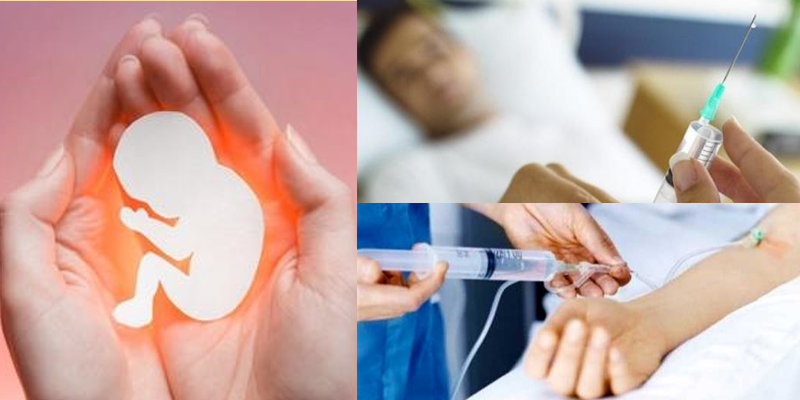
The United Nations Organization (UN), which is supposed to be an organization for helping to resolve the tremendous conflicts that nations constantly have, is the chief promoter of what they call “family planning” or “reproductive health,” and it demands of all Nations, especially the so-called “developing” ones, that they curb the demographic explosion that threatens to “destroy the planet” (which is a myth) by every kind of means to prevent conception, from the abortifacient pill RU486 to making the practice of abortion legal, free and without charge.
Here in Mexico, in the year 1998, President Zedillo stated at a meeting held for “International Women’s Day” that “No fanaticism of any nature, no pressure of any kind, political or otherwise, will inhibit the Government’s effort in that field”. He said that the Government’s commitment to provide family-planning services to women is an inescapable responsibility of the State, and he urged that the states’ laws relating to women’s issues be updated; he warned of the dramatic increase in teenage pregnancies in Mexico and said that much remains to be done to reduce this problem, and that of maternal and infant mortality.
At no point does the president consider the possibility and the urgency of educating young people in chastity, instilling in them the moral values needed to be able to control themselves and be masters of their instincts.
For him, we Mexicans are eternal minors, incapable of making our own decisions, and for that reason the Social Security system is compelled to implant intrauterine devices or to tie the tubes of Fallopio of women, even without their consent.
CAIRO AND BEIJING.
A priority matter on the agenda of the feminist meetings in Cairo and Beijing, in the years 1994 and 1995, was what they called “reproductive health.”
Women claim the right to the “free disposal of their body.” Even supposing she has this right, she in no way has it over another’s body, for she has conceived a complete human being — not a germ of life, nor a promise, but a full life, in the same way that a child is not a mere promise of life because he is not yet an adult.
Every right entails a responsibility, an obligation, and no one has the “right” to harm himself by being the victim of a vice, such as alcohol, drugs or sex, for besides the great harm one does to oneself, there are always other people who are gravely affected by such conduct.
We believe that no woman wants to have an abortion; they reach this extreme decision only when they think that every door has been closed to them and they try to escape through a false one. As a society, are we not capable of offering these women some alternative better than extreme violence against themselves and against the child they carry in their womb?
There are those who claim that there must be Freedom for the right to choose abortion, but freedom does not consist in doing whatever one wants, but in being able to do what ought to be done. No one can have the “right to murder a baby.”
It is essential, in order to carry out any decision, to be duly informed of the consequences of the actions one intends to undertake; otherwise one is deciding “blindly.”
Generally, the woman is not well informed of the physical and psychological consequences that an abortion can cause her, since the language used by abortionists is exceedingly deceptive. Let us look at some of their premises:
1. “It is not a human being, it is just a clump of cells.”
If that were so, do not worry, you are not pregnant. But the tests say otherwise, for human life begins from the moment of conception.
2. “A woman is the owner of her body.”
Precisely for that reason, she must care for it, respect it, not give it away, lend it, or harm it by accepting the worst aggression it can suffer within the sacred sanctuary of her womb.
The woman who has conceived carries within herself a body distinct from her own, new, with a life of its own and different from the life of the one who conceived it; it is a person, with all the rights that the Mexican Constitution recognizes in it.
3. “It is not fair to bring unwanted children into the world.”
So then, after begetting them in an act that is of itself fruitful, it is better to kill them. An “unwanted pregnancy” is a sign that sexuality has been corrupted beforehand. That act of intercourse was no longer as God wills it, the sign of the gift and of the total acceptance of the other person: it was an act of passion, of pleasure detached from reality and from its consequences.
Sooner or later the child will ask his parents: What is an abortion? How to explain to them that there can be unwanted children? How to explain to them that it can be legal to kill a baby in his mother’s womb? How to prevent them from asking themselves: would my mother have aborted me? On what does it depend whether a child is born or dies — on economic circumstances, on whether his mother has a successful career, on a trip, on whether his parents are on the verge of divorce? etc., etc.
4. “Abortion is safer than childbirth”.

For whom? For the murdered baby? And it also has grave consequences for the mother.
Medical Consequences:
Contractions, bleeding, inflammation, pain in the womb, fevers, infections that can be fatal, heavy hemorrhaging, removal of the uterus and ovaries, internal burns from ingesting potassium permanganate, perforation of the vagina and rectum, and sterility.
Psychological:
Anguish, guilt, depression, shame, resentment toward herself, rejection of her partner, an inexplicable mistreatment of her other children and of children in general, distrust, fear of another relationship, loneliness, she feels defenseless, a devalued image of herself; if she is Catholic, a terrible remorse for having committed a mortal sin that warrants excommunication.
5. “In difficult cases, such as rape, deformity of the baby, etc., etc.”
There are options for these painful cases, and murder is not one of them — murder in its worst form, of the most defenseless of human beings: a baby.
Rape:
How many times can they be brought on by the imprudence of mistaken conduct? Cases of pregnancies due to rape are extremely rare, and by the very situation in which the aggression occurs, fertilization does not occur. Dr. Jesús Ares, a forensic physician in a borough of Mexico, D.F., verified that of 500 rape complaints, not a single pregnancy resulted.
And there still exists the alternative of carrying the pregnancy to term and giving the child up for adoption through the institutions of the Church, private and governmental, that facilitate the necessary procedures; and there are also mothers who accept their baby, love him, and he comes to be for them a source of great consolation and joy.
In cases of malformations:
The terrible question is: must this child die? There are not a few cases in which, according to the studies performed on the fluids of the mother’s womb, the child is declared to be abnormal, and when he is born it turns out that he is normal.
“54 years ago my mother went to the doctor; she was in the second month of her pregnancy; her husband was an alcoholic and had a syphilitic condition; one of her children was mentally handicapped, and besides there were several deaf people in the family. The doctor decreed the ‘interruption of the pregnancy,’ but my mother refused. Seven months later I was born; today, in 1824, in the Kárnerton of Vienna, I premiere my Ninth Symphony, my personal song to the joy of living” … Beethoven.
Some savage tribes in Africa, consider deformed children to be hippopotamuses and let them drown in the river; we, the civilized, consider them disposable “vegetables.”
A child’s deficiencies are not our problem; we are his problem; it is our lack of emotional and spiritual morality that has created the difference between those who are “productive” and “normal” and those who in some sense are weak and incomplete. God invites us to look after the crippled, the maimed, the lame, the blind, and “you will be blessed,” because they cannot repay you, but He has hidden surprises in those who are not like us.
6. “Do not impose your religion on me.”
This is not a religious or philosophical question, it is a biological one; it is about human life, and before life all ideologies must yield.
7. “There are already too many of us.”
It is one of the most overused sensationalist arguments. Ever since the predictions of Malthus it is insisted that food will run short and that poverty will keep increasing.
It is overlooked that agricultural production in recent years has increased remarkably, both in Africa and in India and in the United States, a country where only 3% of the population works in agriculture, yet it can feed the whole world.
The problem of hunger and poverty in certain parts of the planet is not due so much to the increase in population as to the poor management of resources, the absence of adequate infrastructure — in short, inept and corrupt governments. And in Mexico, we certainly know about this.
8. Women who are enslaved and abused must be liberated.
They maintain that women cannot be forced to carry their pregnancy to term under such adverse conditions, but it is a fact that these women remain as poor and abused as before and will carry, in addition, the trauma of having murdered their child. Half of the pregnancies are girls, who undoubtedly turn out to be the most abused; who defends their rights?
9. “Few children so as to give them much.”
Who says that “giving much” to children is the best way to raise them? He has observed little who has not discovered that an abundance of goods is not the best path for the formation of character, and that the best school of life is the family.
In the United States abortion was legalized in 1973, as it was one of the solutions considered to remedy so many ills; 25 years later, they have reached 36,000,000 sacrificed babies, in the greatest and most silent holocaust in history.
In the United States, as in Europe and Japan, a much greater problem presents itself: having murdered millions of children, they now have to support millions of unproductive elderly people, since in recent decades a clear trend toward the prolongation of life has emerged, hence the need to accept foreign labor, with all the ethnic and social problems that this entails.
In Germany there live 4 million Islamic Turks; Paris and London are literally invaded by Africans or Indians. The United States, with millions of Latin Americans documented or not — the social cost is becoming dreadful!
Information is not enough.
In the second half of the 20th century the taboo of sex was broken, and now all the information there is and ever was is given, starting with lessons in primary school. The communications media have contributed widely, presenting the genital facts of sexuality with all crudeness, but evidently so much information has not been enough to solve the problem of “unwanted pregnancies,” for the statistics show that now, throughout the world, there are more pregnant adolescents than in the days of the “sexual taboos.”
Thus, mere information is not enough; what is needed above all is formation — that is, a whole process of education in human values and in the proper management of the sexual instinct. Handing out condoms left and right to adolescents is a terrible error whose consequences we are suffering: neither have pregnancies been prevented, nor has AIDS been overcome.
The formation of consciences, of the will, of responsibility, of respect for one’s own person and for others, must be a priority in all educational settings: Church, family, school, media, laws, etc.
To form children and young people in chastity is not a matter of giving them biological knowledge, but of a whole dynamic of appreciating sex in the human being as a marvelous divine gift, willed by God for our happiness, full realization, and collaboration with Him in calling to life new beings destined for Eternal Life.
Lost voices.
It is unduly insisted that the decision to abort belongs to the woman, “because she is the owner of her body.” But we must not forget that this child also has a father, co-responsible for the pregnancy, even though it was “unwanted.”
In some legislations, the right and the need to take into account the opinion of the father is already being considered — a father who could object if he knew the decision the woman has made to murder his child.
The crime of abortion cannot be the decision of the woman alone, nor of the man, nor of the family, nor of the doctor, nor of the Social Security system or of the Senate. Quite simply, no one has the right to decide such a thing.
Among all those voices, there is a little voice, a lost one that would like to be heard: that of the baby. A voice brought before the whole world by Dr. Nathanson, a former abortionist converted to Catholicism, in his video “The Silent Scream,” in which one can observe by ultrasound how the child desperately defends himself, with his little mouth open trying to scream, from the curettage (scraping) that mercilessly destroys him, within his own mother’s womb. Let us listen to that lost voice!
The voice of the Church.
We too must listen, and very attentively, to the Voice of the Catholic Church, “expert in humanity,” which in the Encyclical “The Gospel of Life” (Evangelium Vitae) condemns abortion for the umpteenth time, as well as euthanasia and assisted suicide.
“No circumstance, no purpose, no law whatsoever can ever make licit an act which is intrinsically illicit, since it is contrary to the Law of God which is written in every human heart, knowable by reason itself, and proclaimed by the Church.” Simply, one cannot live as if God did not exist.
It is frequently asserted that contraception, safe and affordable for all, is the most effective remedy against abortion, and the Catholic Church is accused of in fact favoring abortion by obstinately continuing to teach the moral unlawfulness of contraception.
The accusation is truly fallacious, for indeed it may be that many resort to contraceptives, even in order to avoid the subsequent temptation of abortion, but the counter-values inherent in the “contraceptive mentality” — quite different from the responsible exercise of fatherhood and motherhood with respect to the full meaning of the conjugal act — are such that they precisely make this temptation stronger, in the face of the eventual conception of an unwanted life. In fact, the abortion culture is particularly developed precisely in those circles that reject the Church’s teaching on contraception.
Unfortunately the close connection which, as a mentality, exists between the practice of contraception and abortion is manifested more and more, and is alarmingly demonstrated also by the preparation of chemical products, intrauterine devices, and “vaccines” which, distributed with the same ease as contraceptives, in reality act as abortifacients in the very earliest stages of the development of the life of the new human being.
“In today’s society we observe a great many disturbing tendencies and a great laxity as regards the Christian vision of sexuality, all of it with something in common: appealing to the concept of freedom in order to justify all kinds of conduct that is no longer in harmony with the true moral order and with the teaching of the Church.”
John Paul II
THREE THREATS FROM THE NORTH.
The so-called partial abortion, Euthanasia, and Assisted Suicide.
We cannot fail to mention the point of view of some Protestants:
As in everything, there is great diversity of criteria among the various Protestant or evangelical churches, and there are some decidedly opposed to abortion that do extraordinary work in Pro-Life activities, such as the wide variety of publications of the “Life Cycle Books” of Lewiston, NY, or the newspaper “National Right to Life” of Washington, DC, where we have found abundant information for this pamphlet, and in whose publications many Catholics collaborate.
But the North American branch of the Ecumenical Council of Churches (WCC) published a book openly in favor of compulsory population control and of the legalization of abortion, thus adding a new stone in the path of the relationship with the Catholic Church.
The work is titled “The Population Dangers and the Response of the Churches,” and the author is the American James Martin Schramm, a professor at the Lutheran University of Decorah Iowa, who actively participated in the world population summit in Cairo, in 1994.
The author maintains that it is urgent and necessary to “improve the status and conditions of women” and to “provide them with adequate means” for their development. It is not a matter of raising their dignity through an integral education and the improvement of their living conditions, but merely of conditioning women in the techniques of artificial birth control, distributing to them en masse the chemical or mechanical instruments to put these techniques into practice, since when women receive this “education” the fertility rate tends to decline.
Partial abortion.
In addition to what has been said above about abortion, they have now “invented” in the United States what they call “partial abortion,” which consists in pulling the baby out of its mother’s womb by the feet, and when only the head is left, they insert a catheter at the base of the skull and suck out the brains. Hardly could there be anything more horrendous and bloody. In the United States about 5,000 partial abortions are performed each year.
A testimony:
I am a registered nurse with 13 years of experience. In September of 1993, I began to work in an abortion clinic in Dayton because at that time I was in favor of the abortionist movement, “Pro-choice.”
I worked as an assistant nurse for three days, and a woman came in who was 6 months pregnant, and for 2 days the dilator was placed in her and … she cried the whole time. On the third day she returned to have the partial abortion performed.
The doctor brought the ultrasound and placed it so as to be able to see the baby. On the screen one could see the heart beating; I asked him to confirm it and he told me: yes, that is the heart beating. The doctor watched through the ultrasound screen and introduced the forceps and secured the baby’s little legs, pulling them downward through the birth canal. Next he brought out the body and the arms until reaching the neck; at that moment, only the baby’s head remained inside; the body was moving, his little fingers overlapped one another, his feet were kicking.
The doctor took a pair of scissors and inserted them into the base of the baby’s head, opened them, and put a high-power suction tube into the perforation and suctioned out the brain mass. I nearly vomited as I watched these things.
The doctor received the head, cut the umbilical cord, delivered the placenta, and threw the baby into a basin, together with the placenta and the instruments he had used. I saw the baby move, and when I asked another nurse, she told me: they are “reflexes.” The mother cried the whole time, saying: “please, forgive me”
The explanations that doctors give about this astonishing and truly demonic method are very confused and evasive, for they try to get around certain technical and legal difficulties.
“I will kill and I will make to live” (Dt 32:39)
“When the sick, the elderly, and the dying are left alone, we will react by proclaiming that they are worthy of love, of care, and of respect.”
John Paul II
Euthanasia.
Euthanasia is defined as an action or omission which of itself and by intention causes death, with the purpose of eliminating all suffering (EV 65)
There are circumstances in life in which illness or extreme old age makes death desirable, both on the part of the patient himself and of the relatives who care for him; and yet it must be remembered that we are masters neither of life nor of death.
Two extremes must be avoided: euthanasia, and “aggressive medical treatment” which consists in the very opposite, that is, in certain medical interventions no longer appropriate to the real situation of the patient, being disproportionate to the results that might be expected, or else too burdensome for him or his family.
When death is imminent and inevitable, one can in conscience renounce treatments that would only prolong, no longer life, but a painful agony. One can allow nature to follow its natural course, providing the sick person, of course, with the normal care. This expresses the acceptance of the human condition in the face of death (EV 65)
In modern medicine, the so-called “palliative care,” intended to make suffering more bearable in the final phase of illness and at the same time to ensure the patient an adequate human accompaniment, is gaining prominence.
We Catholics also have in the Sacraments the divine accompaniment, and relatives should see to it in good time that the priest visits with the Sacrament of the Anointing of the Sick and the Holy Viaticum, which, by the action of the Holy Spirit, provides the sick person with Sanctifying Grace, spiritual peace, Christian fortitude, joy in the Lord, and, if God wills, sometimes health.
It is not prudent to call the priest only when the sick person is unconscious “so that he will not be frightened,” it being a reality that the Sacraments help enormously in those so difficult moments. It is not licit to deprive the dying person of his own consciousness without grave reason, for in the face of death men must be in a condition to fulfill their moral and family obligations and, above all, to prepare themselves with full consciousness for the definitive encounter with God.
Assisted suicide.
Dr. Kevorkian (“Dr. Death”) in the United States has devoted himself to “helping people who wish to commit suicide to die by their own hand.” He fitted out an ambulance to inject intravenously a serum, but with the possibility that, by opening a valve, the suicidal person may also let a powerful poison enter. The doctor withdraws “prudently” and leaves the fatal decision and the lethal movement to the suicidal person.
Obviously his actions have aroused great controversy in the Courts, and he has been imprisoned on several occasions, but he insists that he will continue his conduct and fights for the legalization of “assisted suicide.”
The Evangelium Vitae says regarding suicide:
– Suicide is always as morally objectionable as murder. The Church’s tradition has always rejected it as a gravely evil choice.
– To share another’s suicidal intention and to help him carry it out by means of so-called “assisted suicide” means to make oneself a collaborator in, and sometimes the author of, an injustice that never has justification, not even when it is requested.
– One of the characteristic features proper to the present-day attacks on human life consists in demanding their legal recognition, as if they were rights that the State, at least under certain conditions, must acknowledge for its citizens.
– The common root of all these tendencies is the “ethical relativism” that characterizes many aspects of contemporary culture.
However, it is precisely the problem of respect for life that reveals the equivocations and contradictions, with their terrible practical results, concealed in this position.
– The Gospel of life is not exclusively for believers: it is for everyone. The issue of life and of its defense and promotion is not a prerogative of Christians. Although from faith it receives extraordinary light and strength, it belongs to every human conscience that aspires to the truth and is attentive to and concerned about the fate of humanity.
In life there is surely a sacred and religious value, but in no way does it appeal only to believers: indeed, it is a value that every human being can also understand in the light of reason and that therefore necessarily concerns everyone.
When the Catholic Church declares that the unconditional respect for the right to life of every innocent person — from conception to natural death — is one of the pillars on which every civil society rests, “wants simply to promote a human State. A State which recognizes the defence of the fundamental rights of the human person, especially of the weakest, as its primary duty.”
Risks in the practice of euthanasia and of “assisted suicide.”
1. Wrong diagnosis, by not taking into account the mental state of the sick person, including those who suffer terminal illnesses, who may possibly contemplate the possibility of an assisted suicide because they are not duly attended to for the mental disorders and depressions they suffer during their afflictions. Thus, if euthanasia or assisted suicide come to be legalized, they can be carried out without having been chosen by the sick person, because he is not in full use of his faculties and because he is especially vulnerable.
2. Poor management of physical symptoms; doctors may opt for assisted suicide instead of seeking the appropriate treatments for each patient.
3. Insufficient attention to the sufferings and fears of terminal patients, who can be helped with due psychological attention and, above all, with the Sacrament of the Anointing of the Sick, which would help the sick person to die in peace in the Christian Hope of going to Heaven.
4. Vulnerability of marginalized groups. This practice puts at grave risk the poor, isolated elderly people, members of minority groups, who find themselves completely defenseless before the decisions of other people.
5. Devaluation of the lives of the so-called “disabled” because they are not “productive.”
6. Sense of obligation. Many patients would feel pressured to make this decision, so as not to be a burden to their relatives.
7. Recommendations of the doctor. Many patients blindly follow the doctor’s recommendations, and so when he says that euthanasia is “medically appropriate,” patients feel that it is the only alternative.
8. The financial question. Euthanasia is much cheaper than treatments for the elderly or the terminally ill, and no longer are palliatives or other solutions sought.
9. Arbitrariness in the limits. In a society that accepts medically assisted suicide, it would be difficult if not impossible to contain this option within limited groups, for anyone, even if not terminally ill, could request medical assistance for his suicide.
10. Impossibility of regulation, since it would be difficult, given the nature of this decision, to prevent abuses and errors, which frequently occur in the conduct of some doctors.
11. Transplants. The possibility of intervening to obtain organs for transplants, which is a “big business.”
“Euthanasia is immoral and antisocial”
It is a document of the Spanish Episcopate, which can be found on the Internet, in which very important points are made; we cite some of them:
– There are those who think that to take the life of a person in order to spare him suffering is something good, on the assumption that it is the person himself who asks for it; and they analyze the consequences of the decriminalization of euthanasia, which would open the way for, along with voluntary euthanasia, the imposed kind to come as well, and no one would any longer have the guarantee of “dying naturally and in peace.”
The Archbishop of Barcelona, Spain, Cardinal Ricardo María Carles, denounced that many sick elderly people in the countries of Europe where euthanasia is legal travel to Spain to be treated for their ailments, for they literally flee from their countries of origin because they do not trust their doctors or the hospitals.
How many forms of attack on Life are we going to keep “inventing”? The Holy Father John Paul II rightly says that we live in a culture of death and of true extermination.
“Christ crucified is a proof of God’s solidarity with the person who suffers”
John Paul II
NIHIL OBSTAT September 7, 1998 Fr. Dr. José Luis G. Guerrero Rosado
Censor
IMPRIMATUR September 22, 1998 Fr. Lic. Guillermo Moreno Bravo Vicar General
Author: Alicia Herrasti
