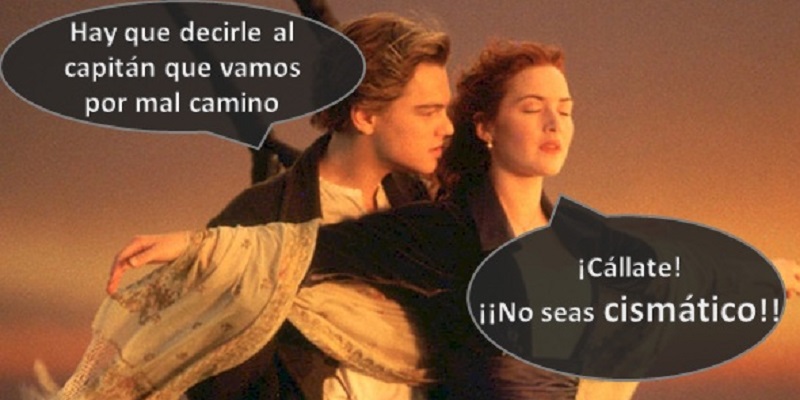
In a previous article I gave a brief summary of the approach to ecumenism that the Catholic Church has had before and after the Second Vatican Council. As I already said, I reiterate that I am in favor of genuine ecumenism as the Magisterium teaches in its various documents, from the encyclical of Pius XI, Mortalium Ánimos, through the Decree of the Second Vatican Council “Unitatis Redintegratio” and the development that followed with the documents related to ecumenism by John Paul II such as Reconciliatio et Paenitentia (On reconciliation and penance in the mission of the Church today), Ut Unum Sint (On commitment to ecumenism).
However, I cannot fail to observe what I consider errors in ecumenical praxis that I consider important to mention, even if that implies some criticism of the recent pontificates, including the current one. I will try to be as respectful as possible and to ensure that my criticism is always constructive.
I am aware that this exposes me to “friendly fire” from many Catholics who confuse defending the Catholic faith with defending everything the reigning Pope says or does, even in matters of opinion, and who look badly upon disagreement even when seeking the good of the Church. But the fact is that we are not a “sect” where everything the leader says is beyond objection and the followers throw themselves like hyenas to tear apart anyone who dares to contradict him.
Having said this, I will begin to list what I consider errors in current ecumenical praxis:
1.- Understanding apologetics and ecumenism as mutually exclusive
The rise in ecumenical commitment has made us leave in the background the importance of apologetics, which the ecclesiastical hierarchy largely considers an attempt to resolve differences by means of conflicts and arguments.
We have an example in the recent speeches of Pope Francis, who seems to agree with this point of view, since the few times he has alluded to apologetics it has been to discourage it. In a homily of January 25, 2015 he stated that: “Many controversies among Christians, inherited from the past, can be overcome by setting aside every polemical or apologetic attitude, and by seeking to understand together in depth what unites us, that is, the call to share in the mystery of the Father’s love, revealed by the Son through the Holy Spirit”.
Later he added that “the unity of Christians—we are convinced—will not be the result of refined theoretical discussions, in which each one will try to convince the other of the soundness of his own opinions.”
In defense of those words it can be said that the Pope is not saying that apologetics must be set aside in order to resolve “all” but rather “many” of the controversies, and that it is true that through dialogue and our own efforts alone we are not going to restore the unity of Christians, because it is certainly a divine gift.
But apologetics does not claim to do that either. Apologetics seeks to accompany the transmission of the Christian faith, allowing the evangelizer “always to be ready to give an answer to everyone who asks him for the reason for his own faith” (1 Peter 3:15-16). In this way it not only allows us to know and deepen the foundation of our faith, but also to transmit it effectively to non-believers, participating in and fulfilling the great commission of our Lord.
Put briefly: with apologetics we are not going to solve all the problems in the Church, but without it, even less so.
Pope John Paul II seemed to have a clearer understanding of the need for apologetics, but even so his words fell into oblivion and the bishops, at least the great majority of them, did not make plans or take permanent actions in this regard.
I especially remember two speeches by the Holy Father, one in October 1999 and another in May 2002. In both he highlighted the importance of revitalizing a new apologetics:
“For in a world where people are continuously subjected to the cultural and ideological pressure of the media and the aggressively anti-Catholic attitude of many sects, it is essential for Catholics to know what the Church teaches, to understand that teaching, and to experience its liberating power. A lack of understanding leads to a lack of the spiritual energy needed for Christian living and the work of evangelization.”[1]
“In other words, we need a new apologetic, geared to the needs of today, which keeps in mind that our task is not just to win arguments but to win souls, to engage not in ideological bickering but to vindicate and promote the Gospel. Such an apologetic will need to find a common «grammar» with those who see things differently and do not share our assumptions, lest we end up speaking different languages even though we may be using the same tongue.”[2]
The Pope at that time was clear that this apologetics had to have certain essential characteristics in order to achieve its objective, which involved having empathy toward separated brethren but without falling into a sentimental interpretation of love separated from truth:
“This new apologetic will also need to breathe a spirit of humanity, that compassionate humility which understands people’s anxieties and questions and which is not quick to presume in them ill will or bad faith. At the same time, it will not yield to a sentimental sense of the love and compassion of Christ sundered from the truth, but will insist instead that true love and compassion can make radical demands, precisely because they are inseparable from the truth which alone sets us free (cf. Jn 8:32)”[3].
2.- Inaction in the face of the sectarian phenomenon
On the other hand, from my perspective, it almost seems as though the Catholic hierarchy considers Protestantism as if it were represented only by Lutheranism, and in what is usually called this “ecumenical era” it has neglected not only apologetics outwardly but apologetics inwardly.
Catholic faithful are not formed to know the foundation of their Catholic faith and to be able to defend it effectively against the objections of Protestants. If we combine that into an explosive cocktail where we motivate them to attend ecumenical meetings in which they “share” their faith with our brethren, the result is not greater unity and integration, but the abandonment of the Catholic faith in order to begin forming part of Protestant communities.
The evidence speaks for itself, since a recent Latinobarómetro report reveals that from 1995 to 2013 the Catholic Church has lost faithful in almost every Latin American country, going from 80 to 67 percent of the population. The same report highlights the parallel growth of the Protestant population that identifies itself as “Evangelical Christian.” The proportional relationship between the increase in Evangelical Protestants and the reduction in the number of Catholics can only mean that more and more Catholics are becoming Protestants.
In total, Catholicism has lost 13 percentage points in terms of believers throughout the continent, going from 80 percent of the population in 1995 to 67 percent in 2013. Although it remains the religion with the largest number of followers in those countries, the downward trend is constant and has been accentuating.
In some countries the decline is even greater, such as Nicaragua and Honduras, where it loses a presence close to 30 percent. There are also significant declines, from 20 to 15 percent, in Costa Rica, Uruguay, Chile, Panama, and Brazil.
If the problem is viewed globally, according to the Catholic Church’s own official statistics collected by CARA, although the population worldwide went from 653.6 to 1.229 billion, it has declined by 1% in percentage terms, and the decline would have been greater if the massive abandonment of the Catholic faith that it suffered in the continents of America and Europe had not been offset by the increase that occurred in Asia and Africa, continents of hope that, if they follow the same approach, will end up suffering the same fate.
It is a phenomenon that I have observed with my own eyes, since a few blocks from my house there is a Catholic community that became Protestant as a result of these ecumenical meetings where there was a total absence of apologetic formation on the part of the faithful. Today it is called “Evangelical Church, The Love of God,” and one of the formerly Catholic parishioners is currently “the pastor.”
3.- Objective promotion of religious indifferentism
Even if that is not their intention, many statements and actions of the Catholic hierarchy objectively foster in many faithful the impression that it is not essential to be Catholic, but that it can be just as good to remain Protestant.

Let us take, for example, the event where Pope Francis received a group of Lutherans, in which a statue of Luther was placed in the hall and with which he even took several photographs. Although it can be understood as an ecumenical “diplomatic” gesture that seeks to sympathize with the Lutheran brethren he was going to receive, beyond that, placing a bust of someone implies presenting him in some sense as a “model”. We do not make busts of Hitler or Stalin; we make them of people worthy of being admired and imitated. If we add to this the politically correct praises that are becoming more and more frequent, a cocktail is formed that, even without intending it, dissipates from the minds of Catholics the gravity of the acts he committed and the essential importance of belonging in unity to the one Church founded by Christ.
And the fact is that if someone can curse and insult the Pope and the bishops with the most obscene adjectives, identify the Catholic Church as the “Whore of Babylon,” abolish the Mass, deny the dogmas, persecute Catholics and Protestants, provoke and incite a massacre of one hundred thousand peasants, be a furious anti-Semite, and still be a “witness of the Gospel,” being Catholic or Protestant can make little difference.
After all, a “witness” is one who “is able to attest to an event because he has knowledge of it” (RAE). Are we perhaps admitting that Luther had faithful and accurate knowledge of the Gospel?
I agree with making every effort to forget and overcome the disagreements of the past and to seek unity with our Lutheran brethren, but I think we must do so not by vindicating Luther, but by leaving him behind. Never by recreating fantastic images far removed from the reality of who he really was and what he became.
I will give an example of this type of “whitewashing,” far removed from reality, which is increasingly abundant in the higher Catholic hierarchy:
Recently Cardinal Koch, president of the Pontifical Council for Promoting Christian Unity, published an article in L’Osservatore Romano for which he was publicly congratulated by Pope Francis, in which he makes rather debatable statements that I will analyze below. He says:
“He [Luther] absolutely did not want to break with the Catholic Church and found a new church, but had in mind the renewal of all Christendom in the spirit of the Gospel”
Here is an example of an equivocal statement. I am not referring to admitting the possibility that Luther, even though mistaken, had “right intention,” which, as I already explained on one occasion, is possible since only God sees the internal forum of each person. I am referring to the statement that he had in mind the renewal of all Christendom in the “spirit of the Gospel.”
That Luther sought a renewal of the Church in his own way, I do not dispute, but that it was in the spirit of the Gospel is impossible to admit without qualifying that it was in what he considered the “spirit of the Gospel,” without actually being so.
The facts speak for themselves: Luther had and took advantage of the opportunity to “reform” the Christian religion according to his understanding of the “spirit of the Gospel,” and what emerged from there was Protestantism as we know it: a religion that, although with elements of truth inherited from the Catholic Church, denies the authority of the Pope and of the Church and has replaced it with the free interpretation of the Bible, denies a not insignificant number of dogmas of the Catholic faith, and has abolished the Holy Mass.
What Luther failed to do—and thanks be to God—was to impose his vision of the “spirit of the Gospel” on all Christendom, but where he managed to do so freely, without opposition, he produced no true renewal but chaos and divisions, which shows that his doctrine was not the true Gospel, but a distorted one.
It therefore makes no sense to call him a “witness of the Gospel,” since if that were so, we would have to grant the title to practically all the heretics who caused schisms and divisions and who probably also had “good” intentions.
Cardinal Kock also states that Luther would have found in the Second Vatican Council “his council,” something that again is difficult to reconcile with reality. The Second Vatican Council reaffirmed Catholic doctrine in dogmas that Luther radically rejected.
Can it really be believed that Luther was going to accept a Dogmatic Constitution such as Lumen Gentium which reaffirms the hierarchical constitution of the Church and the Papacy, or Dei Verbum which accepts Sacred Tradition as a form of transmission of Revelation? Perhaps Gaudium Et Spes? If we are honest, even while admitting the good that may have existed in Luther, it is enough to know a little of his works and his teachings to know that he was only willing to accept the authority of the Church and the councils if they agreed with his particular understanding of the Bible. Therefore, this type of statement, even when it comes from the President of the Pontifical Council for Christian Unity, can only be understood as “politically correct” expressions, but completely and absolutely far removed from reality.
Where we are going…
Meanwhile, the situation of the Church grows worse every day.
I have worked in companies all my life, and if there is one thing I have been able to learn, it is that indicators reflect the success or failure of a management effort. The figures that show a massive desertion from the Catholic religion demonstrate unequivocally that we are doing something wrong. There may be many causes; I only point out some of those that I consider have contributed to accelerating the debacle.
Another thing I learned in the business world is that if we keep doing things the same way, we cannot expect to obtain different results, and if we insist on taking a medicine that has proven ineffective, we are not going to cure any disease. An ecumenical “euphoria” in which other important aspects in the pastoral care and formation of the Catholic people are neglected will not diminish this bleeding, which is detrimental to their spiritual good and causes the number of Protestants to increase, feeding their ranks from the Catholic people, while we very happily pose smiling for the photo.
Author: José Miguel Arráiz
NOTES
